
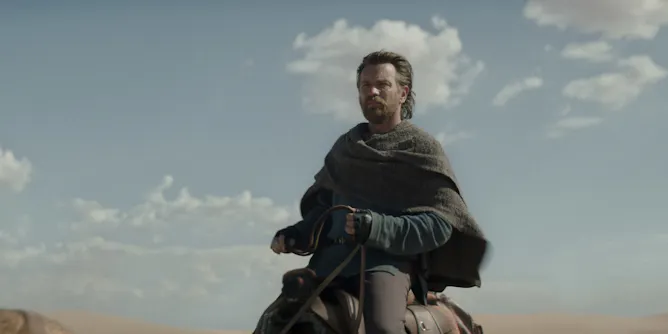
Both are orders of religious warriors and both were taken down by power-hungry rulers
Articles on Science fiction
Displaying 81 - 100 of 239 articles

In an interview, scholar Alyssa Collins explains how her time spent plumbing the sci fi writer’s papers left her stunned by the breadth of her interests and the depth of her scientific knowledge.

What might our future look like? Together, these speculative fiction stories offer a First Nations response to this burning question.

New virtual realities are changing the way we interact with our urban spaces. How will the metaverse make some urban amenities redundant and others indispensable?

There was a real man behind the swashbuckling hero who was as deft at sparring with his pen and sword as Rostand’s hero.

We simulated the desert planet to find out.

Mass data collection and surveillance have become ubiquitous. For marginalized communities, the stakes of having their privacy violated are high.
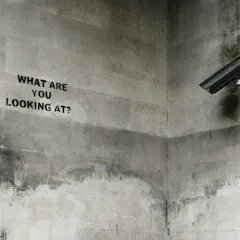
Once analysts gain access to our private data, they can use that information to influence and alter our behaviour and choices. If you’re marginalized in some way, the consequences are worse.
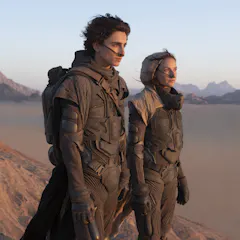
Is Dune scientifically plausible? We ran a climate model to find out.
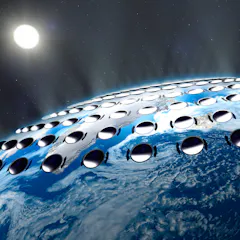
The audio version of an in-depth article on how science fiction’s hopes and fears can inspire humanity’s response to the climate crisis.

From the author of The Yellow Wallpaper, Herland is a feminist classic: darkly comic and rich with irony.
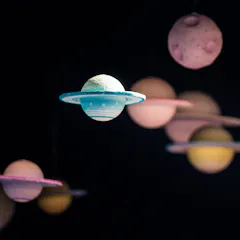
Attending, debating or simply following COP26? Here’s why you should be reading science fiction.
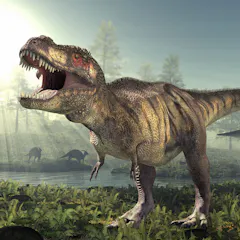
Ever since moviegoers saw the first ‘Jurassic Park,’ millions have wondered if scientists could make a dinosaur in the lab.

Climate disasters are drawing comparisons to apocalyptic films. Their happy endings may have given us a false sense of hope.
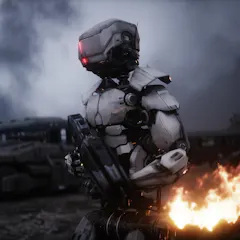
Science fiction doesn’t just introduce us to speculative technologies – the genre explores how they might affect society too.
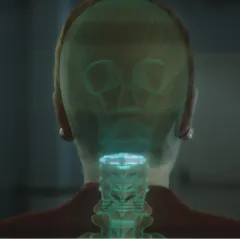
Leaving our earthly bodies and living forever as a machine isn’t just a thing of modern science fiction. These transhumanist ideas date back to the 18th century.
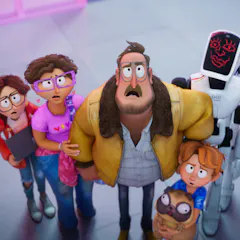
Fictional screen robots have long represented our fear of technology. A new animated family film combines this trepidation with many parents’ fear of losing offline connection with their kids.
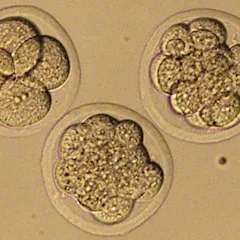
Researchers have grown the first human-monkey hybrid embryos as well as mouse embryos in artificial wombs late into development. These biomedical breakthroughs raise different ethical quandaries.

If octopuses simply started evolving a smarter brain, what stops them from ruling over humans? Why has this not happened already? An expert explains what these cephalopods might be capable of.

Science fiction has often had an inspirational and positive relationship with space endeavors. But the new US Space Force is struggling with a pop culture public relations problem.
Top contributors
-

Senior Lecturer in Film and Media Studies, Manchester Metropolitan University
-
Professor, Director of the Centre for Robotics, Queensland University of Technology
-
Lecturer in Marketing, Lancaster University
-
Senior Lecturer in English, University of Liverpool
-
Lecturer in Comparative Literature, University of Kent
-
Associate professor, University of Johannesburg
-
Professor of Film Studies, Bangor University
-
Adjunct Research Fellow of The Cairns Institute, James Cook University
-
Director of Doctoral Programmes in Art & Design and Senior Lecturer in Culture & Context, Nottingham Trent University
-
Senior Instrument Scientist, Australian Nuclear Science and Technology Organisation
-
Professor of English and Comparative Literature, Monash University
-
Space Plasma Physicist, Imperial College London
-
Professor in Robotics, Queensland University of Technology
-
Associate Professor in Archaeology and Space Studies, Flinders University
-
Dean of Science, University of California, Santa Cruz