
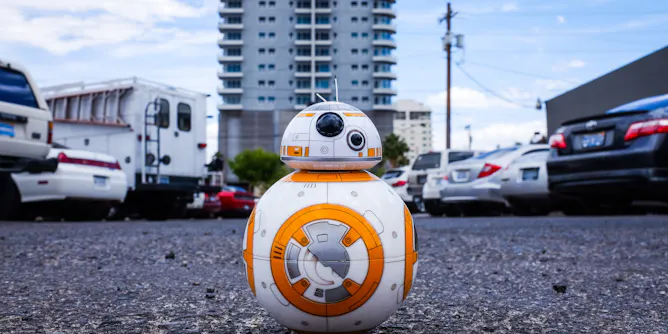
‘Use the reinforced concrete, Luke.’
Articles on Science fiction
Displaying 121 - 140 of 239 articles

At the heart of the debate is that most fundamental question: what does it mean to be human?

The fictitious world of Judge Dredd highlights authoritarianism, including laws against outsiders, walls around cities and rules that deny people basic rights. Are the Dredd comics a cautionary tale?

Technology firms should use more design fiction to explore and avoid potential negative consequences, such as AI bias.
An obscure Russian prince lays claim to being the first person to announce that humanity may destroy itself through its own technological advancement.
Science fiction writing often serves as a thought experiment that explores shared and hidden beliefs whose material and political reverberations lie further in the future.

From Lord of the Rings to Game of Thrones, writers and linguists have invented an array of new languages.
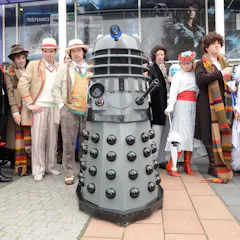
The first peer-reviewed survey of Doctor Who fans’ attitudes to science reveals it was literally life-changing TV for some. But the verdicts were surprisingly nuanced and sometimes contradictory.
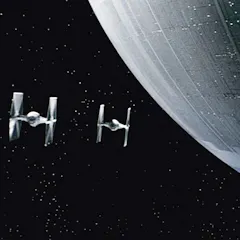
If sci-fi films mirror the world’s contemporary dystopian anxieties, then over the years Star Wars has gone from nuclear war to environmental collapse.
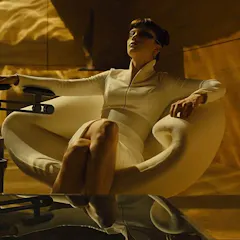
Science fiction is fast becoming science fact, which should be cause for concern.

From mobile phones to artificial wombs: what a breathtakingly visionary set of predictions from a century ago can teach us about our attempts to forecast the future today.

If “Black Mirror” is one of the most fascinating and disturbing series of the last ten years, it is because of its main character: technology.

Speculative writers flesh out our passing thoughts into complete, functioning societies and explore how they might unfold.
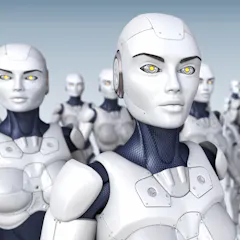
A legal expert looks at the issue of robot rights and what makes us human.
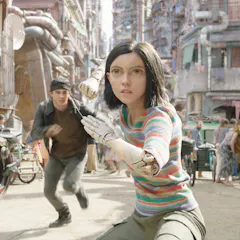
We have robots that can walk and run but still a long way to go before the technology matches the cybernetic skills in the new science fiction film Alita: Battle Angel.
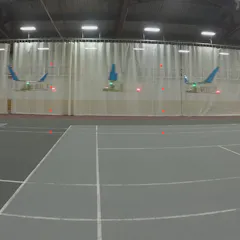
Ionic winds – charged particles flowing through the air – can move airplanes using only electricity; no propellers or jet engines needed. The scholar who led the project explains how it works.
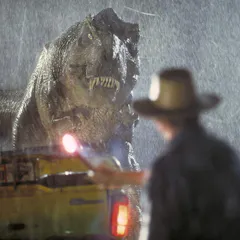
As fictional inventors make terrible choices on the big screen, real-world tech innovators can learn from their example how not to make the same kinds of ethical mistakes.

As we enter the age of the Anthropocene, there is a growing recognition of different kinds of ‘un-real’ storytelling.

Jodie Whittaker finally takes over as the first woman to play the Doctor in the long-running TV series. But that’s not all that’s new as the show make a welcome return to our screens.
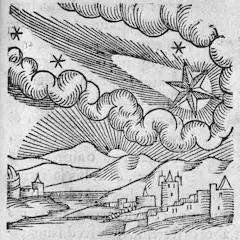
Science fiction has been around for centuries.
Top contributors
-

Senior Lecturer in Film and Media Studies, Manchester Metropolitan University
-
Professor, Director of the Centre for Robotics, Queensland University of Technology
-
Lecturer in Marketing, Lancaster University
-
Senior Lecturer in English, University of Liverpool
-
Lecturer in Comparative Literature, University of Kent
-
Associate professor, University of Johannesburg
-
Professor of Film Studies, Bangor University
-
Adjunct Research Fellow of The Cairns Institute, James Cook University
-
Director of Doctoral Programmes in Art & Design and Senior Lecturer in Culture & Context, Nottingham Trent University
-
Senior Instrument Scientist, Australian Nuclear Science and Technology Organisation
-
Professor of English and Comparative Literature, Monash University
-
Space Plasma Physicist, Imperial College London
-
Professor in Robotics, Queensland University of Technology
-
Associate Professor in Archaeology and Space Studies, Flinders University
-
Dean of Science, University of California, Santa Cruz