

There are parasites on Earth that control the minds of their hosts.
Articles on Science fiction
Displaying 21 - 40 of 239 articles

In Never Let Me Go, Kazuo Ishiguro summons our liberal sentiments only to turn them against us.
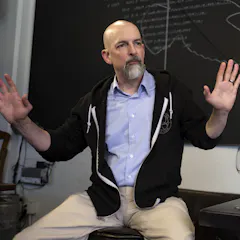
Three recent developments in AI – in video games, wearable technology and education – suggest that building something like Stephenson’s Young Lady’s Illustrated Primer is possible.
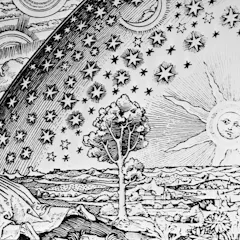
In the 19th century, astronomers could see Mars through telescopes, but not clearly. Some used their imaginations to fill in what the blurry images couldn’t convey.
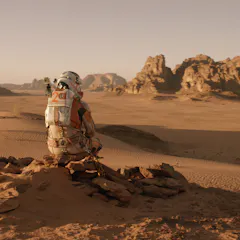
NASA hasn’t landed humans on Mars yet. But thanks to robotic missions, scientists now know more about the planet’s surface than they did when the movie was released.

The dread that AI evokes seems a distraction from the more disquieting scrutiny of humanity’s own dark nature.

Science fiction has been obsessed with perfect female robot companions but never considered what makes a good male human companion, till now.
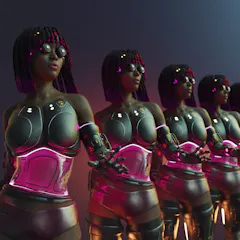
From angry spirits and parallel universes to alien abductions and epic folklore, African writers are offering fresh new horizons for the world’s science fiction landscape.
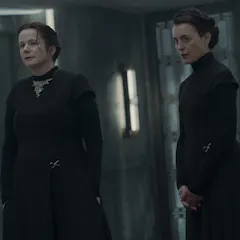
Based on books written by Herbert’s son, the series strays in a few details from the writer’s vision of the Dune World.
How people feel about AI’s involvement in social interactions as depicted in science fiction can help shape policy governing AI in public spaces, including AI for environmental learning.

What might the age of generative AI tools mean for strategic thinking and planning within organisations losing key figures?
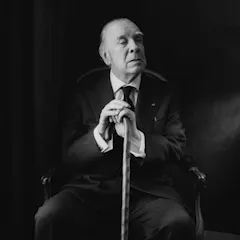
Borges imagined an endless library that contained every possible permutation of letters. The truth is out there, but it’s embedded among hordes of lies and gibberish.
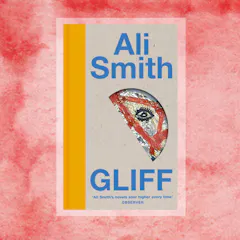
Gliff is set in a dystopian Britain – a kind of fairy tale of the future in which two children navigate a world which seems increasingly baffling and hostile.

While it is fair to say that Warhammer 40k has so far been underrepresented in science fiction circles, it seems the tide is finally starting to turn.

The original 1984 film’s vision of rogue AI turning on humanity remains hugely influential.
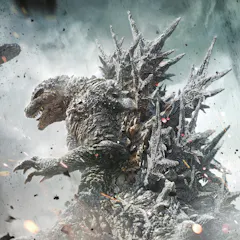
Like the Japanese atomic survivors who were awarded the 2024 Nobel Peace Prize, Godzilla has a message to share.
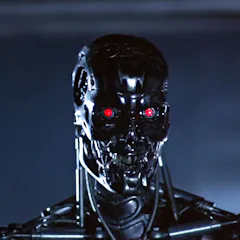
The Terminator not only redefined the science fiction but also explored the dangers of unchecked technological advancement.

Using films like “The Matrix,” a sociology course examines how factors beyond our control shape the world we live in − in fact and in an imagined future.
Science fiction can be thought of as a film negative of history – a back door into what used to worry people and what gave them hope.

Jordan Prosser’s Big Time revels in the human drive to make art and forge connection, even in the most oppressive situations – and it whisks us along for the ride.
Top contributors
-

Senior Lecturer in Film and Media Studies, Manchester Metropolitan University
-
Professor, Director of the Centre for Robotics, Queensland University of Technology
-
Lecturer in Marketing, Lancaster University
-
Senior Lecturer in English, University of Liverpool
-
Lecturer in Comparative Literature, University of Kent
-
Associate professor, University of Johannesburg
-
Professor of Film Studies, Bangor University
-
Adjunct Research Fellow of The Cairns Institute, James Cook University
-
Director of Doctoral Programmes in Art & Design and Senior Lecturer in Culture & Context, Nottingham Trent University
-
Senior Instrument Scientist, Australian Nuclear Science and Technology Organisation
-
Professor of English and Comparative Literature, Monash University
-
Space Plasma Physicist, Imperial College London
-
Professor in Robotics, Queensland University of Technology
-
Associate Professor in Archaeology and Space Studies, Flinders University
-
Dean of Science, University of California, Santa Cruz