
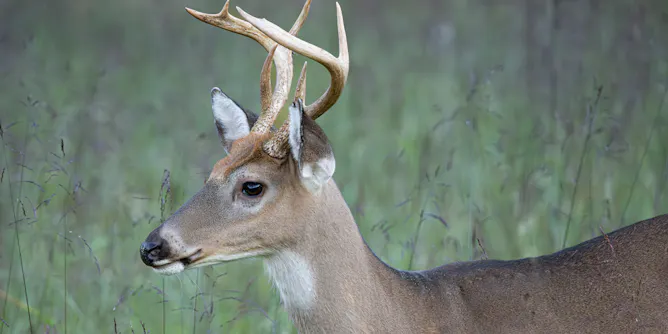
New research shows how these storytelling choices can distort science – and how to move beyond them.
Articles on Science
Displaying 61 - 80 of 796 articles
Analysis of a rock examined by the Curiosity rover reveals an abundance of organic matter.
An avalanche during a storm in the Sierra Nevada killed at least eight skiers on a guided backcountry excursion.

The essays in a new anthology offer two distinct ways of interpreting the Promethean legacy of scientific progress.
Behind this summer’s floods and slips is a simple signal we rarely talk about: humidity. As the climate warms, NZ will need to pay closer attention.

Some medical conditions involve cartilage tissue loss, which is why skin grafting is vital. Lab-grown cartilage could be the way forward for human tissue repair and reducing animal testing.
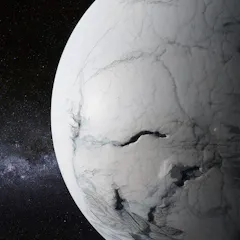
New research reveals that Earth may not have been completely covered in ice.
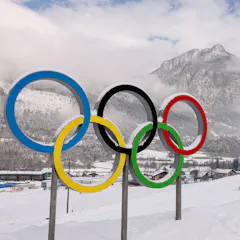
While physical exertion helps athletes stay warm, sweating can lead to dehydration.
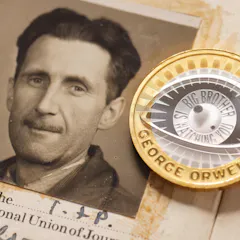
Orwell argued that you don’t have to be a scientist to think more scientifically.

A federal judge dealt one blow to the effort when he found the administration had violated the law in handpicking a panel to question climate science.
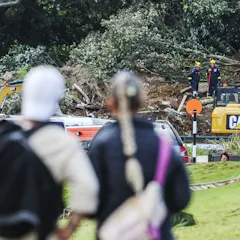
After the fatal landslides at Mount Maunganui, attention has focused on recent tree removal from Mauao. But landslides rarely have simple causes.
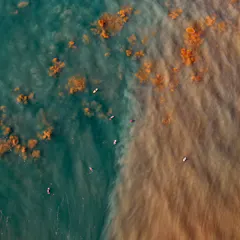
More than a fifth of the global ocean has gradually lost underwater light. But short, intense “marine darkwaves” can be just as damaging for life below the surface.
While AI can streamline certain parts of the scientific process, a philosopher argues that it cannot replace human expertise and collaboration.

Scientists have traditionally focused on educating the public on science or correcting misinformation. But researchers from marginalized communities often have broader goals in science communication.

Researchers who focus on one specialty are more likely to rise through the academic ranks, even though wicked societal problems require crosscutting work to solve.

Ancient thinkers struggled to tell facts from falsehoods just like we do – and their strategies are still relevant today.

The warning lights from the cryosphere have been flashing red for several years and governments and policymakers ignore this at their peril.
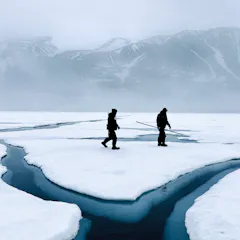
The 20th anniversary of the annual report tracks how sea ice, snow cover and many other vital signs of the Arctic have changed, and the impact that’s having on people and wildlife.

War on Science takes aim at science’s global culture wars. Edited by controversial physicist Lawrence Krauss, it argues evidence-based science is under threat.
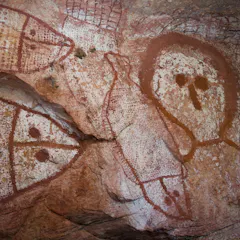
New research confirms humans first reached the Sahul super-continent by two different routes around 60,000 years ago.
Top contributors
-

Professor and Deputy Vice-Chancellor (Research), University of Sydney
-
Professor in Applied Cognitive Psychology, Manchester Metropolitan University
-
Senior Lecturer and Researcher in Cognitive and Parapsychology, Manchester Metropolitan University
-
Open Evidence Research, UOC - Universitat Oberta de Catalunya
-
Professor of Public Affairs, The Ohio State University
-
University Distinguished Professor of Astronomy, University of Arizona
-
Professor of Natural Philosophy in the Department of Physics, University of York
-
Professor, Philosophy of Science, The University of Melbourne
-
Professor of Creative Pedagogies, Edinburgh Napier University
-
Professor of Natural Resources and Environmental Science, University of Vermont
-
Associate Professor in Astronomy, Monash University
-
Dean of Science, University of California, Santa Cruz
-
Professor of Environmental Engineering, North Carolina State University
-
Senior Lecturer in Physics, Nottingham Trent University
-
Honorary Associate, School of Physics, University of Sydney