

Scientific innovation has been driving US economic growth for decades. Losing that edge means losing access to the technologies and brainpower that come with it.
Articles on Science
Displaying 41 - 60 of 796 articles

In an urbanized and globalized world, most kids aren’t directly connected to agriculture. School gardens can help them learn where their food comes from.

Retailers are racing to hand your shopping over to AI. Consumers are right to be wary – and not just about privacy.

The comic’s accuracy has inspired fans like Stephen Hawking to pursue a career in science.

Science itself isn’t ‘truth,’ but it is an activity with the goal of getting closer to the truth.
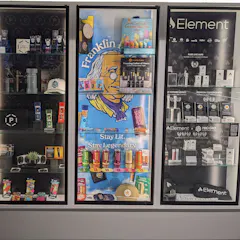
Researchers are anxiously awaiting government action on rescheduling cannabis.

NASA’s Artemis II mission has revived lunar ambition – and a potential new race between nations. Very different visions now complicate the human future of space.
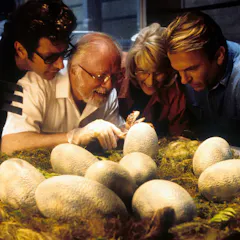
We all know science influences books, movies and TV – but the influence goes both ways.
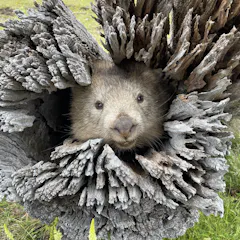
From wombat and mozzie surveillance to deciphering climate history and spotting star explosions, citizen scientists are instrumental in contributing knowledge.
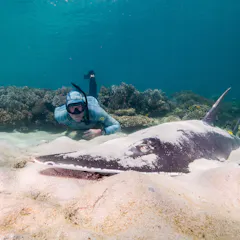
Citizens have contributed to science in Australia for many decades – and the field is now undergoing rapid growth

There are two ways to understand sexual harassment in the workplace, but one of them is more scientific than the other.

The podcast was created in partnership with UFPA to showcase what scientists in Brazil and Australia are doing to mitigate the impacts of climate change

The word misinformation is loaded, and overused. The difficulty of assessing evidence is partly to blame.
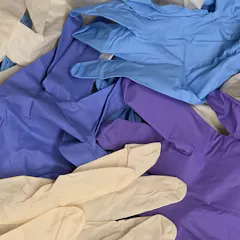
Tiny particles from certain lab gloves look like microplastics, and they can contaminate samples, new study finds.

Australia spends less on research and development than most of the developed world, and our productivity growth is the lowest in decades.

Parents do not need to be experts to help build their child’s science skills at home.

Debates over responsibility for past species loss generate heat but little light. Moving forward requires context, evidence and Indigenous knowledge.

Leigh argues three forces underpin most innovation: tinkering, teamwork and trade. New ideas alone aren’t enough.

Tiny triangular-shaped flints from arrowheads found in Uzbekistan shed light on how the first settlement of ‘Homo sapiens’ – our modern human ancestors – came to Europe.
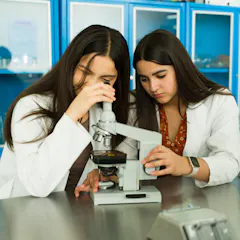
New research suggests GCSE science builds thinking skills that matter far beyond the lab.
Top contributors
-

Professor and Deputy Vice-Chancellor (Research), University of Sydney
-
Professor in Applied Cognitive Psychology, Manchester Metropolitan University
-
Senior Lecturer and Researcher in Cognitive and Parapsychology, Manchester Metropolitan University
-
Open Evidence Research, UOC - Universitat Oberta de Catalunya
-
Professor of Public Affairs, The Ohio State University
-
University Distinguished Professor of Astronomy, University of Arizona
-
Professor of Natural Philosophy in the Department of Physics, University of York
-
Professor, Philosophy of Science, The University of Melbourne
-
Professor of Creative Pedagogies, Edinburgh Napier University
-
Professor of Natural Resources and Environmental Science, University of Vermont
-
Associate Professor in Astronomy, Monash University
-
Dean of Science, University of California, Santa Cruz
-
Professor of Environmental Engineering, North Carolina State University
-
Senior Lecturer in Physics, Nottingham Trent University
-
Honorary Associate, School of Physics, University of Sydney