
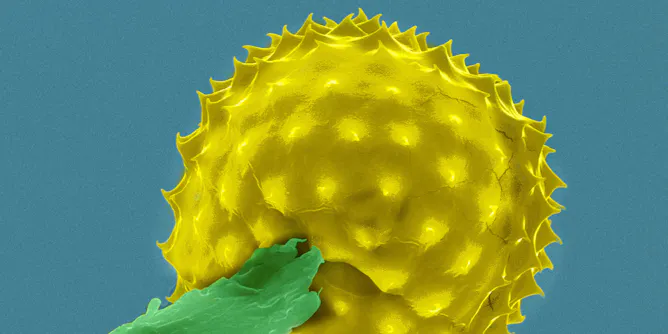
Rising temperatures mean longer, earlier pollen seasons, but the bigger problem is what carbon dioxide will do to the amount of pollen being released. A 200% increase is possible this century.
Articles on Science
Displaying 381 - 400 of 796 articles

Our age of agnosis is increasingly coming into contact in ways beyond historical standards and recorded memory. Empathy, not apathy, is needed now more than ever before.
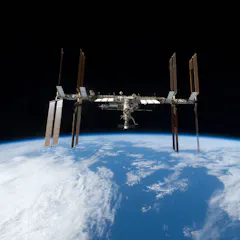
What happens to the International Space Station when tensions on Earth rise? A space policy expert explains how the ISS is run and how Russian aggression has threatened its operation in the past – and now.
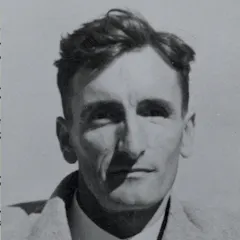
His theory, based on years of detailed climate and weather data, became known as the Callendar Effect. Today we call it global warming.

Colleges don’t have to sit by and watch STEM majors leave for other fields. Two Ph.D. biology students share tips for encouraging students to stick with STEM despite the difficulty involved.
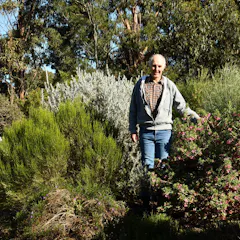
Without these older Australians, my research wouldn’t be where it is today. So let’s meet a few of them.
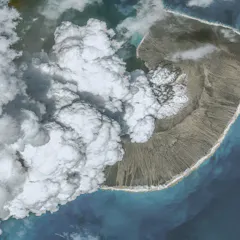
A phenomenon first theorized over 200 years ago is also a telltale sign of nuclear tests.
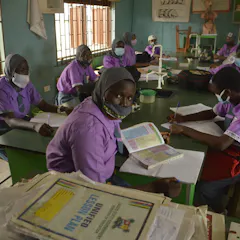
Learning about sustainable development and consumption should not be limited to particular disciplines like those in the sciences and technologies.

From basic childhood curiosity, to fossil introductions from parents – it seems a scientist’s spark can come in many forms.

Just because something isn’t 100% certain doesn’t mean you ignore it, and other lessons from two researchers who study the problem of science denial.

Supply chain issues, emergency science, social distancing requirements and a lot more free time offered both challenges and opportunities for research scientists.

Many scientists stuck at home during university closures dealt with increased domestic responsibilities. But some groups had it worse than others.

Climate models can’t see tornadoes, but they can recognize the conditions for tornadoes to form. An atmospheric scientist explains what that means for forecasting future risks.
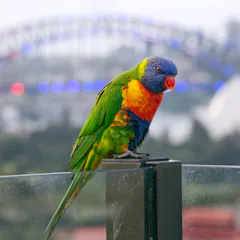
There’s enormous value in citizen science projects that encourage urban-dwellers to learn about what is often, quite literally, on their doorsteps.
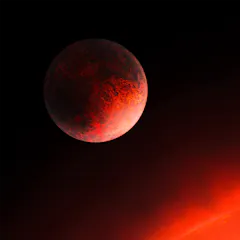
Most of what we know about planets outside our Solar System relates to gas-giant planets. A new study has identified and characterised a smaller exoplanet.
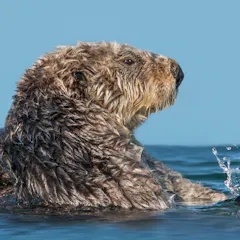
New research finds that ‘leaky mitochondria’ help keep sea otters warm.
Good science doesn’t eliminate uncertainty: it explains it.
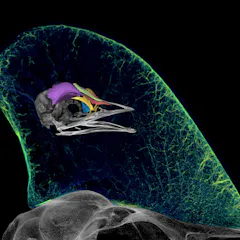
Scientists have been using art to illuminate and share their research with the public for centuries. And art could be one way to bolster K-12 science education and scientific literacy in the public.
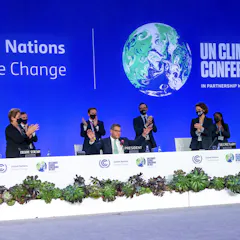
Has the summit delivered on its goals?
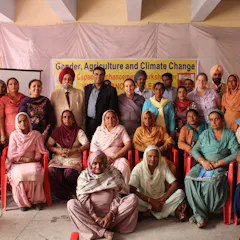
Women’s climate knowledge is often overlooked, despite it being a vital resource for adapting to a warming world.
Top contributors
-

Professor and Deputy Vice-Chancellor (Research), University of Sydney
-
Professor in Applied Cognitive Psychology, Manchester Metropolitan University
-
Senior Lecturer and Researcher in Cognitive and Parapsychology, Manchester Metropolitan University
-
Open Evidence Research, UOC - Universitat Oberta de Catalunya
-
Professor of Public Affairs, The Ohio State University
-
University Distinguished Professor of Astronomy, University of Arizona
-
Professor of Natural Philosophy in the Department of Physics, University of York
-
Professor, Philosophy of Science, The University of Melbourne
-
Professor of Creative Pedagogies, Edinburgh Napier University
-
Professor of Natural Resources and Environmental Science, University of Vermont
-
Associate Professor in Astronomy, Monash University
-
Dean of Science, University of California, Santa Cruz
-
Professor of Environmental Engineering, North Carolina State University
-
Senior Lecturer in Physics, Nottingham Trent University
-
Honorary Associate, School of Physics, University of Sydney