
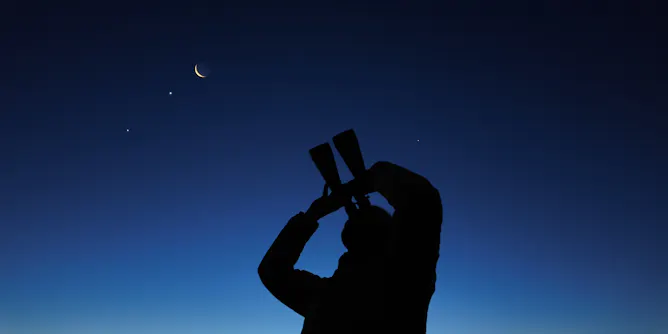
A look at the night sky forecast to motivate you to dust off your telescope for the darker nights of autumn.
Articles on Saturn
Displaying 1 - 20 of 66 articles
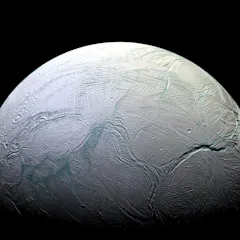
The icy moon appears to have an ocean of liquid water hidden under its outer shell.
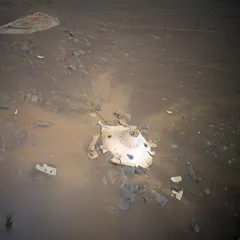
The US wants to put a flag on Mars. But there’s a risk it could carry unwanted stowaways that might compromise future scientific investigations.
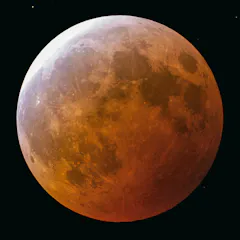
In 2025 we will see Saturn’s rings ‘disappear’, the Moon turning red, meteor showers and more.
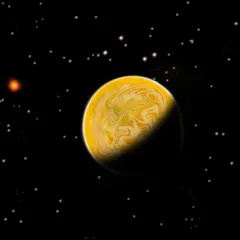
Astronomers have detected possible signs of gases released by volcanic activity.
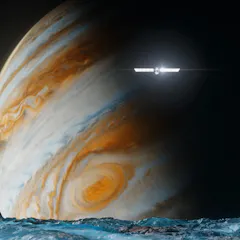
On October 10, Europa Clipper will take off on a long journey to Jupiter’s moon Europa. The icy moon could potentially host alien life – and there’s only one way to find out.

Saturn’s moon Enceladus has geysers shooting tiny grains of ice into space. These grains could hold traces of life − but researchers need the right tools to tell.
The Solar System could be awash with oceans, not on the surface but hidden inside the most surprising bodies

Among the missions being planned is a huge helicopter drone to explore Saturn’s moon Titan.
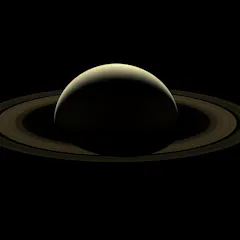
Viral headlines would have you think Saturn’s rings will vanish in just 18 months. Here’s what that really means and why you don’t need to worry.
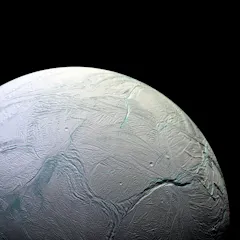
Phosphorus is the most elusive element crucial for life as we know it – and we now have the first evidence there’s some available in the oceans of Enceladus.
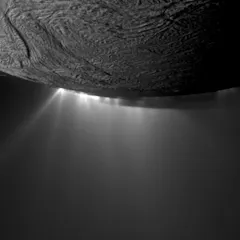
Five out of the six essential elements required for life on Earth were known to exist on Enceladus. Now the sixth and final one has been found too.

Female characters in Greek mythology lived under strict patriarchal rules, but they spoke truth to power and resisted injustice.
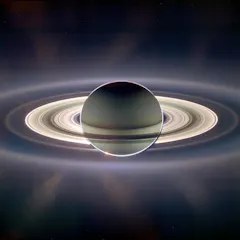
New research suggests Saturn’s rings may be surprisingly young.
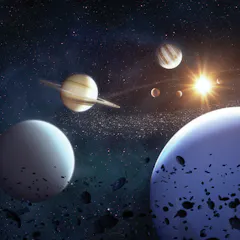
It all starts with a cloud of gas and dust.

A scholar of Greek mythology explains the naming of NASA’s missions after mythological figures and why the name Artemis is indicative of a more diverse era of space exploration.
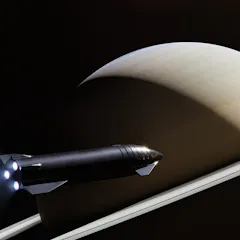
There has never been a dedicated mission sent to the “ice giants”, Uranus and Neptune. But there may be one on the horizon.
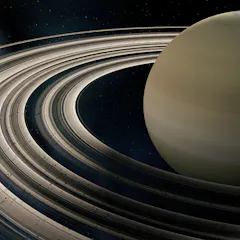
Saturn, Jupiter, Neptune and Uranus all have rings.
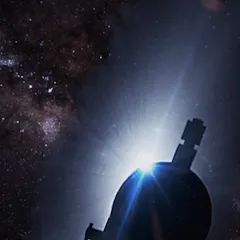
Such a mission could be developed soon, allowing astrophysicists to take selfies of the solar system and use the Sun’s gravity as a lens to peer deep into space.

Gravity, mass and centrifugal force all contribute to the final shape of a planet.
Top contributors
-

Senior Curator (Astronomy), Museums Victoria Research Institute; The University of Melbourne
-
Professor of Planetary Geosciences, The Open University
-
Professor (Astrophysics), University of Southern Queensland
-
Professor of Physics, Deputy Director (Solar System) at the Mullard Space Science Laboratory, UCL
-
Associate Professor of Classical Studies, Tufts University
-
Program Manager / Adjunct Research Fellow, Swinburne University of Technology
-
Facilities Program Director Nasa Operations Canberra Deep Space Communication Complex , CSIRO
-
Outreach Manager, Canberra Deep Space Communication Complex, CSIRO
-
Senior Instrument Scientist, Australian Nuclear Science and Technology Organisation
-
Professor of Planetary and Space Sciences, The Open University
-
Postdoctoral research associate, University of Oxford
-
Pro Vice-Chancellor Flagship Initiatives, Swinburne University of Technology
-
Research Fellow, La Trobe University
-
Associate Professor in Archaeology and Space Studies, Flinders University
-
Professor of Planetary Physics, UCL