
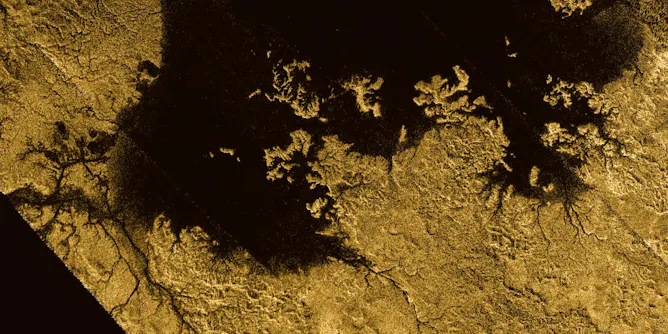
From the tallest cliff in the solar system to its largest impact basin, geological processes on other worlds are very similar to those on our own planet.
Articles on Saturn
Displaying 21 - 40 of 66 articles

From the birth of Jesus Christ to Newton’s discovery of gravity, great conjunctions of Jupiter and Saturn have many notable connections in human history.
The 2020 winter solstice is also when Saturn and Jupiter appear closest to each other for 60 years, Here’s what you need to know about both the events.
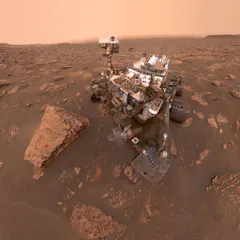
The clouds of Venus may harbour alien life. But where else?

We’re not sure how the rings work or how they formed, but there are a few theories.

Many people are still upset that Pluto was demoted from being a planet. But definitions of various celestial objects are fairly fluid. So whether it is an asteroid or moon or planet is up for debate.
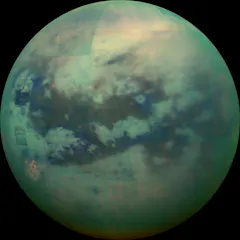
Saturn’s largest moon has been fully mapped for the first time.
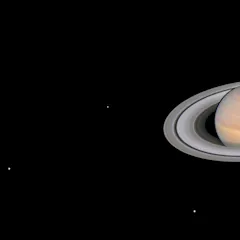
Astronomers have found 20 new moons around Saturn, and will keep finding more as technology improves.
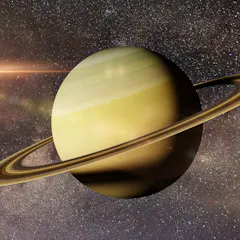
Most people think that many millions of years ago, Saturn didn’t have rings at all. Instead, it had a big moon moving around it. Eventually, the moon burst and broke into pieces.
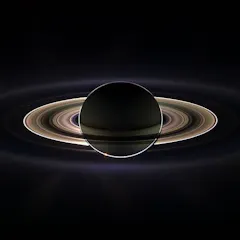
Although the rings of Saturn may look like a permanent fixture of the planet, they are ever-changing. New analyses of the rings reveal how and when they were made, from what and whether they’ll last.
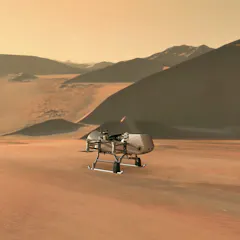
Titan may host primitive lifeforms and could tell us how life arose on our own planet.
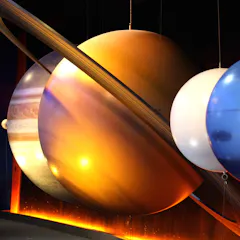
The five planets visible to the naked eye since ancient times are putting on a dazzling display this month, in a night-sky dance along with the Moon.
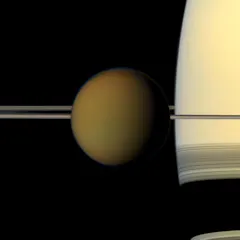
Titan is more than a billion kilometres from our Sun but occasionally it’s shadow can be seen here on Earth, with the right technology. That’s what scientists gathered in Western Australia to observe.
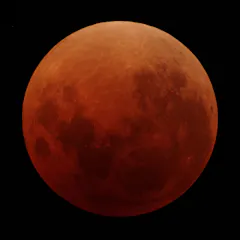
All five five planets visible to the naked-eye are on show in the night skies over Australia, and a Blood Moon on the way too.
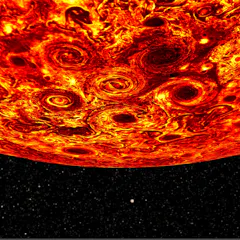
Surprising new results from the Juno mission may us help work out what’s going on at Saturn and other gas giants, too.
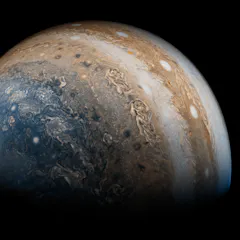
New experimental results on methane may help us to uncover whether Uranus really is the coldest planet.
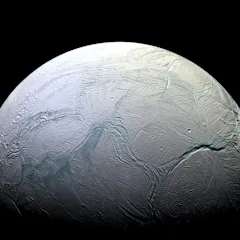
Scientists used to think that the ocean on Enceladus would be transient, perhaps freezing after a few million years. A new study suggests this isn’t the case.
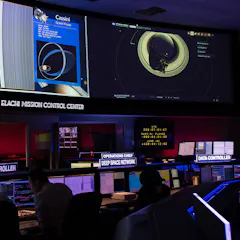
Cassini may be gone but the data it left behind could help reveal how long Saturn’s day is and how its magnetic field is generated.
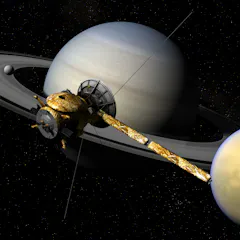
As Cassini’s titanic mission comes to an end, we need to start thinking ahead. A combined mission to explore Saturn’s moons Titan and Enceladus would be a good place to start.
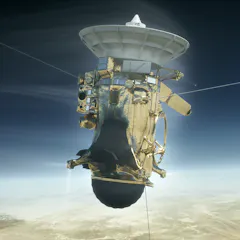
The last signals from Cassini space probe before it burns up in Saturn’s atmosphere will tracked by the Canberra Deep Space Communication Complex.
Top contributors
-

Senior Curator (Astronomy), Museums Victoria Research Institute; The University of Melbourne
-
Professor of Planetary Geosciences, The Open University
-
Professor (Astrophysics), University of Southern Queensland
-
Professor of Physics, Deputy Director (Solar System) at the Mullard Space Science Laboratory, UCL
-
Associate Professor of Classical Studies, Tufts University
-
Program Manager / Adjunct Research Fellow, Swinburne University of Technology
-
Facilities Program Director Nasa Operations Canberra Deep Space Communication Complex , CSIRO
-
Outreach Manager, Canberra Deep Space Communication Complex, CSIRO
-
Senior Instrument Scientist, Australian Nuclear Science and Technology Organisation
-
Professor of Planetary and Space Sciences, The Open University
-
Postdoctoral research associate, University of Oxford
-
Pro Vice-Chancellor Flagship Initiatives, Swinburne University of Technology
-
Research Fellow, La Trobe University
-
Associate Professor in Archaeology and Space Studies, Flinders University
-
Professor of Planetary Physics, UCL