
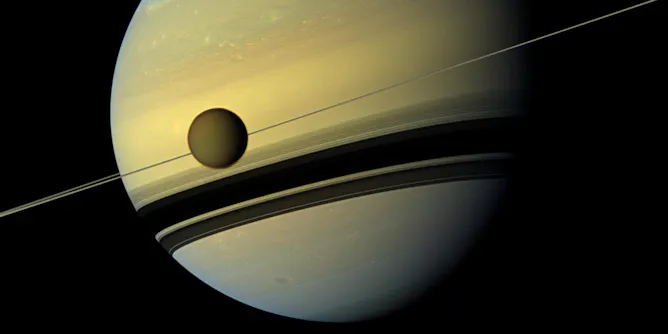
The Cassini space probe discovered liquid lakes, poisonous gases and the basic elements of life on Saturn’s moon, Titan.
Articles on Saturn
Displaying 41 - 60 of 66 articles
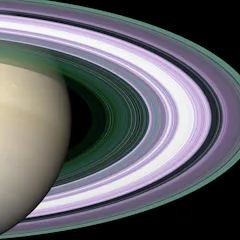
The Cassini space probe took us up close and through the beautiful rings of Saturn. It captured some amazing images, and even the sound of the rings during its mission.
The Cassini space probe discovered several new moons on its mission to Saturn, and revealed fresh views of the moons we already knew about.
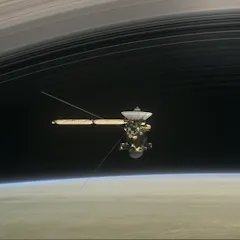
With only days to go before NASA’s Cassini space probe ends its two-decade mission to explore Saturn, what has it revealed about the ringed planet, the second largest in our solar system?
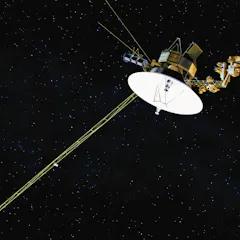
The Voyager space probes sent back some amazing images of the planets in the outer Solar System, and they’re still talking to Earth every day via Australia’s tracking station.
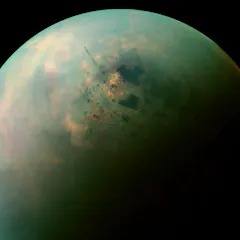
Scientists discover rare molecules on Titan which suggests it’s creating the building blocks of life.
Fingers on buzzers.
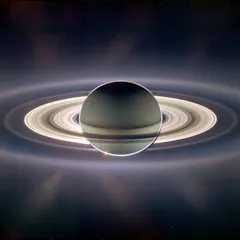
One of the most successful space exploration missions of all time still has a lot left to uncover.
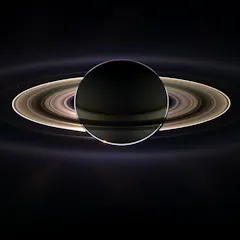
With the probe now on its ‘Grand Finale,’ a Cassini team member describes the amazing discoveries it made about the ringed planet and its many moons.
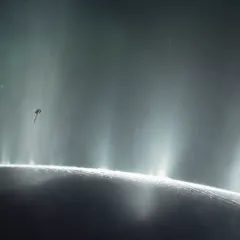
Earth is a relatively dry planet compared to some of the other ocean worlds in our Solar system. Life needs water so what about life on these other places?
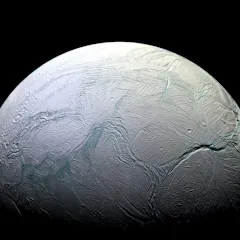
New findings make it hard to imagine a more important goal for solar system exploration than searching for microbial life in Enceladus’ internal sea.
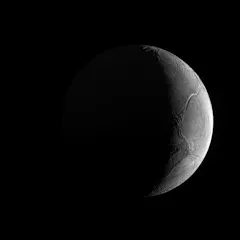
There has been much excitement this week about the possibility of water – and life – on some newly discovered exoplanets. But we can look closer to home for evidence of ET.
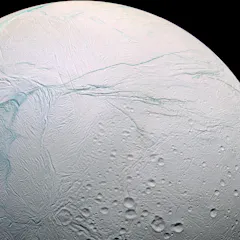
A new theory could change our understanding of the moons in our solar system – and the genesis of life itself.
It’s regarded as a Biblical myth, but what the magi are supposed to have seen is rooted in astronomy.

Recent Martian findings are just the latest discoveries of aurora on other planets, both in and out of our solar system.
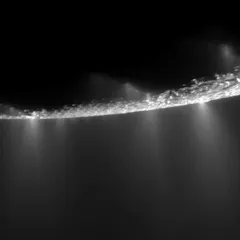
Study pinpoints some of the chemical signs of microbial life on Enceladus. The study could in part be corroborated by Cassini’s flyby of the moon.
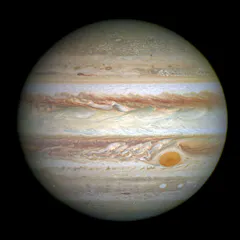
How a bunch of pebbles could have created Jupiter, Saturn, Neptune and Uranus.
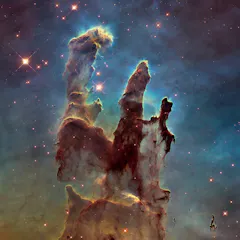
Astronomers from around the world identify their favourite images sent back to Earth by the Hubble Space Telescope.
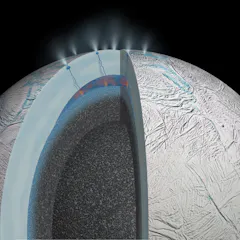
Saturn’s tiny moon Enceladus joins Europa and Mars as possible locations for life beyond Earth.
Look up at the night sky this week and you’ll find Mars and Saturn together in the west. Mars stands out with its reddish colouring and you might just be able to detect a faint yellow tinge to Saturn…
Top contributors
-

Senior Curator (Astronomy), Museums Victoria Research Institute; The University of Melbourne
-
Professor of Planetary Geosciences, The Open University
-
Professor (Astrophysics), University of Southern Queensland
-
Professor of Physics, Deputy Director (Solar System) at the Mullard Space Science Laboratory, UCL
-
Associate Professor of Classical Studies, Tufts University
-
Program Manager / Adjunct Research Fellow, Swinburne University of Technology
-
Facilities Program Director Nasa Operations Canberra Deep Space Communication Complex , CSIRO
-
Outreach Manager, Canberra Deep Space Communication Complex, CSIRO
-
Senior Instrument Scientist, Australian Nuclear Science and Technology Organisation
-
Professor of Planetary and Space Sciences, The Open University
-
Postdoctoral research associate, University of Oxford
-
Pro Vice-Chancellor Flagship Initiatives, Swinburne University of Technology
-
Research Fellow, La Trobe University
-
Associate Professor in Archaeology and Space Studies, Flinders University
-
Professor of Planetary Physics, UCL