
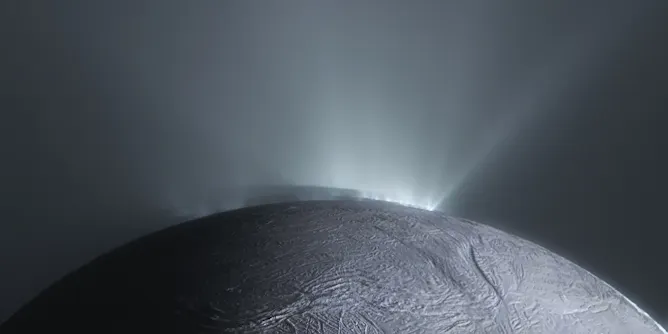
Future missions may be able to take only a small, damaged sample from space back to Earth. A simple analysis tool could help determine whether its contents suggest the presence of life.
Articles on Enceladus
Displaying 1 - 20 of 25 articles
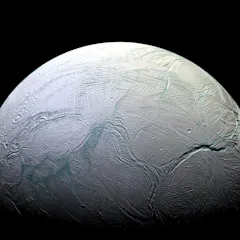
The icy moon appears to have an ocean of liquid water hidden under its outer shell.
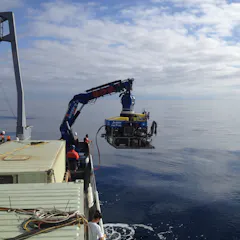
Microbes hidden deep in ocean volcanoes could resemble life on other planets or moons.
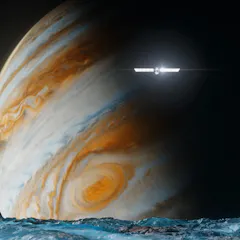
On October 10, Europa Clipper will take off on a long journey to Jupiter’s moon Europa. The icy moon could potentially host alien life – and there’s only one way to find out.

Saturn’s moon Enceladus has geysers shooting tiny grains of ice into space. These grains could hold traces of life − but researchers need the right tools to tell.
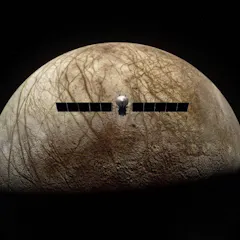
An instrument on the Europa Clipper mission might be able to detect biological cells from space.

The Solar System could be awash with oceans, not on the surface but hidden inside the most surprising bodies
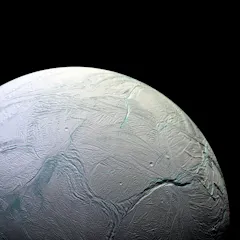
Phosphorus is the most elusive element crucial for life as we know it – and we now have the first evidence there’s some available in the oceans of Enceladus.
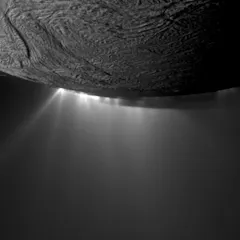
Five out of the six essential elements required for life on Earth were known to exist on Enceladus. Now the sixth and final one has been found too.
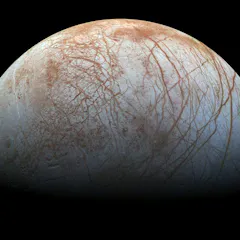
There may be life on Jupiter’s moon Europa or Saturn moon’s Enceladus.
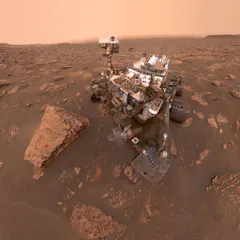
The clouds of Venus may harbour alien life. But where else?
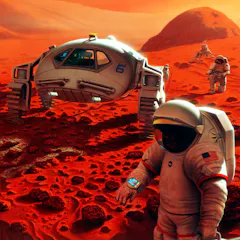
NASA’s InSight Mars lander touches down Nov. 26, part of a careful robotic approach to exploring the red planet. But human exploration of Mars will inevitably introduce Earth life. Are you OK with that?
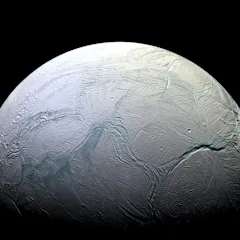
Scientists used to think that the ocean on Enceladus would be transient, perhaps freezing after a few million years. A new study suggests this isn’t the case.
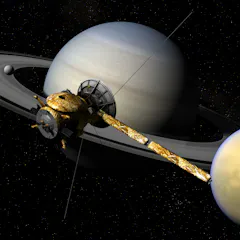
As Cassini’s titanic mission comes to an end, we need to start thinking ahead. A combined mission to explore Saturn’s moons Titan and Enceladus would be a good place to start.
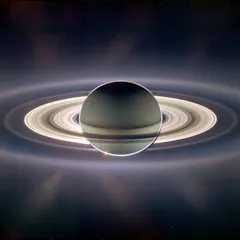
One of the most successful space exploration missions of all time still has a lot left to uncover.
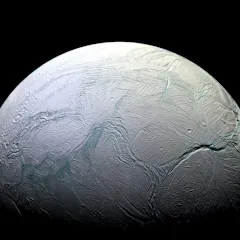
New findings make it hard to imagine a more important goal for solar system exploration than searching for microbial life in Enceladus’ internal sea.
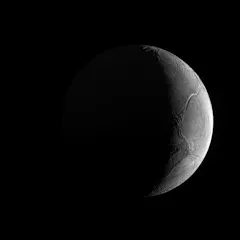
There has been much excitement this week about the possibility of water – and life – on some newly discovered exoplanets. But we can look closer to home for evidence of ET.
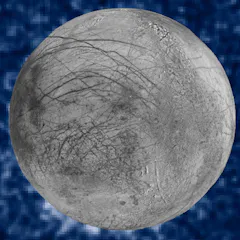
There’s now strong evidence that Europa might be a worthwhile place to search for life.
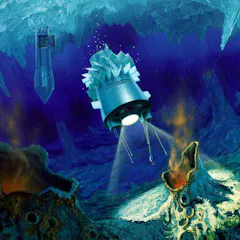
We could be exploring the oceans of Jupiter’s and Saturn’s icy moons in a couple of decades. Here’s what we need to work out.

Missions including ExoMars, Juno and Rosetta could make some major discoveries in 2016.
Top contributors
-

Professor of Planetary Geosciences, The Open University
-
Professor of Planetary and Space Sciences, The Open University
-
Professor of Physics, Deputy Director (Solar System) at the Mullard Space Science Laboratory, UCL
-
Senior Instrument Scientist, Australian Nuclear Science and Technology Organisation
-
Professor, Sapienza University of Rome
-
Professor of Astronomy, Vanderbilt University
-
Professor of Planetary Science, University of Leicester
-
Senior Lecturer, School of Chemistry, UNSW
-
Professor and Director of the Australian Centre for Astrobiology, UNSW
-
Postdoctoral research associate, University of Oxford
-
PhD candidate, Meteorology, University of Reading
-
Assistant Professor of Planetary Sciences, University of California, Riverside
-
Associate Professor, School of Chemistry, UNSW
-
Space Projects Manager & Mission Design Lead, University of Portsmouth
-
Research Fellow, ARC CoE Plants for Space, School of Molecular Sciences, The University of Western Australia