
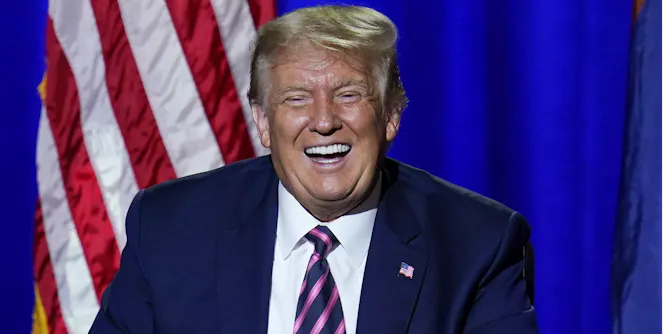
A political action committee of longtime Republican strategists is using satire to attack President Donald Trump and influence American voters.
Articles on Satire
Displaying 61 - 80 of 137 articles
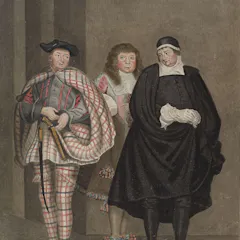
Puritans were often depicted as fools until they had a shot at government, and then the humour got darker.

The French satirical magazine republished the controversial caricatures of Prophet Muhammad. An expert says satire has often been a subject of condemnation.
Political satire is not dead – but it’s had to adapt since Donald Trump’s election.
What people find funny about politics depends largely on who is in power.

Amid the uncertainty and pain in the world magnified by COVID-19, puppeteers and jesters get away with telling hard truths and inciting cathartic laughter.
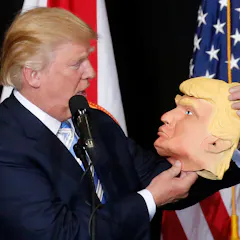
Donald Trump’s bizarre interview with journalist Jonathan Swan went viral this week. While some regard the US president as beyond parody, satire may be starting to bite as he slides in the polls.
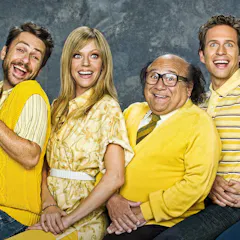
If it’s escapism you’re looking for, watch Schitt’s Creek or The Good Place. But if you want a dirty dive that makes the real world look good by comparison, try It’s Always Sunny in Philadelphia.
We all need reassurance and humour in the coronavirus pandemic. A best-of list of both biting satire and silly parody to beat the quarantine blahs.

Charlie Brooker shouting at the TV is the comic relief needed in the pandemic. The return of The Wipe is as pointed as it is hopeful.

Jokes and satire can build resilience but also spread misinformation as people don’t always know what is trustworthy and what is just funny.

It’s dehumanising when cartoonists use images of sexual violence to make broad-brush comments about society.
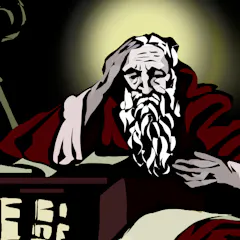
Theologian Franz Bibfeldt may never have lived, but his legacy continues in many important ways – most of all not to take ourselves too seriously.
The Church of the Flying Spaghetti Monster may seem to be a joke, but it highlights some real contradictions in secular societies.
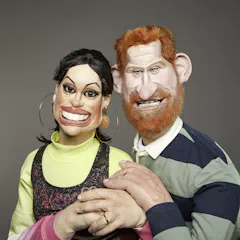
Satire can skewer a pompous or corrupt politician. But history shows it can also popularise its targets.

The second feature from the creator of Brass Eye and Four Lions is a savage spoof on the FBI’s counter-terrorism strategy.
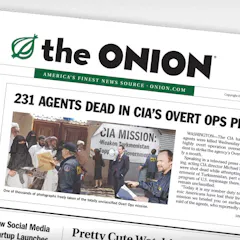
You might see a headline from The Onion or The Babylon Bee and, for a split second, think it’s true. But many social media users don’t get the joke – and share these articles as if they’re real.

Jon Stewart insists he is just a comedian, but his comic barbs have always had a political edge.
Public taste has changed and that is that. It’s not just the references that date in topical satire. Audiences are powerful, and if they feel insulted they can shut down a comedian.

Spoof Twitter accounts carry on a grand tradition of satire that has its roots in the 18th century.
Top contributors
-

Professor of English, Flinders University
-
Associate Professor in 18th-century Literature, York St John University
-
Lecturer in Journalism, Swansea University
-
Honorary lecturer, School of Social Sciences, UNSW
-
Professor of International Affairs and Comparative Literature, Penn State
-
Associate Professor in the Media School, Indiana University
-
Senior Lecturer in English Literature, York St John University
-
Lecturer in Creative Writing, Flinders University
-
Kidman Chair in Australian Studies and Director, JM Coetzee Centre for Creative Practice, Adelaide University
-
Assistant Professor of Experimental Psychology, Utah Valley University
-
Reader in International Political Economy, University of Warwick
-
Associate Professor, School of Communication, Queensland University of Technology
-
Professor of English, York University, Canada
-
Assistant Professor of Media Communication, University of Arkansas – Fort Smith
-
Emeritus Professor, Cardiff University