
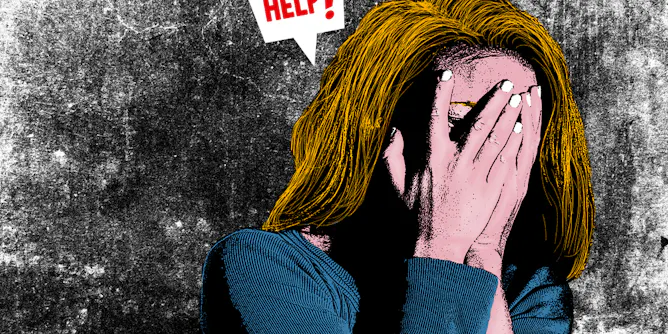
Not everyone will be celebrating this results day, so here’s a few words of advice for both students and parents, to help put things into perspective.
Articles on Resilience
Displaying 241 - 260 of 261 articles
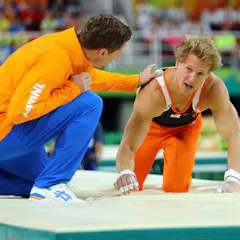
Some Olympic moments are a timely reminder of the human capacity to bounce back in the face of challenge or failure. But why do some people wilt, while others seem to do over or go again?

In response to disasters like Superstorm Sandy, engineers are developing new building codes and tools to calculate the value of upgrades. National policy should encourage builders to use these tools.

Why psychological pain and trauma could have some positive effects – but only for some people.
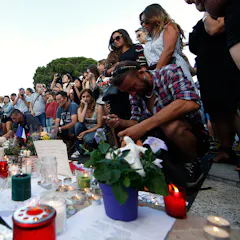
Our complex modern society is very vulnerable to everything from the attack in France to power failures. The good news is we can fix this.
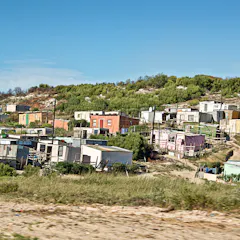
Many African cities are sites of rapid urbanisation. To ensure that such societies are water resilient, it is necessary to address formal and informal forms of development.
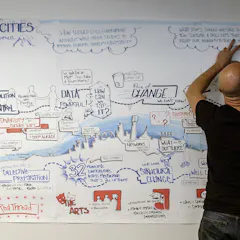
The Resilient Melbourne Strategy, adopted this month, marks a shift towards “whole-of-city” thinking.
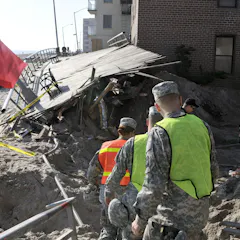
As Atlantic hurricane season opens on June 1, eastern U.S. cities can prepare by updating laws, codes and ordinances that hamper rebuilding after storms.
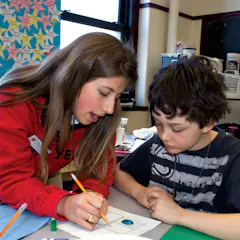
Many students are in the process of deciding whether to take a gap year – a year between high school and starting college. What does evidence tell us about taking a gap year?
The idea of resilience is important - but is it being co-opted in our workplaces?
The odds of recovering from a terrible experience are higher than you might think.
Markets have been on a rocky ride all year on concerns another recession looms. Here are a few lessons we can learn from the last one.
Hundreds of cities worldwide have pledged to act against climate change. New York City’s experience rebuilding after Hurricane Sandy offers useful lessons about making urban areas more resilient.
Want to build resilience in children? Tell them family stories of courage.
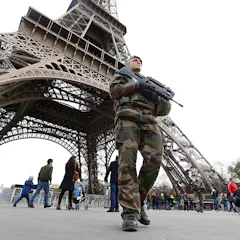
The root cause of our vulnerability is the structure of the global economy: highly interconnected, complex and filled with turbulence.
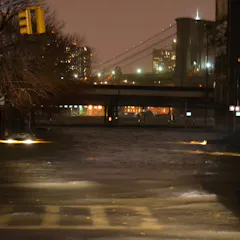
Study finds higher risk of flooding from a combination of storm surge and heavy precipitation, particularly along the East Coast of the US.
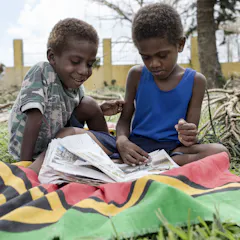
This Sunday marks 100 days since Cyclone Pam hit Vanuatu, with ceremonies in villages across the nation to mourn the 11 people who died. Meanwhile, islands left brown in the aftermath are green again.
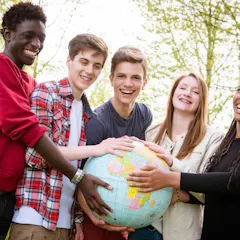
A new study has found that second-generation immigrant kids have a unique advantage over first-generation or even third-generation immigrants.
Five years on from the devastating Black Saturday fires that swept through central Victoria in February 2009, research shows that people and communities are largely recovering well. In the first major…

The Conversation is running a series, Class in Australia, to identify, illuminate and debate its many manifestations. Here, Katrina McFerran discusses how access to music education can reaffirm social…
Top contributors
-

Professor of Political Science, Public Policy and Urban Affairs, Northeastern University
-
Associate Professor and Canada Research Chair in Human Dimensions of Water Resources and Water Resilience, Brock University
-
Lecturer in Applied Sport & Exercise Psychology, University of Portsmouth
-
Associate Professor, Environmental Sustainability Research Centre, Brock University
-
Assistant Professor of Communication and Cognitive Science, University of California, Davis
-
Professor of Psychology, The University of Texas at Austin
-
Doctor of Philosophy, University of British Columbia
-
Executive Director, Sustainable & Resilient Economy, The Ohio State University
-
Assistant Professor, Department of Educational and Counselling Psychology and Canada Research Chair in Youth Suicide Prevention, McGill University
-
Lecturer in Psychology, University of Bradford
-
Associate Professor, Macquarie University
-
Senior Lecturer, School of Global, Urban and Social Studies, RMIT University
-
Assistant Professor, McGill Group for Suicide Studies, Department of Psychiatry, Faculty of Medicine and Health Sciences, McGill University
-
Associate professor, University of Johannesburg
-
Associate Professor, International Research Institute of Disaster Science, Tohoku University