

AI infractions could result in a year-long ban from the arXiv system, which is an essential communication channel in many fields of research.
Articles on Research integrity
Displaying 1 - 20 of 29 articles

Some industry-funded clinical trials show signs of being designed to market drugs rather than to test them for their safety and effectiveness. Detecting these studies remains difficult.

The safeguards in place to protect research integrity are not keeping pace with the tools that can be used to circumvent them.

Peer review is so integral to the scholarly system that research would grind to a halt without it.

Academic publishing now shows the same decline that has hit social media and online marketplaces.

Scientific misconduct can waste public funds and harm human health. But views differ about the best way to tackle it.

The Trump administration is not just reforming the US research system – it is trying to remake it.

The tool helped stop 45 flawed studies informing clinical guidelines for polycystic ovary syndrome.

Some academic publishers have been accused by scientists of being “too greedy” and prioritising profit over research integrity.

In 2023, more than 10,000 research papers were retracted because of scientific misconduct. But it’s not always deliberate.

Peer review ensures the findings of research are trustworthy. But what happens when it’s performed by an AI model?

Online surveys are a great way to gather data, but there is an increasing risk that data collection may be threatened by ‘bad actors’ and artificial intelligence.

Big tech doesn’t just fund research into itself – it also controls researchers’ access to data. Even big tobacco didn’t have this kind of power.

AI systems mass-producing cheap research would be bad news for an already struggling scientific ecosystem.
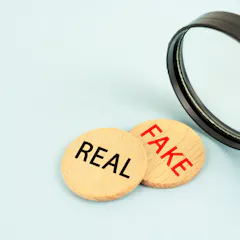
Paper mills rely on the desperation of researchers to fuel their business model.

Pressure to ‘publish or perish’ and get results out as quickly as possible has led to weak study designs and shortened peer-review processes.

The only way for science to fight the booming fake research industry is to fund smart, dedicated people to stay ahead of the fraudsters.

The movement to change the way researchers are measured should undoubtedly be embraced.

Australian scientists are no more honest or dishonest than those in other countries that have national bodies to investigate research fraud. We have a sport integrity watchdog but not one for research.

The government has breached the public’s trust and its own privacy policy by using Medicare data about Australians’ prescribing habits to recruit participants for a study.
Top contributors
-

Associate Professor, School of Law, University of Canberra
-
Associate Professor of Law, Bond University
-
Professor of Methodology and Integrity, Vrije Universiteit Amsterdam
-
Professor in Lyman Briggs College, Fisheries & Wildlife, and Philosophy, Michigan State University
-
Professor of Obstetrics and Gynaecology, Monash University
-
Professor of Violence Prevention and Addiction Studies, Deakin University
-
Professor of Public Relations, Michigan State University
-
Director of the Sainsbury Laboratory, University of Cambridge
-
Senior Lecturer in psychology, Keele University
-
Professor of Sociology, Michigan State University
-
Co-Director: Centre for Competition Law and Economics, Stellenbosch University
-
Assistant Professor of the History of Science and Technology, Durham University
-
Assistant Professor of Psychology, Grand Valley State University
-
Emeritus Professor, National Centre for Youth Substance Use Research, The University of Queensland
-
Visiting Fellow, Australian National Centre for the Public Awareness of Science, Australian National University