
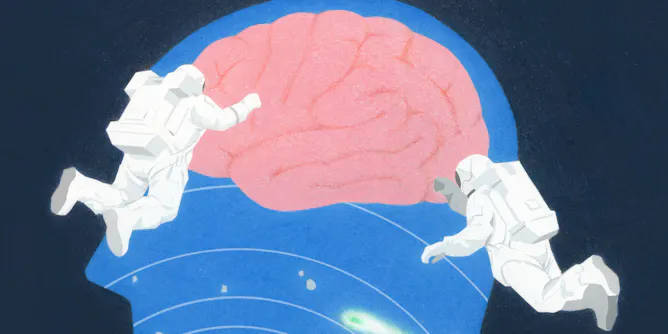
These changes aren’t permanent – the brain goes gradually back to normal after coming back to Earth. Understanding the physical effects of spaceflight helps plan space missions.
Articles on Research Brief
Displaying 41 - 60 of 636 articles

The reasons colleagues stay silent when co-workers are mistreated may not be what you assume − and it’s not what companies typically spend money on in their efforts to create a fair environment.

New research adds evidence to a common thesis offered after the end of the Cold War that globalization was making physical distance economically obsolete.

Priming people to watch out for political deepfakes helps them question the AI-generated videos.

Nearly three-quarters of tourism professors are white, a recent analysis found, and nearly half are white men.

Philosophers from Aristotle to Nietzsche have debated whether being virtuous only helps others, or if it benefits the virtuous person, too.

With targeted support, refugees are more likely to gain employment, increase their savings and find safety if not housed in camps, study finds.
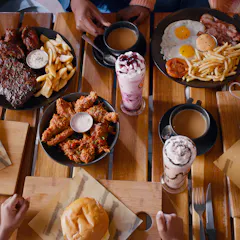
Older adults whose diets consisted of only 15% ultraprocessed foods – rather than the usual 50% – had lower weight, insulin and cholesterol.

By openly saying, ‘This isn’t for you,’ brands signal focus and specificity. That helps the right customers feel a stronger connection.

Girls are at an even greater risk of early substance use than boys.

Obituaries reveal shifting cultural values across time and place. Here’s a glimpse into how the moral vocabulary has evolved over several decades.
A new tool lets researchers get a handle on how social media algorithms affect emotions and polarization.

Those driven by both heart and mind help the most people, even far beyond their own circle.

A survey of 849 professional Santas found that one-third of them don’t match the usual image of a roly-poly bearded white man.

Doing the mental work of connecting the dots across multiple web queries appears to help people understand the material better compared to an AI summary.

The achievement gap in reading is evident by students’ first year of school, according to a new study – making early intervention all the more important.

When it comes to buying sex toys, diarrhea medication and acne cream, consumers like the impersonal touch.

These findings support a paradox: When a business handles a problem well, its customers can become more loyal than if no problem had occurred.

Pretty isn’t always profitable.

Two economists found links between the adoption of right-to-work laws and the opioid overdoses of working-age male teens and men.
Top contributors
-

Assistant Professor of Psychology, Arizona State University
-
Director, Institute for Social and Health Equity, University at Albany, State University of New York
-
Distinguished Professor of Pharmacy Practice, University of Connecticut
-
Associate Professor of Nonprofit Studies, George Mason University
-
Assistant Professor of Social Psychology, University of Utah
-
Professor of Economics and Education Policy, New York University
-
Associate professor, Bowling Green State University
-
Associate Professor of Education, University of Southern California
-
Associate Professor of Mechanical, Aerospace and Biomedical Engineering, University of Tennessee
-
Ben L. Fryrear Chair in Marketing and Associate Professor of Business Administration, University of Pittsburgh
-
Professor of Communication, The Ohio State University
-
Associate Professor of International Business, University of South Carolina
-
Associate Professor of Communication, Michigan State University
-
Associate Professor of Quantitative Marketing and Analytics, Binghamton University, State University of New York; Indiana University
-
Senior Research Fellow and Lecturer of Gerontology, UMass Boston