

When states prohibit parents from opting their kids out of vaccines for religious, philosophical or other nonmedical reasons, communities stay better protected against infectious diseases.
Articles on Research Brief
Displaying 61 - 80 of 636 articles

New research on 224 corporate apologies suggests investors reward leaders who take personal responsibility – with one key exception.

Relying on flexible labor arrangements does not provide lasting financial benefits for nonprofits, making them more of a Band-Aid than a cure.

Federal funding cuts are destabilizing many food pantries, homeless shelters, mental health clinics and other nonprofits, threatening the services they provide.

This lens modeled on biological eyes could make it easier to give soft machines and bio-safe tools the ability to see.

The researchers found that mRNA-based COVID-19 vaccines could potentially help patients whose tumors don’t respond well to traditional immunotherapy.

People who highly value equality and purity are most likely to see excessive wealth as wrong, a new study suggests.

Common chatbots produce generic lesson plans that are unlikely to improve learning, a study finds. It shows how teachers should be critical users – not rapid adopters − of generative AI.

In hot housing markets, buyers who outbid rivals often overpay – and face higher risks of loss and foreclosure.

Seasonal allergies may seem like a minor, passing inconvenience. But pollen seasons can take a real toll on mental health.
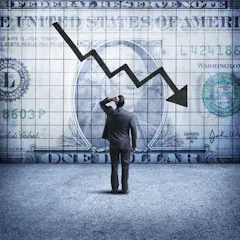
Partisan bias doesn’t stop with voters. When Republicans hold the White House, Republican economists consistently overshoot on growth forecasts.

A new study found that, on average, infant deaths increased by more than 7% in states with laws that limited abortions.

Responsible borrowers are locked out of the global financial system for reasons beyond their control. A study looking at shopping habits offers a novel solution.

Philosophers are fond of saying that their field boosts critical thinking. Two of them decided to put that claim to the test.
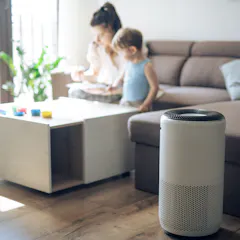
Manufacturers often make bold claims about how well these technologies work. Better testing would allow consumers and institutions to pick the most effective ones.

Consumers perceive some misspellings positively, but only if the unconventional spelling is relevant and not too extreme, according to a new study.
Survey shows students rapidly picked up chatbots, but perhaps surprisingly, they more often used it to augment their learning, rather than hand work off.

College students need to learn how to talk about religion with people of different faiths, two scholars write.

Those signs about surprise insurance charges are intended to keep patients informed – but new research points to a negative side effect.

Statistics shows data is often grouped on a bell curve distribution, but a business study reveals that extreme outliers can skew research – with big implications.
Top contributors
-

Assistant Professor of Psychology, Arizona State University
-
Director, Institute for Social and Health Equity, University at Albany, State University of New York
-
Distinguished Professor of Pharmacy Practice, University of Connecticut
-
Associate Professor of Nonprofit Studies, George Mason University
-
Assistant Professor of Social Psychology, University of Utah
-
Professor of Economics and Education Policy, New York University
-
Associate professor, Bowling Green State University
-
Associate Professor of Education, University of Southern California
-
Associate Professor of Mechanical, Aerospace and Biomedical Engineering, University of Tennessee
-
Ben L. Fryrear Chair in Marketing and Associate Professor of Business Administration, University of Pittsburgh
-
Professor of Communication, The Ohio State University
-
Associate Professor of International Business, University of South Carolina
-
Associate Professor of Communication, Michigan State University
-
Associate Professor of Quantitative Marketing and Analytics, Binghamton University, State University of New York; Indiana University
-
Senior Research Fellow and Lecturer of Gerontology, UMass Boston