
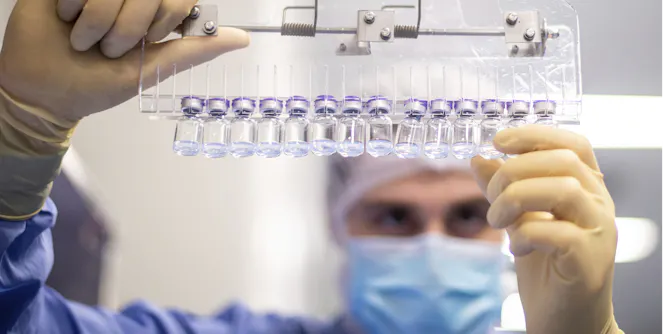
The type of deep-tech ventures behind mRNA vaccines are key to economic prosperity and sustainable development.
Articles on Research and development (R&D)
Displaying 41 - 60 of 139 articles
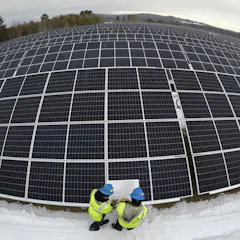
The US is generating more electricity than ever from wind and solar power – but often it’s not needed at the time it’s produced. Advanced energy storage technologies make that power available 24/7.

The COVID pandemic is giving drug companies an opportunity to reset their image. So how did they get so big and their credibility sink so low?
Stronger agricultural R&D systems will enable agriculture to power Africa’s transformation.

My new research shows Australia has spent more subsidising fossil fuel research indirectly via research and development tax credits than directly via grants.

A biomedical engineer explains the basic research that led to the discovery of insulin and its transformation into a lifesaving treatment for millions of people with diabetes.

Australia’s R&D expenditure as a percentage of gross domestic product has declined over the past decade.

Experts assess Nigeria’s response to COVID-19 so far and express worry that the country does not appear to have learnt much; it isn’t prepared for the next pandemic.

The lack of dedicated funding and support for research commercialisation, on top of the other obstacles academics face, means Australia’s poor performance is no mystery.

To drive living standards upward we need new technologies to relentlessly improve productivity.

The ubiquity of mobile phones is a defining feature of the 21st century, but it’s been possible to place a phone call on the go since shortly after World War II.

Just 5% of Australian businesses have collaborated with university researchers, and the smaller the company, the less likely collaboration.
The government’s 10-year target is to increase research and development funding to 2% of GDP. Investment in science in the latest budget is out of step with that goal.

Scientific knowledge is a critical driver for human health and wellbeing, economic development and environmental sustainability.

Lowering the tax rates on profits from patents registered in Australia is unlikely to increase local research and development. But it will be a gift for multinationals.

The federal government is right to focus on improving Australian universities’ success rate in commercialising research, but can take specific steps itself to help achieve this.

Government incentives might boost the numbers of collaborative research projects, but academics also must work on their relationships with industry practitioners to ensure everyone contributes fully.

The recent arrest of a Chinese-born scientist at MIT raises questions about the value of international science collaboration and its impact on the American innovation system.
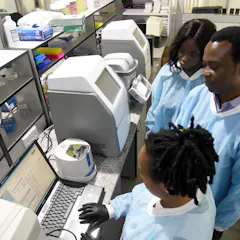
Thanks to major science infrastructure, human resource training and education investment in African nations, the continent is well placed to lead from the front.
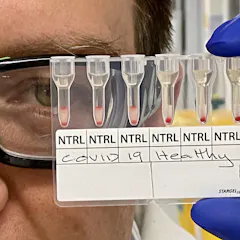
As well as extra funding for research beyond what has been announced in the budget for 2021, Australia must take half-a-dozen further steps to put the research sector back on a sound footing.
Top contributors
-

Emeritus Professor of Innovation, University of Technology Sydney
-
Professor of Public Affairs, The Ohio State University
-
Professorial fellow, Flinders University; Australian National University
-
Director of the MacDiarmid Institute for Advanced Materials and Nanotechnology, University of Auckland, Waipapa Taumata Rau
-
Director, Melbourne Institute of Applied Economic and Social Research, The University of Melbourne
-
Professor of Public Policy, ADFA Canberra, UNSW
-
Previous Vice President of the Academy of Science of South Africa and DSI-NRF SARChI chair in Fungal Genomics, Professor in Genetics, University of Pretoria, University of Pretoria
-
Professor of Research Policy, Department of Science, Technology, Engineering and Public Policy, UCL
-
Director of Research, US Studies Centre, University of Sydney
-
Innovator in Residence, University of Oxford and Emeritus Professor, School of Business, The University of Queensland
-
Honorary Professor, TU Wien
-
Senior Research Scientist, African Population and Health Research Center
-
Director of programmes, African Academy of Sciences
-
Associate Professor, Bond Business School, Bond University
-
Assoc Prof. Renewable Energy, Monash University