

The Australia 2030: Prosperity Through Innovation report offers five “imperatives for action”: Education, Industry, Government, Research and Development, and Culture and Ambition.
Articles on Research and development (R&D)
Displaying 81 - 100 of 139 articles

Calestous Juma believed that Africa needed an integrated science, technology and innovation framework. The continent can make this happen.

A new study connects the dots between published science and patented innovations, mapping just how society benefits from basic scientific research.

Research dollars don’t stay locked up in academia and government labs. R&D collaborations with the private sector are common – and grow the innovation economy.

Without leading edge innovations and coordination, Canadians will die from the epidemic of antibiotic resistant infections.

President Trump’s budget reportedly will slash funding for clean energy research and development. An energy expert explains the importance of government support and spotlights some key opportunities.
R&D support is not the only way public policy can help create new industries.
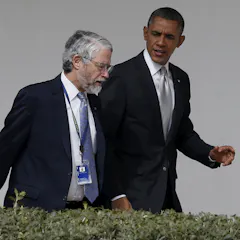
Innovation is a huge part of economic growth – and the White House needs to be well-informed on science and tech issues when setting goals and budgets. Here’s how presidents get up to speed.
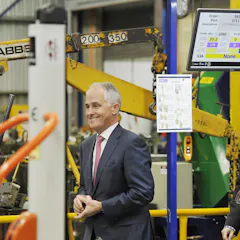
The collapse of the car manufacturing industry will require more investment in R&D and technological innovation to ensure Australia doesn’t fall behind.

With federal support for on-campus R&D dwindling as a percentage of GDP, keeping basic research afloat is a challenge. Schools and researchers are left to try to fill in the funding gaps.

Neither major party has made science and engineering issues a big part of its platform. But research – and its funding – are crucial if the U.S. wants to maintain status as a global leader.

The tax system is only one of several ways R&D can and should be incentivised.

There is a very real risk that South Africa’s major research projects will stumble and the whole research machine will be shut down by ongoing student protests.

South Africa must examine how science funding is allocated to universities. It also needs to acknowledge that not all universities should be focusing on research and development.

Australia’s relatively small market size means it must rely more heavily on international markets to innovate.
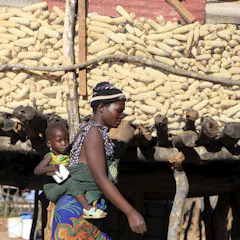
Economic growth alone won’t end hunger. Good policies and programmes are needed, too. Scientists and researchers have a role to play in these initiatives.

Research and development investment remains stagnant in Australia. It’s time for a new, long-term strategy for research.
Policies for encouraging research, development and startups are good but both major parties need to move beyond this to help Australia innovate.
There are a number of stumbling blocks to intra African collaboration. These must be addressed to ensure that research is not duplicated and that findings are shared.
Successful economies are led by innovation and driven by knowledge. For Africa to advance, it needs to make more substantial investments in its research and development sector.
Top contributors
-

Emeritus Professor of Innovation, University of Technology Sydney
-
Professor of Public Affairs, The Ohio State University
-
Professorial fellow, Flinders University; Australian National University
-
Director of the MacDiarmid Institute for Advanced Materials and Nanotechnology, University of Auckland, Waipapa Taumata Rau
-
Director, Melbourne Institute of Applied Economic and Social Research, The University of Melbourne
-
Professor of Public Policy, ADFA Canberra, UNSW
-
Previous Vice President of the Academy of Science of South Africa and DSI-NRF SARChI chair in Fungal Genomics, Professor in Genetics, University of Pretoria, University of Pretoria
-
Professor of Research Policy, Department of Science, Technology, Engineering and Public Policy, UCL
-
Director of Research, US Studies Centre, University of Sydney
-
Innovator in Residence, University of Oxford and Emeritus Professor, School of Business, The University of Queensland
-
Honorary Professor, TU Wien
-
Senior Research Scientist, African Population and Health Research Center
-
Director of programmes, African Academy of Sciences
-
Associate Professor, Bond Business School, Bond University
-
Assoc Prof. Renewable Energy, Monash University