

New research adds evidence to a common thesis offered after the end of the Cold War that globalization was making physical distance economically obsolete.
Articles on Research
Displaying 41 - 60 of 945 articles
There’s a worry that AI will take away student voice and agency.

When you outsource romance, there’s a hidden emotional cost.

Nearly three-quarters of tourism professors are white, a recent analysis found, and nearly half are white men.
AI-mediated culture is already being filtered in ways that favor the familiar, the describable and the conventional.

More organizations are letting AI act on their behalf, but far fewer have mature governance to manage the consequences.
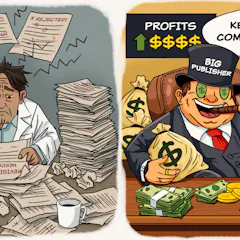
Academic publishing system often allows scientific errors to persist because it prioritises profit and prestige over timely correction.

Researchers who focus on one specialty are more likely to rise through the academic ranks, even though wicked societal problems require crosscutting work to solve.

A lack of access to child care costs the state an estimated $2.7 billion in lost productivity and revenue.

When cities burn, plastics, electronics, cleaning chemicals and much more create a toxic brew. Studies launched during the LA fires a year ago show exposure is often strongest inside homes.

US science lost a great deal in 2025, including tens of billions of dollars of federal funding, entire research agencies and programs, and a generation of researchers.

Whistleblowers’ stories show how accountability is shifting from formal legal institutions to solidarity networks built outside the state.

The impostor phenomenon shows up with allyship too, new research shows. When people wrongly feel like they don’t have the skills to support their colleagues, the result can be a vicious cycle.

My team analyzed decades of research on family businesses to find out their secret sauce. Three key differences help them keep an edge over competitors.

Research on millionaire migration reveals that social and professional ties matter far more than marginal tax rates.

The tools reveal how Aboriginal ancestors survived and thrived in the continent’s interior more than 100 years ago.

The people who manage America’s aquifers, wetlands, shorelines and recreation areas rely on federal science as they face new and rising risks in a changing climate.

Doing the mental work of connecting the dots across multiple web queries appears to help people understand the material better compared to an AI summary.

By cultivating ‘parasocial’ bonds, digital creators and microinfluencers have turned personal connection into economic power.

The evolutionary science of weight regain unpacked.
Top contributors
-

Professor of Marketing, The Ohio State University
-
Associate Professor (Law), Southern Cross University
-
Cornelia H. Dudley Professor of Psychology, Knox College
-
Professor of Psychology, San Diego State University
-
Professor of Psychology, Dickinson College
-
Associate Professor (hon) at the Centre for Public Awareness of Science, Australian National University
-
Associate Professor of Psychology, Michigan State University
-
Director, Melbourne Institute of Applied Economic and Social Research, The University of Melbourne
-
Professor of Health Services and Policy Research, University of British Columbia
-
Previous Vice President of the Academy of Science of South Africa and DSI-NRF SARChI chair in Fungal Genomics, Professor in Genetics, University of Pretoria, University of Pretoria
-
University Distinguished Professor of Astronomy, University of Arizona
-
Professor of Psychology, Michigan State University
-
Associate Professor of Communication, Michigan State University
-
Professorial Fellow, University of Canberra
-
Professor, Chemistry and Biochemistry, Laurentian University