

The National Day for Truth and Reconciliation on Sept. 30 invites people across Canada to learn about the history and impacts of the residential school system.
Articles on Reparations
Displaying 1 - 20 of 82 articles
New data show just four of the 19 targets are being met or are on track to be so. With such a poor track record, it’s time for a different approach.
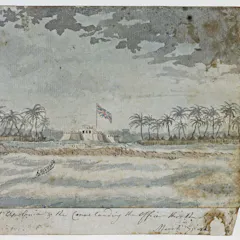
Why did Appolonia trade so few enslaved people? Short answer: unique economy and sacred beliefs.

Laws put in place after the war aimed to return stolen belongings and offer war damages to victims. In reality, many Jewish families faced lengthy waits and legal hurdles.
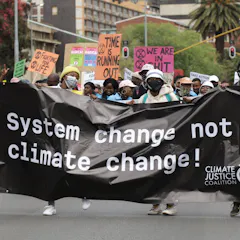
Recycling and cutting personal waste isn’t enough. Polluters must be regulated, and reparations paid by companies that have harmed the environment.

The ruling stems from the harm island nations are suffering as sea level rises, and it opens a door for future claims for reparations. But getting to that point isn’t so simple.
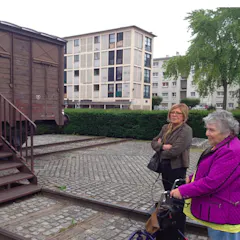
Even when companies do not face legal liability, public pressure can help force a reckoning with complicity in genocide, slavery and other atrocities.
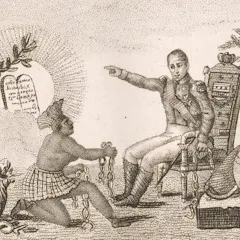
After being exploited for decades by France, Haiti ended up forking over huge sums of money to its former colonizer. Now, the Caribbean nation’s calls for restitution are becoming harder to ignore.

‘40 acres and a mule’ never happened. Now governments and communities across the US are redistributing land and wealth, from Evanston, Illinois, to Athens, Georgia.
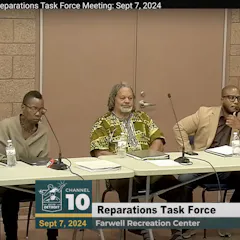
19 US cities have introduced local reparations initiatives to address historic harms against Black residents. But designing a program that is both popular and sustainable isn’t easy.
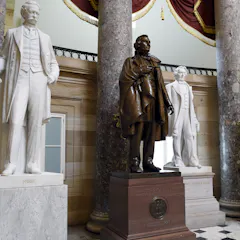
Researchers measured lawmakers’ wealth and found that those whose Southern ancestors owned slaves before abolition have a higher net worth today.
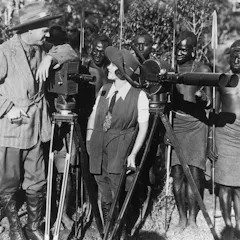
African news media have continued many of the damaging norms of how western media report on the continent. It’s time for a rethink.
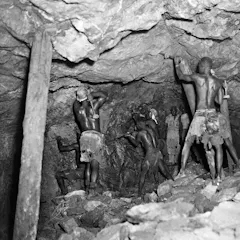
Corrective policies should be implemented as part of a holistic, long-term strategy to address historical injustices and create a more equitable South African society.
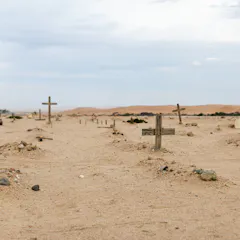
The Long Shadow of German Colonialism tells of a brutal history, and how this past lives on today.
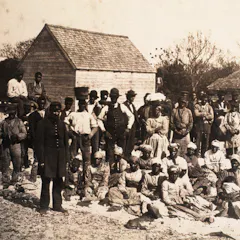
Since the 1930s, the federal government has made payments to victims of financial hardships and social injustices. But for those suffering from the harms of slavery, the US remains silent.

Not all reparations involve money. Returning unique scientific resources is also a way of showing respect and righting past harms.

War is wreaking havoc on land, water and critical infrastructure in Ukraine and Gaza. Two experts on peace and conflict explain how to include such impacts in peace agreements.

Uganda, as the concerned state party, is expected to go out and find Dominic Ongwen’s victims.
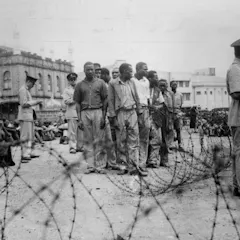
Thousands of Kenyans were held in detention camps, and the British imperialist government tried to cover up brutal violations that occurred there.

Fewer than a quarter of once-colonized countries make official government-to-government requests for an apology or reparations.
Top contributors
-

Professor Emeritus, Department of Political Science, Wilfrid Laurier University
-
Extraordinary Professor, Department of Political Sciences, University of Pretoria
-
Professor in Political Science, Arnold Bergstraesser Institute
-
Assistant Professor, Friedrich-Schiller-Universität Jena
-
Professor of Human Rights and International Humanitarian Law, Queen's University Belfast
-
Professor of French and African American Studies, Yale University
-
Lecturer in Law, University of East London
-
Associate Professor of Public Policy, University of Connecticut
-
Professor of Anthropology, University of the Western Cape
-
Professor of Political Science, Texas Tech University
-
Presidential Professor of Sociology and History, Graduate Center, City University of New York
-
Senior Lecturer in Law, University of Essex
-
Professor of Law and Dean's Fellow, Indiana University
-
Reader in American history, University of Warwick
-
Director of History & Policy at the Institute of Historical Research and Professor of British and Commonwealth History, School of Advanced Study, University of London