
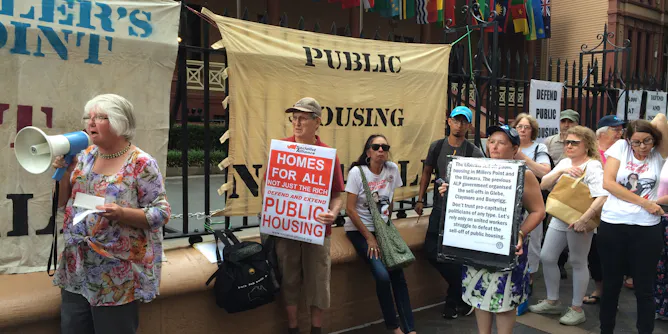
The need to manage long waiting lists for social housing, rather than serving the best interests of tenants and prospective tenants, is a major driver of policymakers’ approach.
Articles on Rental housing
Displaying 81 - 100 of 145 articles

Whether you owned a home or not used to be straightforward. The boundaries are becoming permeable.
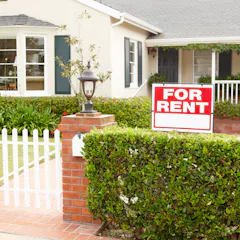
Not all landlords see their properties purely as investments. As welfare reforms take hold, some are starting to take greater responsibility for the well-being of their tenants.

Increasing numbers of older Australians don’t own their homes. Whether they are private renters or live in social housing can make a big difference to their risk of loneliness and anxiety.
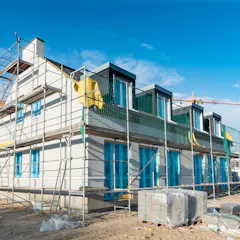
People on the minimum wage can afford only 2% of private rentals and only 1% if on the pension. Affordable housing requirements are often mandatory overseas, but Victoria is relying on negotiation.
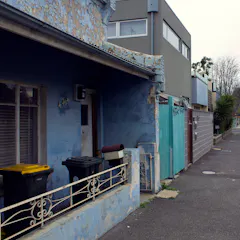
Having quality housing matters. What’s standing in the way of ensuring every Australian has housing that meets basic comfort and health standards? And how can we overcome these problems?
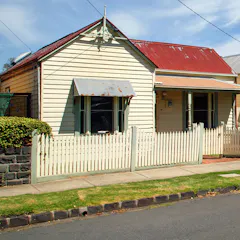
The real estate industry acts in its own interests, not those of the tenants it scares.
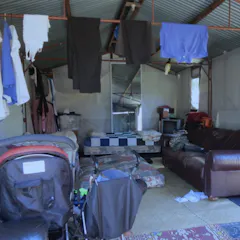
With Australian city rents too high for low-income earners, increasing numbers are forced to share houses or rooms or to live in options like ‘beds in sheds’ and other illegal dwellings.
The problems with housing systems in Australia and similar countries run deep. Solutions depend on a fundamental rethink of our approach to housing and its central place in our lives and the economy.
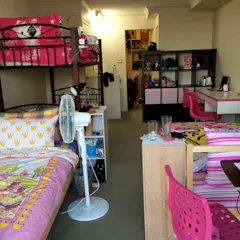
Living in shared rooms is on the rise, because it’s more affordable – and more profitable for landlords. But it’s also a more precarious, often overcrowded and poorly regulated form of housing.
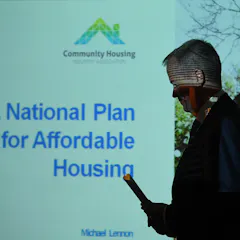
Labor has made a substantial commitment to tackling inequality in Australia, but has taken a second-best approach to overcoming the huge shortfall of social housing.
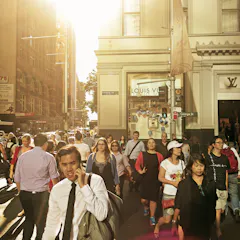
Asian Australians experience high levels of racism. Almost six in ten Asia-born Australians report having had experiences of discrimination when trying to rent or buy housing.
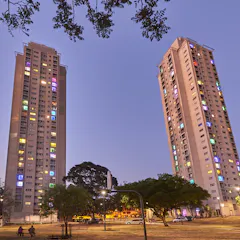
Working-class residents of Waterloo have a history of resisting threats to their community. Many tenants see the redevelopment of public housing as state-led gentrification to squeeze them out.
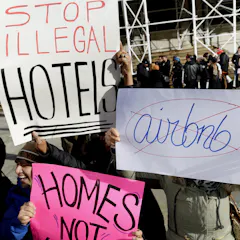
Short-term letting via digital platforms benefits some in the market at the expense of others. Closer regulation might be needed in Melbourne and Sydney, where a permissive approach prevails.
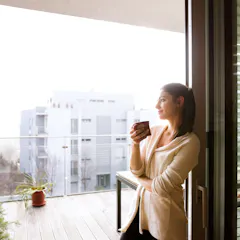
Renting a house shouldn’t mean it’s not home. Until we change our meaning of home by separating it from ownership, we will never be able to “fix” Australia’s housing crisis.
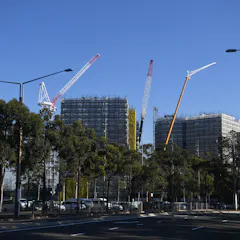
Governments should stop offering false hopes and pandering to NIMBY pressures. As well as increased public and private housing supply, growing cities need well-designed higher-density development.

Proposed changes to NSW rental tenancy law are an improvement, but do not end the excessive rent increases and “no grounds” evictions that put renters – and older women in particular – at risk.

Residential tenancy reforms are before the NSW parliament, but a key reform is missing. In this open letter, housing academics call for an end to landlords’ power to terminate leases with ‘no grounds’.

Until now most people have eventually owned a home. But two trends – falling ownership and a growing aged population – will put the budgets of retirees and government under real pressure.
Property prices have soared in the past decade, but much more modest increases in rent, with the exception of Sydney, suggest less of an imbalance of supply and demand for housing as a place to live.
Top contributors
-

Emeritus Professor of Housing, UNSW
-
Alan Morris is a Friend of The Conversation.
Professor, Institute for Public Policy and Governance, University of Technology Sydney
-
Senior Research Fellow, City Futures Research Centre, UNSW
-
John Curtin Distinguished Professor, Curtin University
-
Professor of Housing Research, Adelaide University
-
Associate Professor, Geography and Urban Studies, Western Sydney University
-
Professor of Housing & Social Policy, HHAUS Housing, Homelessness & Urban Studies, Swinburne University of Technology
-
Professor of Urban and Regional Planning, University of Sydney
-
Professor of Social Epidemiology and Director of the Centre of Research Excellence in Healthy Housing at the Melbourne School of Population and Global Health, The University of Melbourne
-
Emeritus Professor, Urban Planning and Policy, University of Sydney
-
Research Associate, HHAUS research group, Swinburne University of Technology
-
Associate Professor & Associate Investigator ARC Centre of Excellence for Automated Decision Making + Society, Swinburne University of Technology
-
John Curtin Distinguished Professor, Curtin Business School, Curtin University
-
Associate professor in urbanism, University of Sydney
-
Research Associate, Centre for People, Organisation and Work, RMIT University