
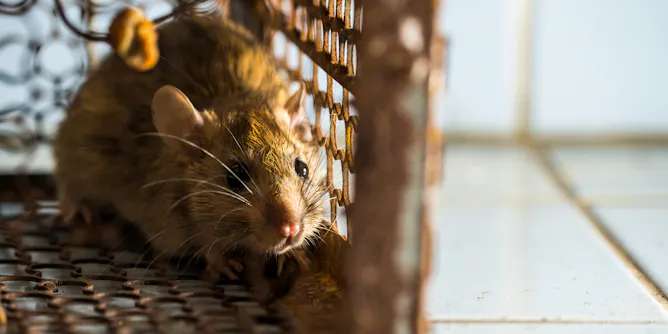
Calling an animal a ‘pest’ can sometimes cause more harm to people than the animal itself.
Articles on Rats
Displaying 1 - 20 of 59 articles
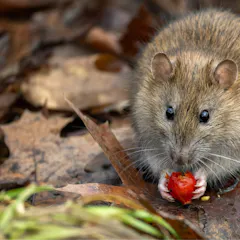
An archaeologist reveals what she learned from sifting through a 200-year-old rat nest recovered from a historic Philadelphia home.
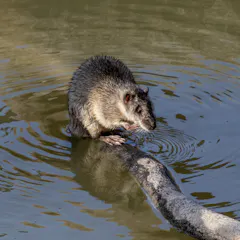
Ever wondered who would win a fight between an Australian and an introduced rat? New research provides the fascinating answer.
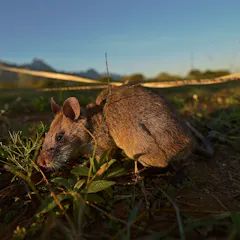
When occurring in nature, mpox is mostly confined to the humid forest regions of west and central Africa.

Equipped with a rodent version of a Cybertruck, these driving rats reveal that positive experiences may sculpt the brain just as powerfully as stressful ones
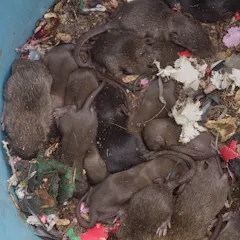
Using birth control to manage rat infestations is a temporary and inefficient approach. Any successful rat management programs would require multiple collaborative approaches.
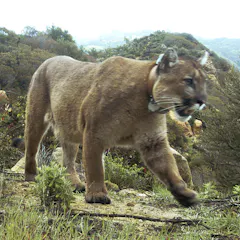
Modern rodenticides can kill rats with a single dose and readily pass up the food chain to larger carnivores. They are widely used and largely unregulated.
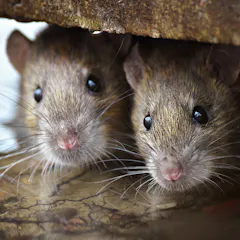
Rats are well known to cause problems for humans. But we need a new approach to our relationship with them.
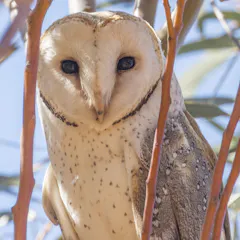
There’s shocking new evidence of rodenticide poisoning in Australia’s nocturnal predatory birds. High concentrations of the active ingredients were found in 92% of the 60 dead birds they tested.

Here’s what determines if a problematic wild animal is saveable or cullable.
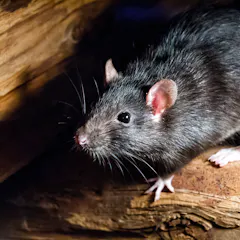
Recent research suggests rats may not have played the critical role in keeping plague going in Europe.
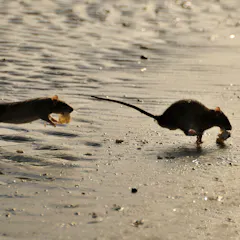
Rats are disrupting the flow of nutrients towards the sea on many tropical islands – this has consequences for fish behaviour and the wider ecosystem.
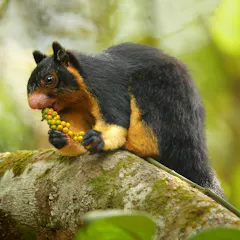
Rodents are the most numerous – and least studied – of all Earth’s mammals.
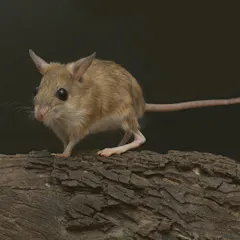
Australia has more than 60 species of native rodents found nowhere else in the world. New research used museum specimens to find out how they got here.
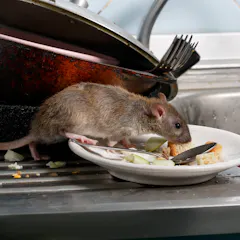
With temperatures plunging, rodents have started seeking the warmth and food inside our houses. Here’s how to deal with them effectively and humanely – without accidentally catching native animals.
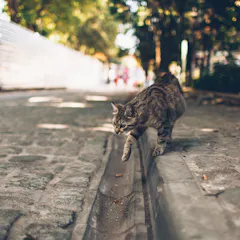
A new study shows that when free-ranging cats are more than a few blocks from forested areas in cities, such as parks, they’re more likely to prey on rats than on native wildlife.
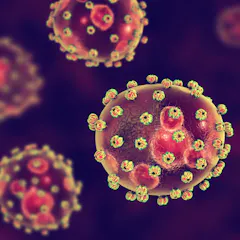
Given the small number of people that have been affected, the threat to the wider community is low.
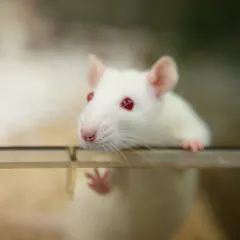
Male rats transfer different hereditary information to their offspring depending on their age.
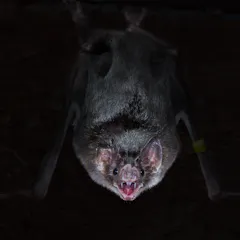
The genome of hepatitis D doesn’t resemble any known virus, making its origin a mystery. But by mining virus sequences from genetic datasets, a new study may have found the answer.
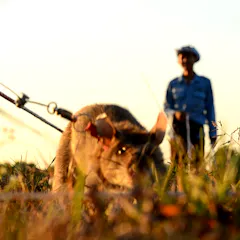
Rats used in mine-clearing operations are changing the perception of the country’s military, which is viewed with suspicion after decades of civil war.
Top contributors
-

Professor of Conservation Biology, School of Life and Environmental Sciences, University of Sydney
-
Professor of Behavioral Neuroscience, University of Richmond
-
Professor in Ecology, Charles Sturt University
-
Assistant Professor, Faculty of Health Sciences; Senior Scientist, Pacific Institute on Pathogens, Pandemics and Society, Simon Fraser University
-
Professor in Wildlife Ecology and Conservation, School of Life & Environmental Sciences, Deakin University
-
Clinical Associate Professor, School of Population and Public Health, University of British Columbia
-
Associate Professor in Wildlife Conservation, Edith Cowan University
-
Professor Emeritus in Terrestrial Ecology, University of Sydney
-
Visiting Research Scholar, Fordham University
-
Honorary Research Fellow, University of Sydney
-
Lecturer/Senior Lecturer, Nottingham Trent University
-
Professor of Palaeobiology, University of Leicester
-
Adelaide University
-
Senior Lecturer, School of Biological Sciences, Adelaide University
-
Postdoctoral fellow, FP7 Marie Curie Cofund Agreenskills+, Aarhus University