
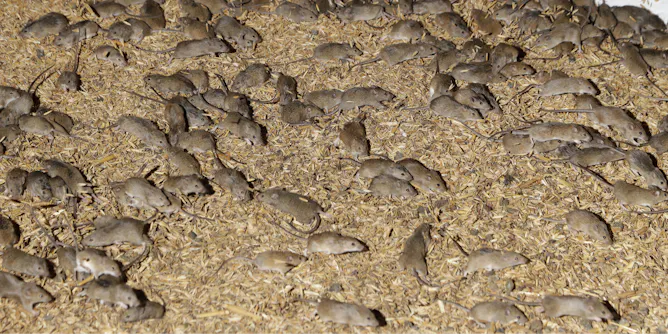
Mice numbers are likely to drop as winter sets in – an expert explains.
Articles on Mice
Displaying 1 - 20 of 53 articles
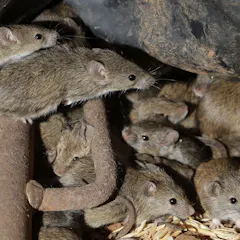
In parts of Western Australia and Southern Australia, mouse numbers are reaching plague proportions.

The comeback story of ‘the fastest mouse in all of Mexico’ reveals how audiences – not cultural gatekeepers – shape the meaning of representation.
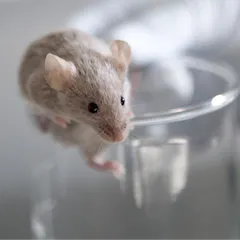
It was once believed that mice had relatively poor vision. Turns out mice are far from blind – and studying how their vision is shaped by their environment and behavior can clarify the same in people.

A study of extracts of a plant in South Africa traditionally used for staying alert showed similar effects in mice.

This new study could change the way we think about ageing.
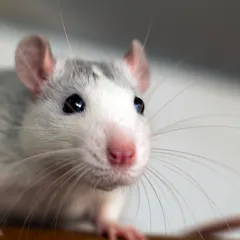
Mice don’t just use their whiskers as a sense of touch.

“De-extinction” research is a poor alternative to helping ‘pre-extinction’ animals still alive today.

Seeing through mouse skin is one thing, disappearing humans is something else entirely.

A new study in mice suggests fasting could increase the risk of cancer. Yet previous research has said the opposite. Here’s what to make of these conflicting findings.
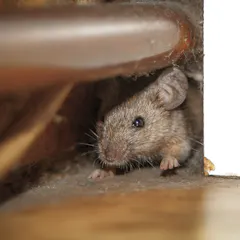
An evolutionary biologist is studying what these resilient urban pests can teach us about adaptation and evolution.
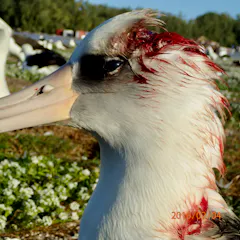
On a small, remote island in the Pacific Ocean, an unlikely predator feasts on the world’s largest albatross colony. Researchers are trying to figure out how to stop these murderous mice.
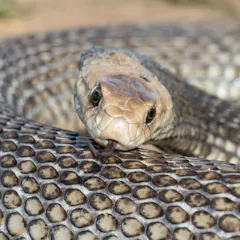
The benefits of snake populations on agricultural land far outweigh the potential costs, and farmers should tolerate rather than kill them.
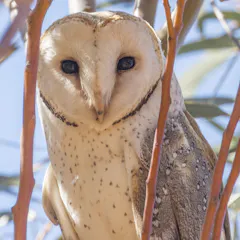
There’s shocking new evidence of rodenticide poisoning in Australia’s nocturnal predatory birds. High concentrations of the active ingredients were found in 92% of the 60 dead birds they tested.
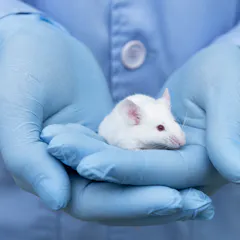
Clinical trial funders now insist studies use female participants. But it will still take a long time for our understanding of how medicine affects women to catch up.
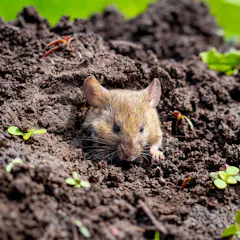
Rodents destroy around 70 million tonnes of grain each year. What if we could trick them into looking elsewhere for their food?
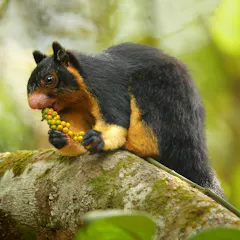
Rodents are the most numerous – and least studied – of all Earth’s mammals.

We dug into what was behind the headlines on nose-picking and dementia so you don’t have to. Here’s what the study really says.
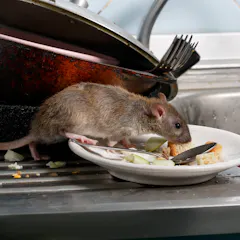
With temperatures plunging, rodents have started seeking the warmth and food inside our houses. Here’s how to deal with them effectively and humanely – without accidentally catching native animals.

Growing applications of nanotechnology include using nanorods for male birth control. The technique has had some success in animals, and offers the potential of human male contraception.
Top contributors
-

Associate Professor in Wildlife Conservation, Edith Cowan University
-
Professor of Conservation Biology, School of Life and Environmental Sciences, University of Sydney
-
Professor of Medicine and Executive Vice Chancellor for MassBiologics, UMass Chan Medical School
-
Professor, University of Warwick
-
Director of the Wildlife Crime Research Hub, Australian Research Council Industry Laureate Fellow, Adelaide University
-
Professor, University of Cambridge
-
Adelaide University
-
Lecturer in Cognitive and Computational Neuroscience, University of Sheffield
-
Associate Professor of Otolaryngology, The Ohio State University
-
Assistant Director of the University Museum of Zoology, Cambridge, University of Cambridge
-
Professor of Applied Mathematics, Adelaide University
-
Researcher, L’Université d’Ottawa/University of Ottawa
-
Honorary Associate Professor in Vision and Computational Neuroscience, University of Sheffield
-
Lecturer College of Science & Engineering, Centre for Tropical Environmental and Sustainability Studies, James Cook University
-
Senior Lecturer, School of Biological Sciences, Adelaide University