
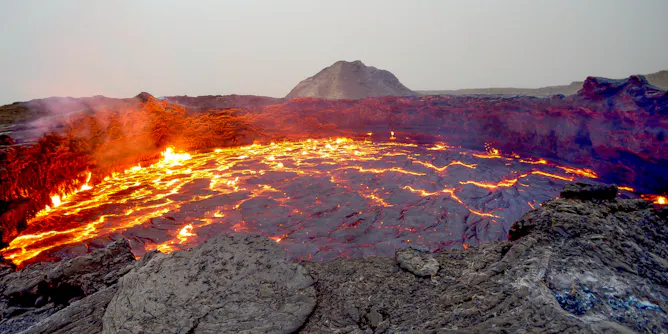
Satellite research in Ethiopia is opening up a new frontier in the hunt for geothermal power.
Articles on Rainfall
Displaying 141 - 160 of 177 articles
It’s wrong to blame climate change for famine and conflict. These can either be prevented, or the impact minimised, if institutions and mechanisms of good governance are in place.
At present, the Middle East and North African region contains 7% of the world’s population but only has access to 1.5% of its renewable freshwater supply through rainfall.
The US wants to invest in more infrastructure to handle our rainfall and melted snow. Stormwater credits could help cut costs and protect the environment.
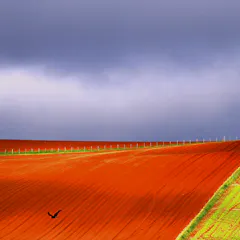
New research shows Australian farmers are adapting to climate change, offsetting at least part of a climate change-induced decline.
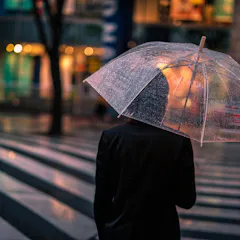
As the planet warms, the amount of moisture in the atmosphere is increasing. This will cause a lot more heavy rainfall, even in areas that are becoming drier.
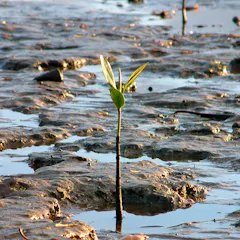
Rain made a welcome comeback to Australia in 2016 after several years of deepening drought. But Tasmania and the Top End were among several places that did not fare so well.
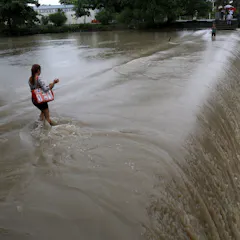
New research shows that global warming has already begun to exacerbate extremes of rainfall in the Pacific region – with more to come.
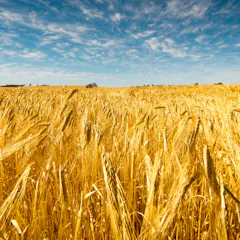
Australia’s wheat harvest has stalled over the past 26 years, and worsening weather is to blame.
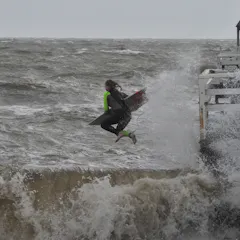
2016 was Australia’s fourth warmest year on record, capping off the hottest decade.
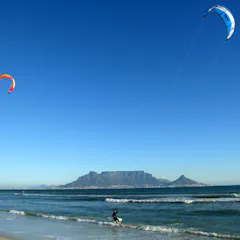
South Africa’s weather is very attractive to international visitors. Climate change could alter their perceptions unless mitigation strategies are put in place.
Satellite rainfall data can be used to predict harsh climate events – and to identify food-insecure populations before disaster strikes.
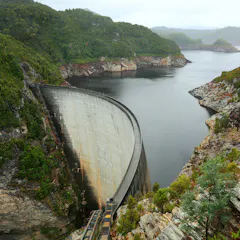
Catch 22: renewable energy can help fight climate change, but climate change might prove hard on renewable energy.
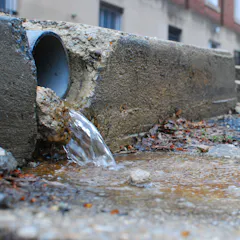
A proliferation of concrete is increasing the risk of urban flooding. The solution? More gardens.
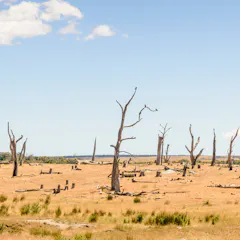
After some unusually wet years, our landscape and ecosystems have once again returned to poorer conditions that were last experienced during the Millennium Drought.
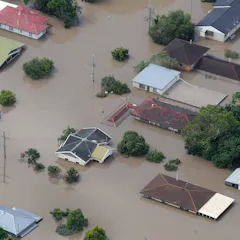
Since 1999, Australia has swung between drought and deluge with surprising speed, because El Niño has fallen into sync with similar patterns in the Indian and Southern Oceans.
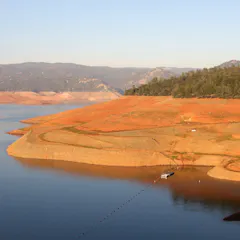
California’s drought is dragging on into its fifth year. What can the state learn from Australia’s 15-year millennium drought?
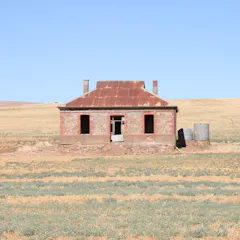
Australia is the land of drought of flooding rains, driven by events such as El Nino. But despite this variability, some parts of Australia are clearly drying out.
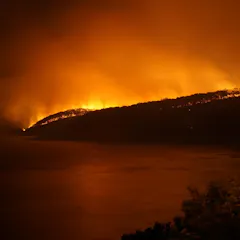
El Niño dominated global climate in 2015, but in Australia the story was more complicated. 2015 was Australia’s fifth warmest year on record, and saw the return of very dry conditions to parts of Australia.
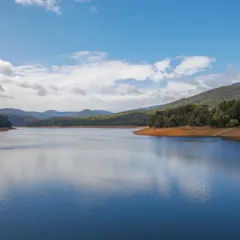
The Millennium Drought ended more than five years ago, but several years of below-average rainfall and El Niño have brought drought back to many parts of Australia. Our latest report on water in Australia shows rainfall is continuing to decline in eastern Australia and increase in the north.
Top contributors
-

ARC Future Fellow and Associate Professor in Climate Science, ARC Centre of Excellence for 21st Century Weather, The University of Melbourne
-
Professor, Water and Landscape Dynamics, Fenner School of Environment & Society, Australian National University
-
Professor of Physical Geography, University of the Witwatersrand
-
Postdoctoral Research Fellow in Atmospheric Sciences, The University of Melbourne
-
Climate scientist, Australian Bureau of Meteorology
-
Researcher, Agricultural Research Council
-
Associate Professor, ARC Centre of Excellence for Weather of the 21st Century, Monash University
-
Climate Scientist, Australian Bureau of Meteorology
-
Professor of Atmospheric Science and Colorado State Climatologist, Colorado State University
-
Adjunct Professor (Practice) in the School of Earth, Atmosphere and Environment, Monash University
-
Climate Scientist, Australian Bureau of Meteorology
-
Professor of Climate Science, UMass Lowell
-
Senior Research Fellow, ARC Centre of Excellence for Weather of the 21st Century, Australian National University
-
Professor in Cloud Microphysics, Monash University
-
Research academic, Fenner School of Environment & Society, Australian National University