

There’s been an increase in the amount of runoff generated from rainfall as land is altered by settlement and deforestation.
Articles on Rainfall
Displaying 41 - 60 of 177 articles

Intense heat and no rain in southwest Western Australia are causing widespread tree and shrub die-offs.
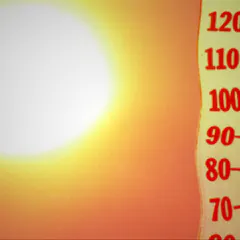
Ghana is experiencing record high temperatures and rainfall patterns have become inconsistent.
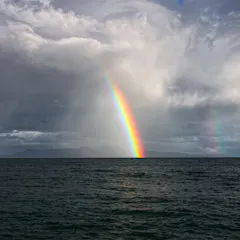
A lack of human activity in the Southern Ocean is just one reason why the air is so clean. Clouds and rain play a vital role in scrubbing the atmosphere, removing natural airborne particles too.
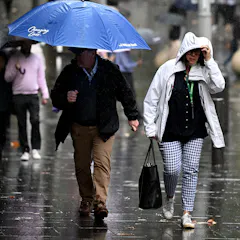
You might be wondering: what is a ‘Black Nor'easter’, what’s causing all this rain and does it have anything to do with climate change? Here’s what you need to know.

Natural variability in Australian rainfall can produce “mega-droughts” lasting 20 years or more. Add in human-caused climate change, and future droughts may be far worse than imagined.
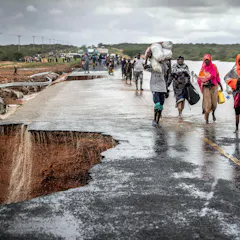
Projections show that there’ll be Indian Ocean dipoles in the future – and that means more rainy days, and more extreme rainfall.

To date, the effects of climate change on global rainfall has been uncertain. New research overcomes this uncertainty – with alarming results.
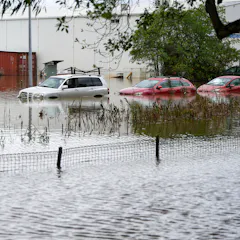
The impacts of record heat on the global water cycle were severe and wide-ranging – and the trend will continue in 2024.
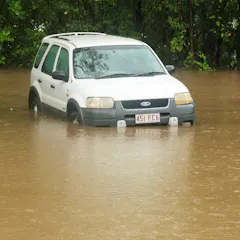
Once the immediate crisis in North Queensland has subsided, authorities will need to grapple with how to deal with the ‘new normal’ of extreme weather events. The big question is: are they prepared?
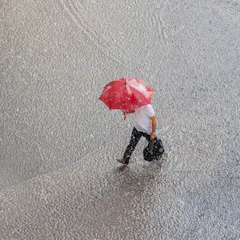
El Niño usually brings hot, dry weather to Australia. But the rains that have drenched eastern Australia are normal too.

There’s a rule of thumb that rainfall intensity increases by about 7% per degree Celsius as temperatures rise. But the increase is much higher in the mountains, scientists found.

As the atmosphere warms, it can hold more moisture. This brings more intense downpours but also accelerates warming – because water vapour is a powerful greenhouse gas.
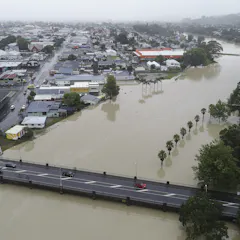
A new report sets out the practical ways New Zealand can improve its urban resilience to flooding due to climate change. But time, rather than money, is of the essence.

Parts of New York’s Hudson Valley were hit with 10 inches of rain, and the mountains of Vermont – where runoff can quickly turn deadly – saw some its worst flooding since Hurricane Irene.

If greenhouse gas emissions continue at a high rate, breadbaskets of Europe and North America will see a 50% chance of a flash drought each year by the end of this century.
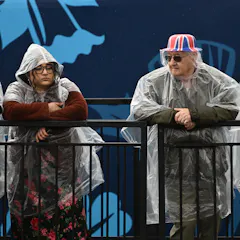
March 2023 was the wettest for 40 years in England and Wales.

Calling the Amazon “the lungs of the world” overlooks the forest’s vital role in the water cycle.

Better food supply, a reduction in population growth rate, and greater integration into global markets are three key steps Niger must take.

Atmospheric rivers can melt fragile new sea ice. When these storms arrive in waves, the sea ice doesn’t have a chance to recover.
Top contributors
-

ARC Future Fellow and Associate Professor in Climate Science, ARC Centre of Excellence for 21st Century Weather, The University of Melbourne
-
Professor, Water and Landscape Dynamics, Fenner School of Environment & Society, Australian National University
-
Professor of Physical Geography, University of the Witwatersrand
-
Postdoctoral Research Fellow in Atmospheric Sciences, The University of Melbourne
-
Climate scientist, Australian Bureau of Meteorology
-
Researcher, Agricultural Research Council
-
Associate Professor, ARC Centre of Excellence for Weather of the 21st Century, Monash University
-
Climate Scientist, Australian Bureau of Meteorology
-
Professor of Atmospheric Science and Colorado State Climatologist, Colorado State University
-
Adjunct Professor (Practice) in the School of Earth, Atmosphere and Environment, Monash University
-
Climate Scientist, Australian Bureau of Meteorology
-
Professor of Climate Science, UMass Lowell
-
Senior Research Fellow, ARC Centre of Excellence for Weather of the 21st Century, Australian National University
-
Professor in Cloud Microphysics, Monash University
-
Research academic, Fenner School of Environment & Society, Australian National University