
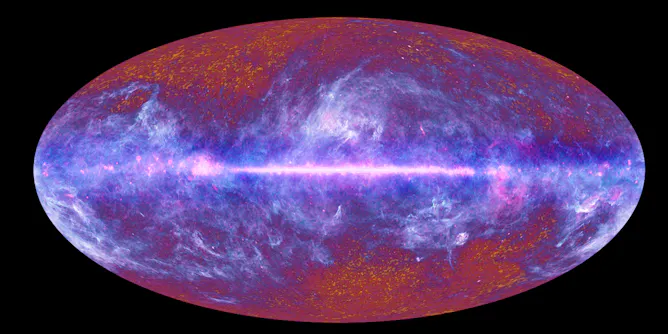
Some physicists believe we could one day find evidence of other universes.
Articles on Quantum mechanics
Displaying 41 - 60 of 131 articles

If we accepted that the future could influence the past, we could get rid of many counter-intuitive aspects of quantum mechanics.
Examining microscopic quantum objects is exceedingly tricky, because their properties are connected to each other. But there could be a new method to measure them as accurately as possible.

Nope, ‘entangled’ particles don’t communicate.
Canada is well positioned to gain far-reaching economic and social benefits from the rapidly developing quantum industry, but it must act now to secure its success.

Quantum mechanics raised tough philosophical questions about the nature of the world – and a physicist named John Bell figured out how experiments could answer them.

A multitude of experiments have shown the mysterious phenomena of quantum mechanics to be how the universe functions. The scientists behind these experiments won the 2022 Nobel Prize in physics.
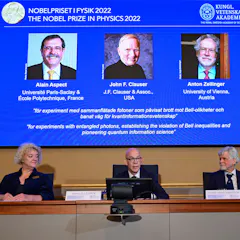
The discovery that particles can be spookily connected has lead to a technological revolution.

Cutting-edge theories of physics suggest time may not be real – but even if they’re right, life can still go on as usual.

Scientists have come up with a number of theories about the multiverse.

Like a coffee you can’t finish stirring, a ‘time crystal’ is a strange quantum state of matter than never settles down to equilibrium.
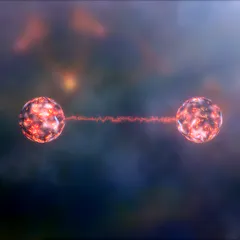
The quantum nature of light can be harnessed for a variety of purposes.
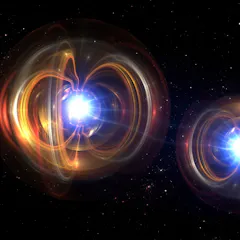
‘Reality, including ourselves, is nothing but a thin and fragile veil’: a new interpretation of quantum physics says objects have no independent existence.
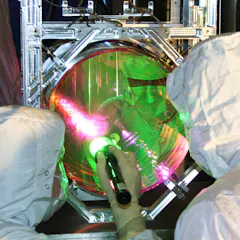
The world’s biggest gravitational wave observatory is now probing the limits of quantum mechanics.

Quantum microscopes reveal biological structures that would otherwise be impossible to see.

A small add-on to existing gravitational wave detectors could reveal what happens to matter as it becomes a black hole, a process like the big bang in reverse.
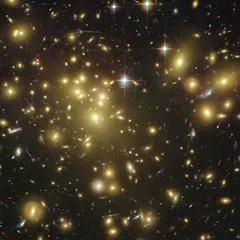
Researchers have found a way to speed up the search for dark matter using technology from quantum computing. By squeezing quantum noise, detectors can now look for axions twice as fast.
Quantum mechanics is strange. A philosopher explains just how strange, and what it means for reality.
For 60 years, physicists thought they knew exactly how coherent a laser could get. Now the ultimate quantum limit to laser coherence has been found, and it’s much much bigger than anybody thought.
We identify an experimental method which could finally reveal whether objects much larger than atoms - such as humans or animals - can exist in several places at once.
Top contributors
-

Director, Centre for Quantum Dynamics, Griffith University
-
Professor, Quantum Nanosystems, UNSW
-
Podcast host, The Conversation
-
Lecturer, The University of Queensland
-
Emeritus Professor, ARC Centre of Excellence for Gravitational Wave Discovery, OzGrav, The University of Western Australia
-
Lecturer, Newcastle University
-
Professor of Physics and Director of the Lancaster Quantum Technology Centre, Lancaster University
-
Professor, Philosophy of Science, The University of Melbourne
-
A/Prof, UTS Chancellor's Postdoctoral Research and ARC DECRA Fellow, University of Technology Sydney
-
Associate Professor, Griffith University
-
Post Doctoral Research Associate, Centre for the Subatomic Structure of Matter, Adelaide University
-
Professor in Physics, Griffith University
-
Associate Professor of Quantum Optics & Quantum Physics, University of Rochester
-
Professor of Physics, Heriot-Watt University
-
Honorary senior lecturer, Australian National University
