
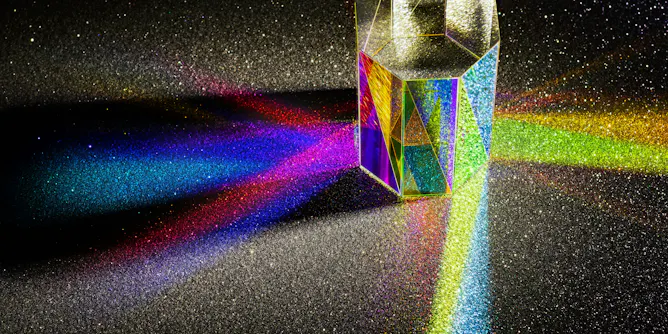
A light particle can appear to leave a cloud of atoms before it enters – a new experiment, asking the atoms, confirms the light spends ‘negative time’ with them.
Articles on Photons
Displaying 1 - 20 of 29 articles

The success of Jinan-1 points the way towards networks of quantum microsatellites, making secure global communication a real possibility.
To make a truly realistic fake picture of a galaxy, you can model exactly how light particles travel through the atmosphere and telescope to reach its sensor.

Chemical manufacturing is an energy-intensive industry. A team of chemists is designing a technique that could power the necessary reactions with sunlight or LEDs.
Scientists on the African continent have made notable contributions to photonics research.
Gravitational waves carry information about massive cosmic events and help scientists to ‘listen’ to space.
Black doesn’t appear in the visible spectrum of electromagnetic radiation. So why do we still see it?

Your faithful companion sees the world differently than you do, but it’s a mistake to assume dogs only see black, white and shades of grey.
Scientists show they can create quantum superpositions of sound particles, pointing to the potential for mechanical quantum computers.
A researcher explains developments in using light rather than electrons to transmit information securely and quickly, even over long distances.
Quantum entanglement is the stuff of sci-fi, advanced physics research and, increasingly, technology used by governments, banks and the military.
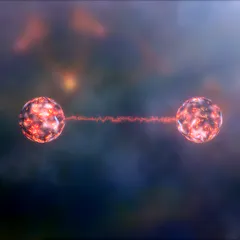
The quantum nature of light can be harnessed for a variety of purposes.

A small add-on to existing gravitational wave detectors could reveal what happens to matter as it becomes a black hole, a process like the big bang in reverse.
Physicists can use bright, hot lasers to slow atoms down so much that they measure -459 degrees Fahrenheit.
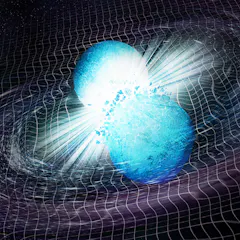
Astronomers are now able to detect a host of signals streaming through the universe. This newfound ability is like gaining new senses and it’s opening the door to understanding the cosmos.
A particle physicist explains just what this keystone theory includes. After 50 years, it’s the best we’ve got to answer what everything in the universe is made of and how it all holds together.
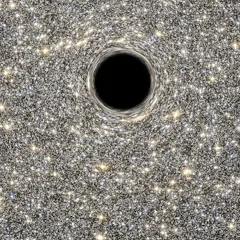
The famous cosmologist was closely identified with black holes due to his revolutionary theoretical work explaining some of their mysterious properties.
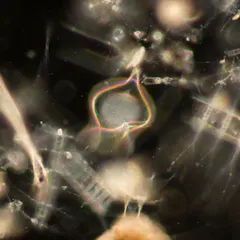
Diatoms’ tricks may offer new insights that keep solar cell energy running efficiently and robustly throughout their processes.

Energy from the sun’s rays can cause skin damage and cancers. Sunscreens can absorb or reflect the dangerous UV light. Here’s how it works.

Scientists in Argentina have discovered a frog that glows in moonlight and at twilight.
Top contributors
-

Professor, Australian National University
-
PhD Student, Imperial College London
-
Professor of Physics and Astronomy & Professor of Microbiology and Molecular Genetics, Michigan State University
-
Associate Professor in Biophysics, University of Pretoria
-
PhD student at the Australian National University, Australian National University
-
Professor in Physics, Griffith University
-
Ph.D. student in Electrical Engineering, University of Michigan
-
Research Chemist, University of California, Riverside
-
Associate Professor, University of Alberta
-
Researcher and Professor, Bioespectroscopy and Biophotochemistry, Universidad de Buenos Aires
-
Postdoctoral Researcher, Macquarie University
-
Professor; ARC Laureate Fellow, Director, ARC Centre of Excellence for Ultrahigh bandwidth Devices for Optical Systems, University of Sydney
-
Assistant Professor of Physics, McGill University
-
Director of the John Adams Institute, University of Oxford
-
Glenn Starkman is a Friend of The Conversation.
Distinguished University Professor of Physics, Case Western Reserve University