
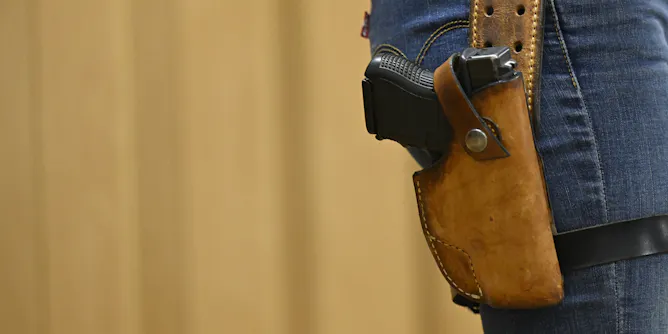
Owning a gun can influence your outlook, both fueling a sense of danger in the world around you and holding out the promise of rescuing you from those fears.
Articles on Psychology research
Displaying 21 - 40 of 96 articles
Bittersweet experiences aren’t uncommon. Do people ever truly feel both positive and negative at the same exact moment, or do we just switch quickly back and forth?
The future and its possibilities are something that you actively co-create with others. New research suggests that imagining together makes you closer and more connected to them in the here and now.

Seeing the world with a restricted color palate seems to tone down an emotion-based resistance to new foods.

Many factors shape an individual’s risk for falling prey to deception, including where and how they are targeted.

Legal psychology researchers are investigating how police treat drunken suspects, how impaired people behave when questioned, and how juries consider their statements.

Activities such as deep breathing, muscle relaxation, yoga and meditation help people manage their anger, according to a meta-analysis of studies involving more than 10,000 participants.

Psychology researchers have used virtual reality to find our brains oscillate with each step – an intriguing finding to better understand how we see the world.

Setting specific, hard-to-reach goals seems to help people maintain motivation, while preventing them from feeling as drained by mental tasks.
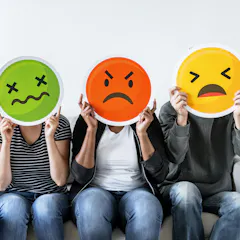
Lots of people will do a lot to avoid feeling negative emotions. But researchers are figuring out how these unpleasant feelings actually have benefits.
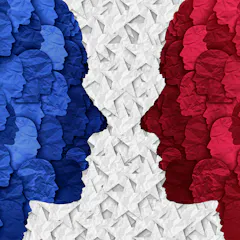
With growing polarization, political attitudes have begun to coincide with moral convictions. Partisans increasingly view each other as immoral. New research reveals the depth of that conviction.
Even in a moment of extreme partisanship, ‘we’ still exist if ‘we’ can witness something together. Researchers are exploring how shared attention can build connection.
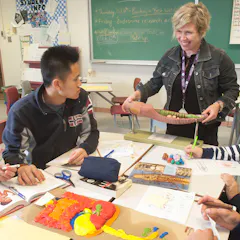
The idea that each person has a particular learning style is a persistent myth in education. But new research provides more evidence that you won’t learn better in one modality than another.

People often privately feel uncomfortable about bad behavior they see around them but mistakenly believe their peers don’t share their concerns.

Laughter is so fundamental that animals like chimps, rats and dogs share the ability with humans. But in people it serves more serious social functions than just letting others know you’re having fun.

Kids were more likely to tell an adult and less likely to touch or hold a handgun that they discovered if they’d recently watched a short video about gun safety.

A number of theories try to explain how cultural differences come to be. A new study quantifies how such factors as resource abundance, population density and infectious disease risk can contribute.

Erroneous calls increase the chances of subsequent calls in favor of the person who was harmed. What drives this behavior, and do people even recognize they’re doing it?

For a while it was all the rage to adopt Wonder Woman’s famous stance and other body positions that allegedly pumped up your confidence – until more studies of the phenomenon failed to find the connection.

A focus on raw intellectual talent may unintentionally create a cutthroat workplace culture. New research suggests women’s preference to avoid that environment may contribute to gender gaps in some fields.
Top contributors
-

Professor of Psychology, Monmouth University
-
Professor of Communication, The Ohio State University
-
Associate Professor of Psychology, Regent University
-
Associate Professor of Psychology, Vanderbilt University
-
Assistant Professor of Psychological Science, Boise State University
-
Associate Professor of Marketing, California State Polytechnic University, Pomona
-
Associate Professor of Psychology, USC Dornsife College of Letters, Arts and Sciences
-
Postdoctoral Fellow at The Injury and Violence Prevention Program, Virginia Commonwealth University
-
David K. Wilson Professor of Psychology, Vanderbilt University
-
Poler Family Professor of Psychology, Amherst College
-
Assistant Professor of Psychology, Eureka College
-
Senior Lecturer in the School of Psychology, University of Lincoln
-
Emeritus Professor of Psychology, Arizona State University
-
Ph.D. Student in Psychology and Neuroscience, University of North Carolina at Chapel Hill
-
Postdoctoral Fellow in Anthropology, University of Utah