
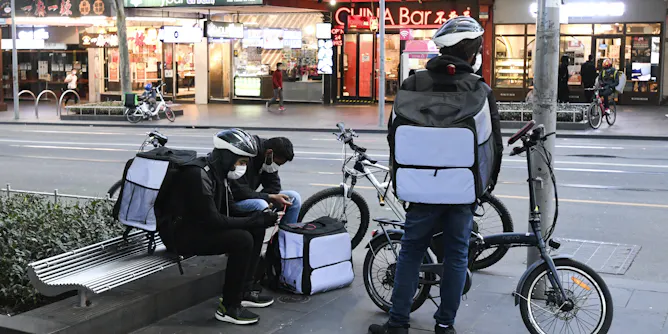
In an Australian first, Western Australia has formally recognised the psychological and social stress of insecure work.
Articles on Precarious work
Displaying 21 - 40 of 60 articles

Many formal sector jobs are increasingly precarious and poorly paid, meaning that formal work is not an avenue to greater social equality for many people.

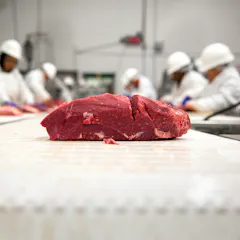
The supply crisis in the meat processing industry was entirely predictable. Employers and the government should have seen it coming.

Recent developments in the organisation of production have led to the decline of wage employment across much of the world.

Strip away the sexy marketing and what you have is just another digital platform shifting legal responsibilities and risks.
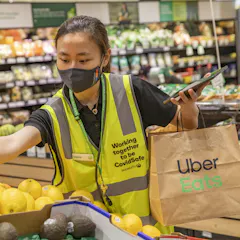
The pandemic home-delivery boom is driving a push to automation and precarious work by Australian supermarkets.
The Fair Work Commission’s ruling that delivery rider Diego Franco was an employee of Deliveroo is a major legal win for Australia’s gig workers.
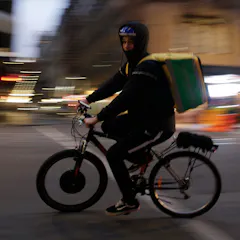
Food-ordering platform Menulog has declared it will break with the standard contractor business model. But let’s not get too excited yet.

Uber has been forced by the UK courts to treat its British drivers as workers. It will probably require legislative change for Uber’s Australian drivers to be treated as employees.
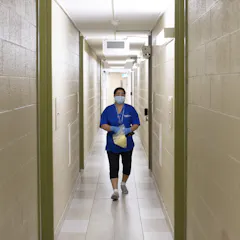
One of the factors that has made COVID-19 so catastrophic in long-term care homes was lack of paid sick leave for low-wage workers.

The federal government’s industrial relations bill will fix a problem that doesn’t exist by making a failed legal argument the law.

The practice of ‘casual’ employment has become a means to foster insecurity and low power, depriving many workers of leave under the guise of an alleged need for flexibility.

The number of people on zero-hours contracts has increased during the pandemic, but they don’t seem to figure in the chancellor’s recovery plans.

We need a holistic response that considers the systemic reasons that force people to lie about working.

Juggling work and family becomes all the more difficult when you’re trying to figure out how to work Zoom, and stressing about losing your job.

With the recession exposing more workers to the vagaries of gig work, it’s more urgent than ever to close the legal loopholes that deny workers employment rights.
The COVID-19 pandemic has highlighted the dangers of unhealthy workplaces and disempowered workers.

Workers who experience job insecurity over several consecutive years become less emotionally stable, less agreeable and less conscientious.

The historically high level of informal work in Latin America will make its recovery much more difficult than elsewhere.

The failure to anticipate the consequence of workers having no paid sick leave is one of the greatest flaws in Australia’s response to the COVID-19 pandemic.
Top contributors
-

Senior Lecturer, Management and Organisations, The University of Western Australia
-
Senior Lecturer, Management and Organisations, UWA Business School, The University of Western Australia
-
Associate professor, University of Sydney
-
Laurie Carmichael Distinguished Research Fellow at the Centre for Future Work, Melbourne; and Professor Emeritus, Griffith Business School, Griffith University
-
Deputy Dean of Research, RMIT University
-
Assistant Professor, Faculty of Education, Brock University
-
Associate professor, University of Johannesburg
-
Associate Professor, Communication, University of Toronto
-
Professor of Health Policy and Management, York University, Canada
-
Associate Professor, Labour studies, Brock University
-
Professor of Epidemiology (Emeritis), University of Toronto
-
Catedrático de Empresa y Turismo Digital, Universidad de Las Palmas de Gran Canaria
-
Emergency physician and Assistant Professor in the Department of Family and Community Medicine, University of Toronto
-
Lecturer, School of Business and Law, Edith Cowan University
-
Senior Associate, Grattan Institute