

If unemployment spikes as predicted, there will be problems beyond the economic pain.
Articles on Insecure work
Displaying 1 - 20 of 39 articles

Researchers found some forms of ‘contingent employment’ are clearly worse for workers. Others, under the right conditions, support job satisfaction. It’s all about job design.
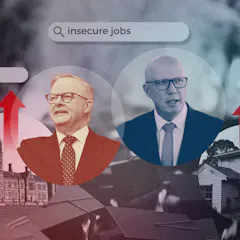
Gen Z and Millennials will outnumber Boomer voters at the election. Does that mean we will see policies to close the growing wealth divide between the generations?

People with secure work and a regular income are more likely to start a family than those working in casual jobs with irregular hours.

These women most often experienced workplace sexual harassment when they were in temporary, casual or contract positions.
There is effectively a class of Australian workers who don’t get holiday and sick pay, no matter how long or regularly they work, simply because their employer deemed them “casual” when they began.

Our five years of research reveals an industry facing push back from both workers and customers. Many workers we spoke with sought to leave the gig economy.

Uber, the poster company of the gig economy, has agreed its Australian workers deserve more employee-like conditions. Why it has done this now isn’t too hard to work out.
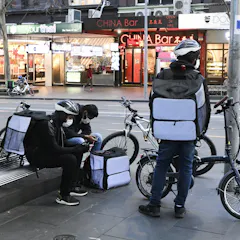
In an Australian first, Western Australia has formally recognised the psychological and social stress of insecure work.
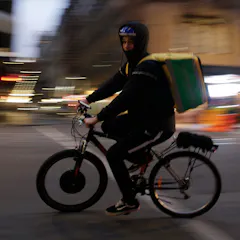
Food-ordering platform Menulog has declared it will break with the standard contractor business model. But let’s not get too excited yet.

The practice of ‘casual’ employment has become a means to foster insecurity and low power, depriving many workers of leave under the guise of an alleged need for flexibility.
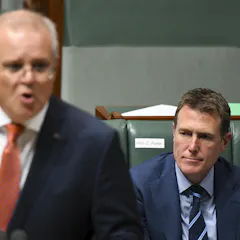
The Morrison Government has picked up its weapons again, with an industrial relations bill that will tip the scales further against employees.
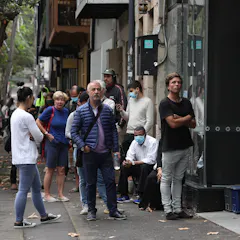
Western Sydney’s growth-driven boom had ended before COVID-19 hit. Some neighbourhood unemployment rates were 2-3 times the metropolitan average, with female workforce participation as low as 43%.

The spread of coronavirus highlights the urgent need for housing for people who have nowhere to live.

We need to see uberisation in the context of all forms of precarious and insecure work becoming more acceptable.

Academics on casual contracts often feel vulnerable and of lower status than “permanent” staff members. They can minimise their exploitation as if it’s part of the authentic academic experience.

Many Uber drivers do their job because the alternatives are worse. It’s an unhappy work choice faced by an increasing number of Australians.

Though best remembered for her role in the doomed German Revolution, Rosa Luxemburg’s theories on how capitalism exploits people and nature need hearing today.

The security of local aid agency workers on the front line hasn’t been prioritised.

Less secure jobs are just one aspect of the rise of finance capital. It’s a driver of increasingly uneven income distributions and corporate priorities that are now putting our future at risk.
Top contributors
-

Laurie Carmichael Distinguished Research Fellow at the Centre for Future Work, Melbourne; and Professor Emeritus, Griffith Business School, Griffith University
-
Professor of Economics, University of Canberra
-
Research Associate, School of Social Sciences, Monash University
-
Senior Lecturer, Management and Organisations, The University of Western Australia
-
Associate professor, University of Sydney
-
Senior Lecturer, Management and Organisations, UWA Business School, The University of Western Australia
-
Public Health Lecturer (University of Tasmania) and PhD Candidate, Southgate Institute for Health, Society & Equity, Flinders University
-
Professor of Economics, University of Newcastle
-
PhD Candidate and Research Fellow, Centre for Employment and Labour Relations Law, The University of Melbourne
-
Professor of Education Policy and Practice, Youth Studies, Monash University
-
Dean of Programs, EM Lyon Business School
-
Assistant Professor, University of Sargodha
-
Lecturer in Management, Employment and Organisation, Cardiff University
-
Professor in Organization and Management, UNSW
-
Professorial Associate in the Centre for Public Policy, The University of Melbourne