

A new book shows how casual educators and teachers play a crucial role in education. But many face underpayment and uncertainty juggling too many contract jobs.
Articles on Casualisation
Displaying 1 - 20 of 24 articles

Workers’ power is being recast as precarious workers in Africa experiment with new ways of organising in the digital age

In most wealthy nations all workers are entitled to annual leave. But that’s not the case in Australia – and the Albanese government’s reforms still won’t change that.
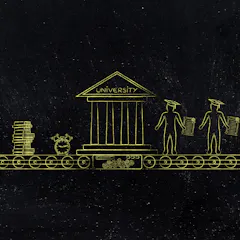
Stuff cuts are just the most visible aspect of critical problems within the modern university, as a new survey of academic workers reveals.

Most farmworkers were not even aware that the farm they worked on was Fairtrade certified.

Despite the high numbers of casual academic staff in Australia, surprisingly little research has been done on their working conditions and experiences.

Casual or short-term contracts, a lack of professional development, little hope of career progression: a survey of academic working conditions sounds a warning.

Lifting wages will be a priority for the Albanese government to ease the cost of living. But the unions and the Greens are likely to push for more changes to tackle problems with the Fair Work system.
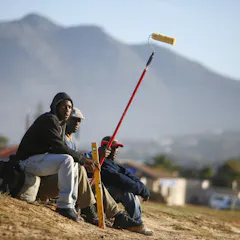
Recent developments in the organisation of production have led to the decline of wage employment across much of the world.
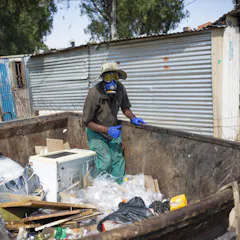
Basic income must be embedded within a broader strategy of economic reform, aimed at increasing the social wage and improving working conditions.
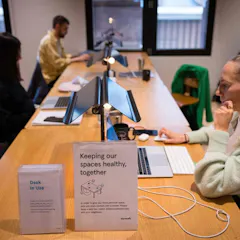
If the best people management practices of the formal economy were to be deployed in the informal economy, new avenues of stimulating economic and life empowerment may be opened.

The federal government’s industrial relations bill will fix a problem that doesn’t exist by making a failed legal argument the law.

We need a holistic response that considers the systemic reasons that force people to lie about working.
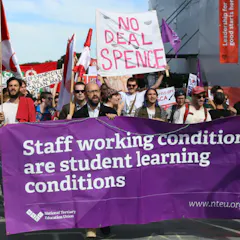
More than a dozen Australian universities have been publicly accused of underpaying staff. Some have paid millions in backpay after audits. And a big factor in wage theft is the rise of casualisation.

Unemployment may be down, but 3% of Britain’s working population are on zero hours contracts. This isn’t good for people or business and the government needs to act.
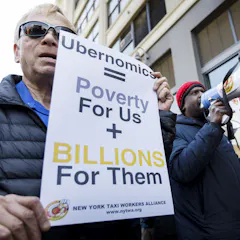
Many Uber drivers do their job because the alternatives are worse. It’s an unhappy work choice faced by an increasing number of Australians.

Public schools in some states outsourced their cleaning services to private companies as part of a neoliberal experiment starting in the 1990s. This has had a host of impacts, including on students.

Sugar daddy capitalism is deformalising relationships and erasing the lines between commercial and non-commercial worlds.
Most workers are still employees, not casuals or gig workers. So what has changed to increase the insecurity of workers?

There is very little evidence that overall labour market insecurity is getting any worse. Trends are stable for rates of casualisation, churn, self-employment and multiple job holders.
Top contributors
-

Laurie Carmichael Distinguished Research Fellow at the Centre for Future Work, Melbourne; and Professor Emeritus, Griffith Business School, Griffith University
-
Associate Professor in Managing People and Organisations, University of Sydney
-
Professorial Fellow, The University of Melbourne
-
Research Associate, School of Social Sciences, Monash University
-
Research Assistant, Industrial Relations, The University of Melbourne
-
PhD Candidate, The University of Queensland
-
Adjunct professor, Flinders University
-
Executive Director, John Curtin Institute of Public Policy, Curtin University
-
Associate Professor of Political and International Studies, Rhodes University
-
Lecturer, School of Economics, Finance and Property, Curtin University
-
Associate professor, University of Johannesburg
-
Lecturer in Accounting, University of Tasmania
-
Professor, Curtin University
-
Senior Lecturer in Accounting, La Trobe University
-
Professor, University of Technology Sydney