

The earned income tax credit lifts around 6 million of the working poor out of poverty every year, but with the economy hammered by COVID-19, many might not get the benefit they need.
Articles on Precarious work
Displaying 41 - 60 of 60 articles

The federal government must provide more support if Victorian businesses and households are to survive the state’s Stage 4 lockdown.

Uber drivers are back in court for a final showdown with the American company.
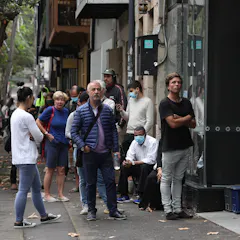
Western Sydney’s growth-driven boom had ended before COVID-19 hit. Some neighbourhood unemployment rates were 2-3 times the metropolitan average, with female workforce participation as low as 43%.

As sand markets boom, entrepreneurs, organized crime and others are cashing in — leaving widespread environmental damage in their wake.

With the support of universities, PhD graduates working beyond the academy could bring their knowhow into PhD seminars or classrooms to help current students expand their career horizons.

We need to see uberisation in the context of all forms of precarious and insecure work becoming more acceptable.
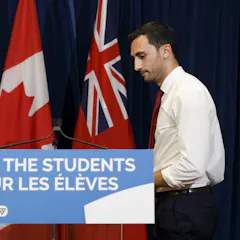
Frustration at intergenerational inequity captures the views of many contemporary education worker activists and environmentalists alike.

Academics on casual contracts often feel vulnerable and of lower status than “permanent” staff members. They can minimise their exploitation as if it’s part of the authentic academic experience.

Graduate students have much to offer the non-academic workforce based on critical thinking and problem-solving skills. Universities need to help them articulate these skills for employers.

Uber’s expansion has become a global epic with regional episodes, but the legal conflict in Argentina has even higher stakes.

Front-line workers employed both inside and outside of the classroom are an integral part of schooling, yet we deny their work conditions are relevant to quality education.

Ontario’s Conservative government, despite its “for the people” slogan, is repealing basic protections for the province’s most vulnerable workers.

Less secure jobs are just one aspect of the rise of finance capital. It’s a driver of increasingly uneven income distributions and corporate priorities that are now putting our future at risk.

Most workers are still employees, not casuals or gig workers. So what has changed to increase the insecurity of workers?
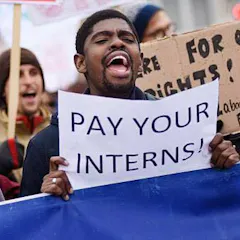
Global activism has played a big role in outlawing unpaid internships. Here’s how protests and social media shaming spurred negative media coverage of unpaid internships.

It’s not all about eating leafy green vegetables and working out: Living and working conditions have a profound impact on our health. So why are politicians avoiding taking action?

Despite relatively stable and low levels of unemployment, workers are increasingly concerned that their jobs are at risk.
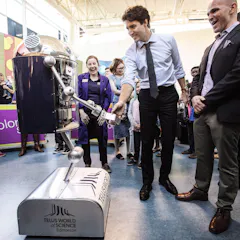
Government is about to be disrupted by technology in the same manner as major industries. It’s about time.

Unemployment levels are low, but many people are being pushed into inadequately paid jobs by a punitive benefit system and lack of choice.
Top contributors
-

Senior Lecturer, Management and Organisations, The University of Western Australia
-
Senior Lecturer, Management and Organisations, UWA Business School, The University of Western Australia
-
Associate professor, University of Sydney
-
Laurie Carmichael Distinguished Research Fellow at the Centre for Future Work, Melbourne; and Professor Emeritus, Griffith Business School, Griffith University
-
Deputy Dean of Research, RMIT University
-
Assistant Professor, Faculty of Education, Brock University
-
Associate professor, University of Johannesburg
-
Associate Professor, Communication, University of Toronto
-
Professor of Health Policy and Management, York University, Canada
-
Associate Professor, Labour studies, Brock University
-
Professor of Epidemiology (Emeritis), University of Toronto
-
Catedrático de Empresa y Turismo Digital, Universidad de Las Palmas de Gran Canaria
-
Emergency physician and Assistant Professor in the Department of Family and Community Medicine, University of Toronto
-
Lecturer, School of Business and Law, Edith Cowan University
-
Senior Associate, Grattan Institute