

America’s fusion of limited labor protections and aggressive AI adoption could create the perfect storm for widespread job insecurity.
Articles on Precarious employment
Displaying 1 - 20 of 23 articles

US workers in general are finding themselves in an increasingly precarious position.

Although work in journalism has never been a safe bet, it’s now rife with deepening uncertainty. The TVO strike aimed at job security is a matter of public interest.

In most wealthy nations all workers are entitled to annual leave. But that’s not the case in Australia – and the Albanese government’s reforms still won’t change that.
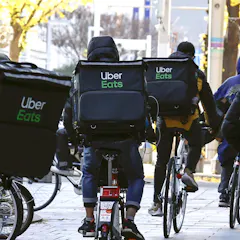
Australia’s largest private-sector employers are steadily integrating gig workers into their operations.

Frustration about unsettled bargaining that predates the pandemic could get channelled into pronounced resistance from educational workers during the coming months.
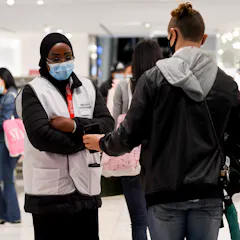
Our research suggests the majority of retail workers – and casual workers even moreso – are being forced to take unpaid leave for COVID-related reasons.
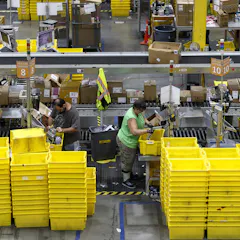
Black Friday, Christmas, and other ‘shopping events’ take a toll on the temporary workers hired to get purchases to consumers.

As the gig economy and precarious work become more prevalent, there’s a growing need for some form of universal income support to help these workers.
Proposition 22 keeps workers for app-based companies like Uber and Lyft classified as independent contractors, but it also reveals deeper problems with contemporary labour markets.
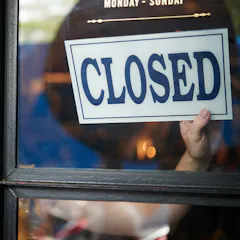
People in precarious employment are hit hardest by economic shocks.

The Federal Court of Australia has rejected the notion workers can be employed as ‘permanent casuals’.

With the support of universities, PhD graduates working beyond the academy could bring their knowhow into PhD seminars or classrooms to help current students expand their career horizons.

An upcoming study on workers in the gig economy suggests the future of work may be a lonely and uncertain one for many workers.
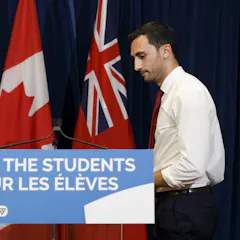
Frustration at intergenerational inequity captures the views of many contemporary education worker activists and environmentalists alike.
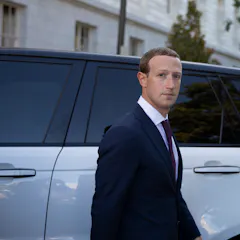
Mark Zuckerberg may try to minimise their concerns, but Facebook moderators and other online workers are beginning to organise for their own protection.

Academics on casual contracts often feel vulnerable and of lower status than “permanent” staff members. They can minimise their exploitation as if it’s part of the authentic academic experience.

Front-line workers employed both inside and outside of the classroom are an integral part of schooling, yet we deny their work conditions are relevant to quality education.
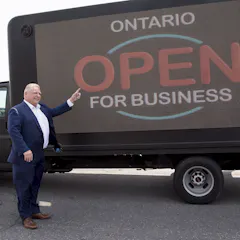
Ontario’s Conservative government, despite its “for the people” slogan, is repealing basic protections for the province’s most vulnerable workers.

No longer can young people invest in their education and work their way into secure employment. The health impacts of this job insecurity are profound.
Top contributors
-

Assistant Professor, Faculty of Education, Brock University
-
Laurie Carmichael Distinguished Research Fellow at the Centre for Future Work, Melbourne; and Professor Emeritus, Griffith Business School, Griffith University
-
PhD Candidate, ARC Centre of Excellence for Automated Decision-Making and Society, RMIT University
-
PhD Candidate, The University of Queensland
-
Associate Professor, Labour studies, Brock University
-
Lecturer, Australian National University
-
Associate professor, Dalla Lana School of Public Health, University of Toronto
-
Research fellow, Deakin University
-
Professor, Crawford School of Public Policy, Australian National University
-
Senior lecturer, University of Sydney
-
Associate Professor, Department of Sociology, University of Calgary
-
Assistant Professor, Labour Studies Program, University of Manitoba
-
Professor of Sociology and Canada Research Chair, University of Toronto
-
Postdoctoral Fellow, Queen's University, Ontario
-
Associate Professor, Sociology, McMaster University