
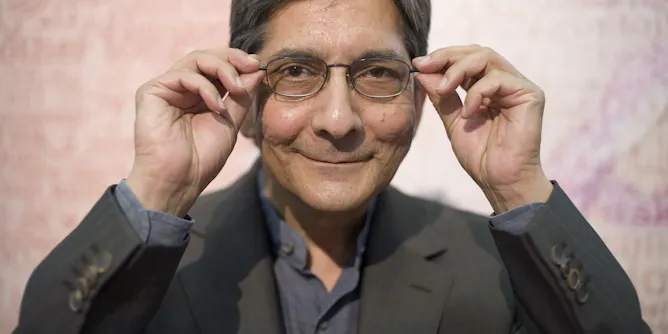
In each of his novels, he explored questions that shifted South Africa’s cultural debates, especially about memory and race.
Articles on Post-apartheid
Displaying 21 - 40 of 107 articles
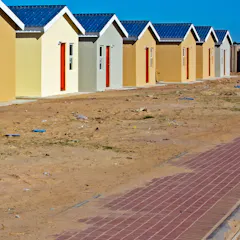
In South Africa and India, research has found that free or affordable housing can actually undermine women’s safety and livelihoods.
During the apartheid period in South Africa – 1948 to 1994 – a lively intellectual culture of opposition emerged on some of the country’s university campuses and within the broader anti-apartheid movement…
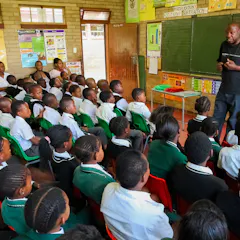
It’s easy to report on access and inputs, but much more difficult to achieve educational quality and meaningful outcomes.
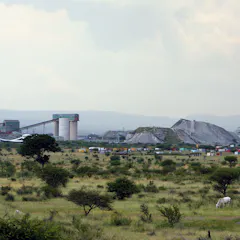
South Africa has made progress towards interrupting the looting of land by chiefs, state officials and mining capital.
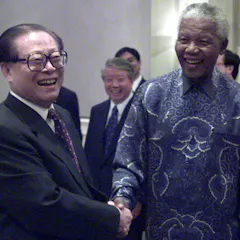
Mandela did not make the decision to jettison Taiwan and recognise China. He adhered to a decision by the governing ANC.

Mandela continues to serve as a rare example of a principled politician committed to forgiveness and reconciliation.
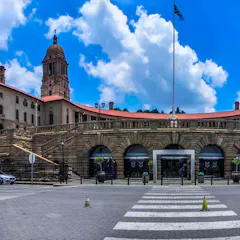
South Africa’s governance challenge can’t simply be fixed by reorganising the structure of government.
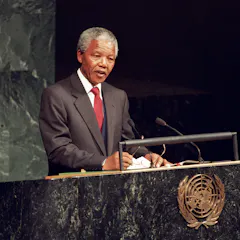
Nelson Mandela’s centenary celebrations provide a chance to debunk the lie that he sold out black South Africans.
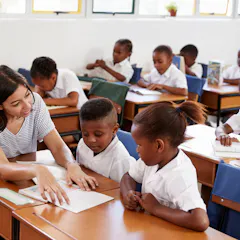
Learners benefit from being exposed to multiple and unfamiliar teacher identities.
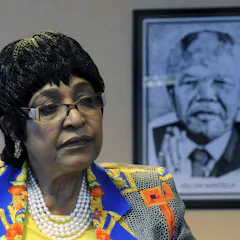
Winnie Madikizela-Mandela’s struggle was for humanity, oftentimes waged in an inhuman way.
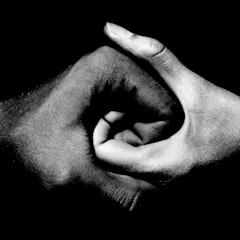
In a society like South Africa’s that is increasingly becoming polarised, simplified opinions should be approached with caution.
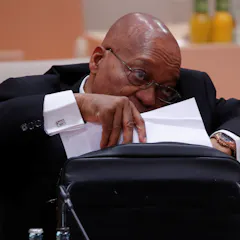
The obituary of the Zuma administration can be summed up with its ethos: grab as much and as fast as you can.

South Africa has tended to prioritise race relations over gender relations since formal apartheid ended.

Writing and rewriting black sporting history is a means of redressing exclusion.
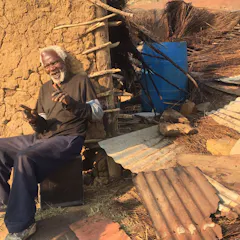
Farm dwellers’ conclusion is that the politics associated with land is not about an organised emancipatory movement. Farm dwellers are mainly preoccupied with daily survival strategies.
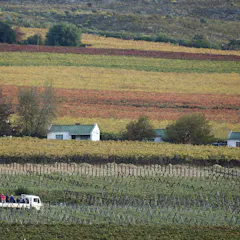
There is very little clarity as to who owns what land in South Africa. A lack of reliable data and statistics doesn’t help.
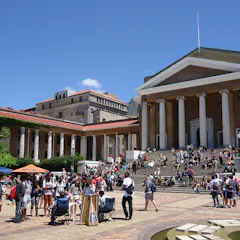
Students experience intense feelings of discomfort, confusion and even embarrassment at being classified as “different” and an “anomaly” alongside the norm of white academic success.

As South Africa marks Media Freedom Day, it’s clear that its battle isn’t over. Attacks on journalists continue –through physical intimidation and there’s also the threat of new laws.

South Africa’s Deputy President, Cyril Ramaphosa, claims the intelligence services are being used to discredit him and prevent him becoming the country’s next leader.
Top contributors
-

Professor of Law, New York Law School
-
Professor of Public Affairs, Tshwane University of Technology
-
South African Research Chair in Teacher Education; Director of Centre for International Teacher Education (CITE) & Professor of International Education and Development Policy (University of Sussex, UK), Cape Peninsula University of Technology
-
Professor and Head of Department of Political and Conflict Studies, Nelson Mandela University
-
Chief Research Specialist in Democracy and Citizenship at the Human Science Research Council and a Research Fellow Centre for African Studies, University of the Free State
-
Emeritus Professor, Poverty, Land and Agrarian Studies, University of the Western Cape
-
Professor of English Language Teaching and Literacy Development, Rhodes University
-
Distinguished Reserach Professor, Southern Centre for Inequality Studies, University of the Witwatersrand
-
NRF Accredited & Senior Researcher; Lead Coordinator of the South-South Educational Collaboration & Knowlede Interchange Initiative, Cape Peninsula University of Technology
-
Professor, Sociology, University of the Western Cape, Nelson Mandela University
-
Professor of Public Theology in the Department of Beliefs and Practices, Faculty of Theology, at the Vrije Universiteit Amsterdam (Free University of Amsterdam), Vrije Universiteit Amsterdam
-
Director and Professor of Education, University of Washington
-
Postdoctoral Research Fellow, University of the Witwatersrand
-
Senior lecturer, University of Pretoria
-
Professor of Sociology, University of the Witwatersrand