
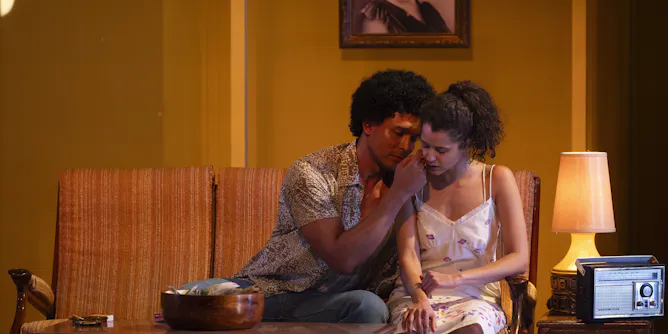
Kristy Marillier’s fierce new ensemble drama, playing at Melbourne Theatre Company, reminds us the personal is political.
Articles on Post-apartheid South Africa
Displaying 1 - 20 of 30 articles

There has been a growing recognition that psychology, as a discipline, must engage more deeply with local contexts.
He explored the darker realities of South African life in three novels before his untimely passing at the age of 30.

The study of (mostly white) residents and (mostly black) workers in an old age home in South Africa took place over seven years and it upended stereotypes.

Linguistic, social, family and cultural backgrounds play a crucial role in shaping students’ experiences.
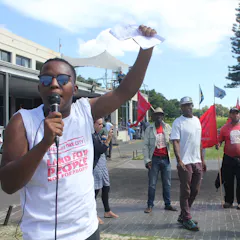
The filmmakers followed the Reclaim the City campaign for six years to document their struggle for accommodation in Cape Town’s elite ‘city bowl’.

While a few new residential developments improve racial mixing, most other developments do not.
The system has allowed many students who would otherwise not access higher education to do so, but it is fraught with problems.
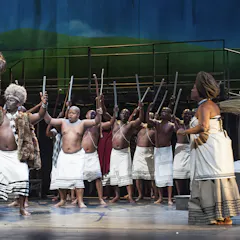
A new book explores how Cape Town became a hub for African opera.

It’s about more than wasteful destruction; it’s a way of restoring dignity to marginalised young lives.

A psychologist analyses the rugby star’s life to extract lessons.

Despite some positive shifts, the staffing situation at public higher education institutions remains polarised in terms of race and gender.

Outspoken, astute and sometimes controversial, he transcended the role of talk radio host to become a public intellectual.
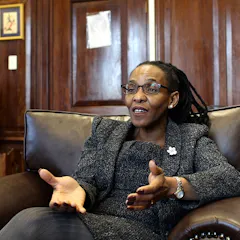
It is important to embrace all the nation’s languages in a multilingual and multicultural society. This will ensure they are used, developed and mainstreamed.

Avoiding trite moralisations, Professor Southall uses empirical research to shed light on white South Africans’ adjustment to democracy.
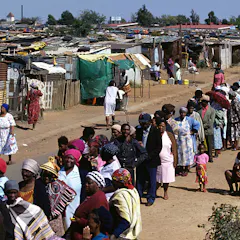
Freedom Day needs to be used by South Africans to renew their commitment to correcting their country’s faults.
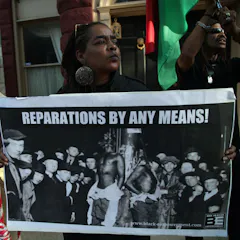
As the US debates reparations for descendants of slavery, cases in Africa help illustrate the limits of programs focused solely in financial restitution.
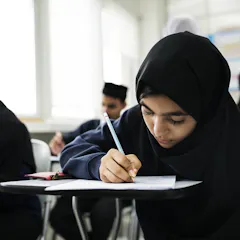
Pupils who aren’t exposed to different perspectives won’t be equipped to participate in and contribute to a democratic society.
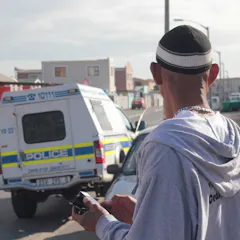
A study shows that some Cape Town gangsters choose to stand alone, preferring their independence to taking orders from a gang boss.
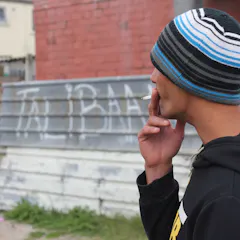
Even after becoming an ‘ex’, former gang members must still negotiate gang associations and activities in the communities they remain in.
Top contributors
-

Professor, Sociology, University of the Western Cape, Nelson Mandela University
-
Professor of Philosophy of Education, Stellenbosch University
-
Honorary research affiliate, Centre of Criminology, University of Cape Town
-
Senior lecturer, School of Governance, University of the Witwatersrand
-
Acting Director: Institute for Pan-African Thought & Conversation, University of Johannesburg
-
Professor, Institute for Poverty, Land and Agrarian Studies, University of the Western Cape
-
Public Health Researcher, Anglia Ruskin University
-
Postdoctoral fellow, SARChi Chair in Gender politics, Stellenbosch University
-
Visiting Professor of Social Work, University of Johannesburg
-
Professor of Urban Governance, University of the Witwatersrand
-
Professor in Africana & Latin American Studies
-
Associate Professor: Ali Mazrui Centre for Higher Education Studies, University of Johannesburg
-
Researcher, Gauteng City-Region Observatory
-
Director in the Centre for Excellence in Learning and Teaching (CELT), Durban University of Technology
-
Emeritus Professor, Poverty, Land and Agrarian Studies, University of the Western Cape