

Decolonising the curriculum is far more nuanced than replacing theorists and authors. Universities first need to define how they approach the development and dissemination of curricula.
Articles on Post-apartheid
Displaying 61 - 80 of 107 articles
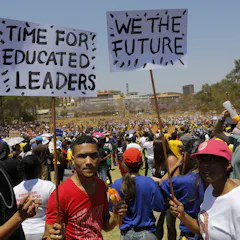
South Africa’s university students have shown that they can have an impact on the political landscape. That’s why it’s so important that they exercise their right to vote.
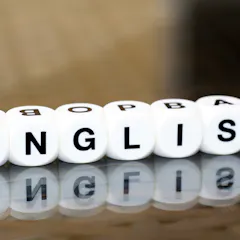
In South Africa there’s a value judgment attached to students who take part in universities’ English for Academic Purposes programmes. This shouldn’t be the case.
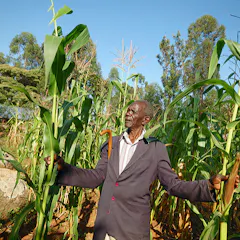
Decolonisation of the curriculum doesn’t have to mean the destruction of Western knowledge, but it’s decentring. Such knowledge should become one way of knowing rather than the only way.
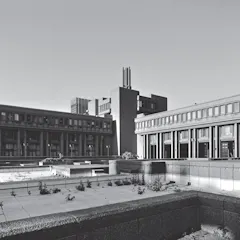
Taking stock of modernist buildings and their potential for reuse is a necessary public project in Johannesburg. A new book that tells the stories of reuse in this African metropolis can help do that.

Sections of South Africa’s student movements regard transformation as a complete failure. Responding to this perceived failure, some have adopted an anti-democratic stance.

South Africa needs to build a mental infrastructure that will allow people to individually and collectively engage in a bold, courageous and trutfhul dialogue.
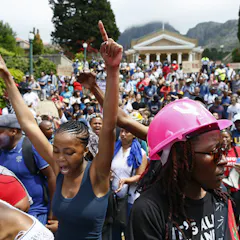
Women students have not been afraid to embrace the label of feminist, leading a wave of university protests in South Africa during 2015 and 2016.
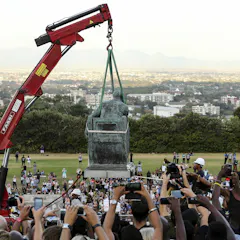
There is a risk that because of fatigue, frustration and silencing the important moment created by South Africa’s student movements will pass by with no proper, long-term structural change.
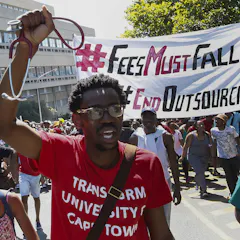
Free public higher education is possible and necessary. It’s also realistic, if it’s based on thorough research, consultation and students giving back through community service after graduation.
Curriculum transformation has to happen. But it has to go further than simply borrowing ideas and concepts.
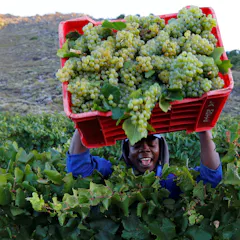
Land issues are increasingly at the centre of politics in South Africa, but the debate needs fresh ideas.
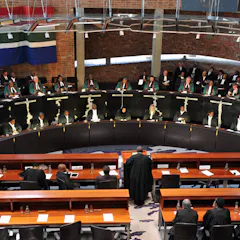
For law faculties, the transformative vision embodied in South Africa’s constitution provides a potent driver for change. So what does a transformed law faculty look like?
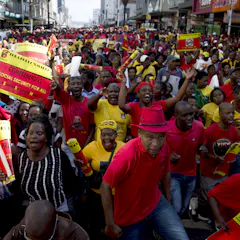
South African labour unions have shown themselves to be effective in translating the prescripts of the law into benefits for their members. This is particularly true in the public sector.
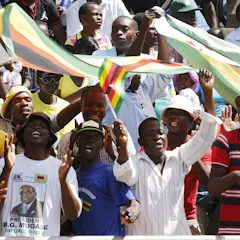
Namibia’s new elite has used “affirmative action” for self-enrichment, while the majority of the population remains excluded from its the wealth. Meanwhile, Zimbabwe’s socio-economic woes continue.
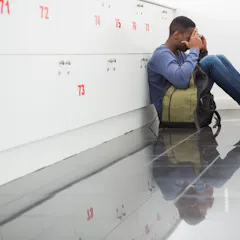
Students from poorer backgrounds feel anxious, ashamed and stressed in the middle-class environment of a university.
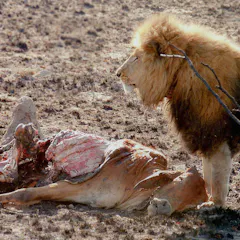
Lions and leopards seem to prefer cattle belonging to farmers who treat their workers badly. Don’t blame the animals – this is a human problem.
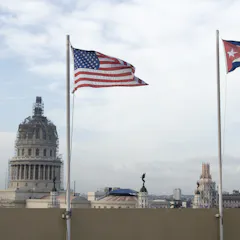
Cuba’s National Capitol Building has been reclaimed as the seat of the National Assembly 54 years after it was abandoned by the new revolutionary government. There are lessons in this for others.

South Africa’s educational policies and curricula tend to be biased against rural lifestyles - even though nearly 20 million people live in the country’s rural areas.
Progress in South Africa’s welfare system is being hindered by corruption, labour disputes and a lack of research and innovation in the field.
Top contributors
-

Professor of Law, New York Law School
-
Professor of Public Affairs, Tshwane University of Technology
-
South African Research Chair in Teacher Education; Director of Centre for International Teacher Education (CITE) & Professor of International Education and Development Policy (University of Sussex, UK), Cape Peninsula University of Technology
-
Professor and Head of Department of Political and Conflict Studies, Nelson Mandela University
-
Chief Research Specialist in Democracy and Citizenship at the Human Science Research Council and a Research Fellow Centre for African Studies, University of the Free State
-
Emeritus Professor, Poverty, Land and Agrarian Studies, University of the Western Cape
-
Professor of English Language Teaching and Literacy Development, Rhodes University
-
Distinguished Reserach Professor, Southern Centre for Inequality Studies, University of the Witwatersrand
-
NRF Accredited & Senior Researcher; Lead Coordinator of the South-South Educational Collaboration & Knowlede Interchange Initiative, Cape Peninsula University of Technology
-
Professor, Sociology, University of the Western Cape, Nelson Mandela University
-
Professor of Public Theology in the Department of Beliefs and Practices, Faculty of Theology, at the Vrije Universiteit Amsterdam (Free University of Amsterdam), Vrije Universiteit Amsterdam
-
Director and Professor of Education, University of Washington
-
Postdoctoral Research Fellow, University of the Witwatersrand
-
Senior lecturer, University of Pretoria
-
Professor of Sociology, University of the Witwatersrand