

Reggae in South Africa has lost its visibility and prominence inside the country after apartheid. But local artists have built up extensive international links.
Articles on Post-apartheid
Displaying 41 - 60 of 107 articles
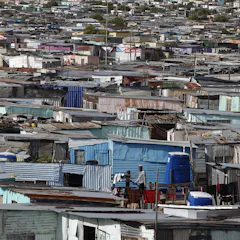
Has South Africa’s constitutional project failed? Is the country’s constitution an obstacle to meaningful redistribution and land reform?
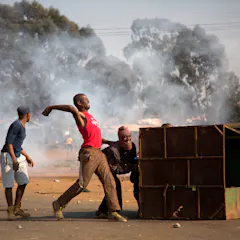
Recent events suggest that South Africa’s government may be resorting to short-term measures to pacify anger over lack of housing. But what’s needed is a major overhaul of the housing policy.
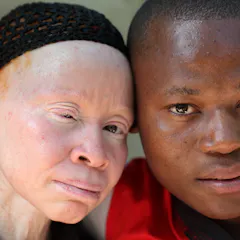
People with albinism tend to identify with the black rather than the white community. Their physical differences, though, mean they don’t fit into either race group.
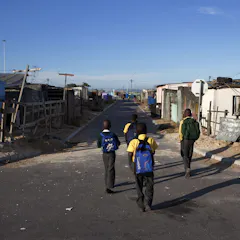
Policies must seek to improve the manner in which the language of instruction is taught to learners who don’t speak that language at home.
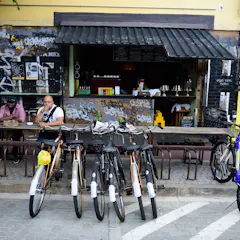
Maboneng in Johannesburg represents one strand of the type of urban “development” that’s advocated for by the proponents of “global cities”.
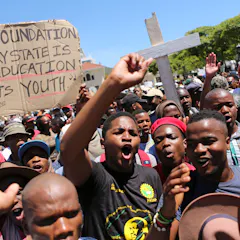
Generational rebellion is an enduring feature of all societies. Indeed, it is the dynamic through which societies renew themselves and move forward.
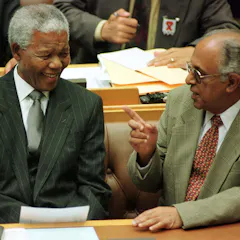
South African struggle stalwart Ahmed Kathrada believed in non-racialism to his core, even as others around him began to argue for an Africanist approach.
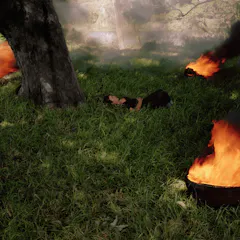
Hidden underneath painting codes are the violence and bloodshed of colonial exploitation. ‘Lull’ is a daunting reminder of this.
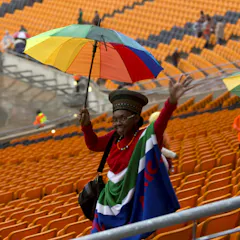
Despite the noble goals of the new South Africa and its ideals of racial harmony, racial tensions remain a major problem in the country. Prejudice and bigotry persists even in universities.

More than two decades after apartheid ended, South African universities still tend to offer a view of the country and continent that is rooted in colonial and apartheid thinking.

If researchers pose the right questions about transformation, this can lead to better answers, stronger policies and, ultimately, real change.

How can conversations around race, class and gender be allowed back into classrooms without becoming emotionally harmful and divisive?

Universities are so busy trying to make ends meet that there’s no time to listen to their communities’ stories. It’s crucial to develop safe spaces where tough conversations can happen.
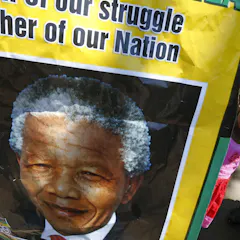
Student activists are losing faith in the legacies of anti-apartheid heroes like Nelson Mandela. Perhaps all South Africans should do the same. It may just be what the country needs for its future.

The history of artisanal training and employment in South Africa has been one of systematic social exclusion and inequality.
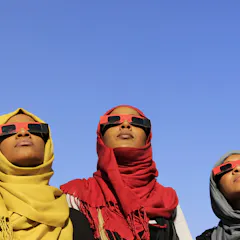
Collaboration is one of the keys to making African science soar: when the continent’s universities work together, they can produce amazing results.

The system of apartheid is long gone. But its legacy of poor funding for historically black universities - and of planning that banished black universities to cities’ margins - remains.

Schools need to adapt and evolve in changing circumstances and conditions as their students’ demographic composition shifts.
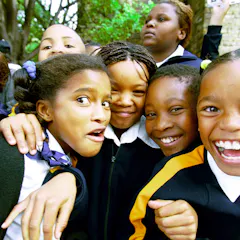
Teachers in South Africa need far more high quality professional development, policy direction and support to take social cohesion from concept to classroom
Top contributors
-

Professor of Law, New York Law School
-
Professor of Public Affairs, Tshwane University of Technology
-
South African Research Chair in Teacher Education; Director of Centre for International Teacher Education (CITE) & Professor of International Education and Development Policy (University of Sussex, UK), Cape Peninsula University of Technology
-
Professor and Head of Department of Political and Conflict Studies, Nelson Mandela University
-
Chief Research Specialist in Democracy and Citizenship at the Human Science Research Council and a Research Fellow Centre for African Studies, University of the Free State
-
Emeritus Professor, Poverty, Land and Agrarian Studies, University of the Western Cape
-
Professor of English Language Teaching and Literacy Development, Rhodes University
-
Distinguished Reserach Professor, Southern Centre for Inequality Studies, University of the Witwatersrand
-
NRF Accredited & Senior Researcher; Lead Coordinator of the South-South Educational Collaboration & Knowlede Interchange Initiative, Cape Peninsula University of Technology
-
Professor, Sociology, University of the Western Cape, Nelson Mandela University
-
Professor of Public Theology in the Department of Beliefs and Practices, Faculty of Theology, at the Vrije Universiteit Amsterdam (Free University of Amsterdam), Vrije Universiteit Amsterdam
-
Director and Professor of Education, University of Washington
-
Postdoctoral Research Fellow, University of the Witwatersrand
-
Senior lecturer, University of Pretoria
-
Professor of Sociology, University of the Witwatersrand