

University students in South Africa tend to fall into a “single story” trap, ignoring other individuals’ experiences to construct an understanding of the country’s political realities.
Articles on Post-apartheid
Displaying 81 - 100 of 107 articles
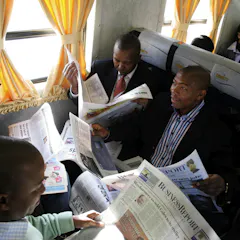
Research in the Eastern Cape, South Africa, shows that many young, black and poor people do not recognise themselves or their communities in the stories they see, hear or read in mainstream media.
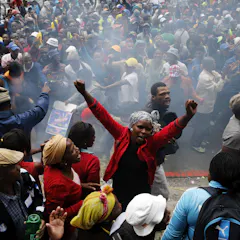
South Africans’ faith in the post-apartheid system of democracy is clearly slipping - and some even suggest that a return to apartheid would be a good thing.
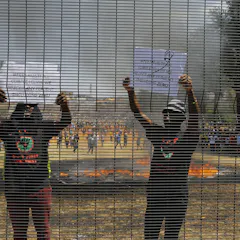
The student protests that rocked South Africa’s universities in 2015 are part of a class struggle as poor and marginalised people fight for their place in an unequal system.
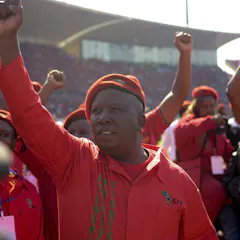
South African opposition politician Julius Malema has blamed economic policies put in place during Nelson Mandela’s era for the country’s high levels of inequality. He may have a point.

The central thrust of Haffajee’s book is compelling. It argues that black South Africans, especially the new generation of young, black ‘born frees’ are obsessed with whiteness and white privilege.
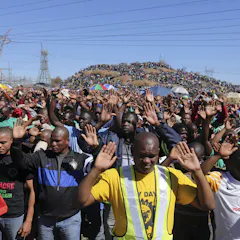
The reporting of the Marikana massacre was characterised by embedded journalism, sensationalism and polarisation of views. The media became a loudspeaker for powerful political and economic interests.
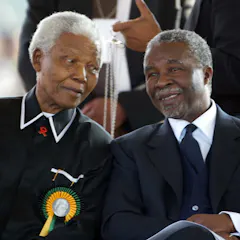
Over the past two decades, it has not been easy for any country – let alone a newly freed one, like post-apartheid South Africa – to understand the rapidly changing world.
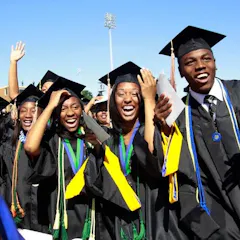
Universities in South Africa have tried to “grow their own timber” in a bid to diversify staff bodies. These programs haven’t been wildly successful. Why, and what can be done differently?
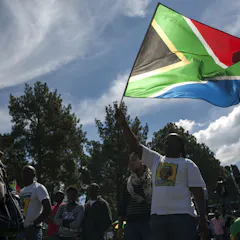
University students in South Africa have shown the potential of mass mobilisation to influence policy in advancing justice for their constitutional democratic rights.

Since the 1940s, it’s been common for political moderates to move to the fore in South Africa – then, intermittently, to the background. They are replaced by radicals or exclusivist nationalists.
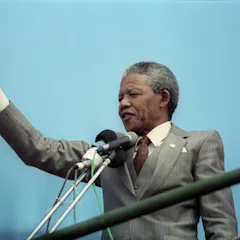
The late South African statesman Nelson Mandela exemplifies lifelong learning that is deeply rooted in dialogue.
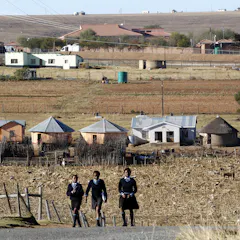
A lot has changed for the better in South Africa’s education system - but inequality remains a thorn in the country’s side. How can we disrupt educational inequality?
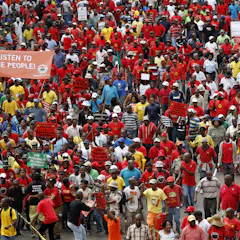
Economic transformation of unequal societies in a democratising context is difficult. This requires a creative mix of policy options underpinned by a commitment to social justice.
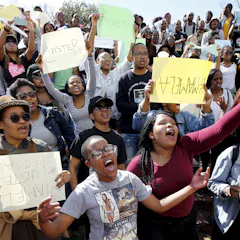
The university should be the bastion of the right to free expression in the promotion of democracy, and has a moral and ethical obligation to provide spaces for fierce debate and critical engagement.
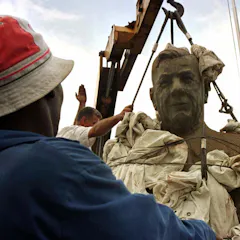
Vocational training is regarded as “low status” in South Africa. Much of the negativity around technical and vocational work seems to lie in the country’s history.
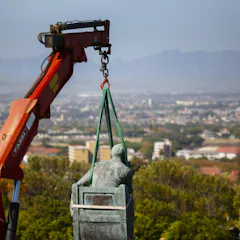
How can the higher education sector guard against proposed transformation measures being merely superficial quick fixes? At least part of the answer may lie in institutional governance.
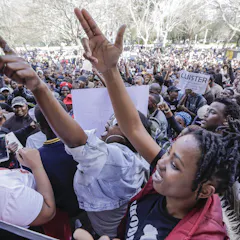
Black youth are grappling with the question of the meaning of freedom in post-apartheid South Africa. They seek an antidote to their reality wherein blackness continues to be mocked and marginalised.
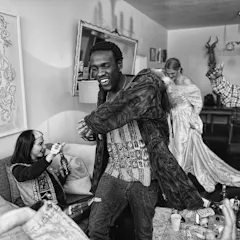
The journey of South African film has been a tumultuous one, with a disjointed history and an uncertain future.
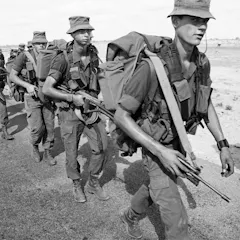
The impact that the system of conscription had on the roughly 600,000 white men who became both pawns and agents of the apartheid state has seldom been publicly acknowledged.
Top contributors
-

Professor of Law, New York Law School
-
Professor of Public Affairs, Tshwane University of Technology
-
South African Research Chair in Teacher Education; Director of Centre for International Teacher Education (CITE) & Professor of International Education and Development Policy (University of Sussex, UK), Cape Peninsula University of Technology
-
Professor and Head of Department of Political and Conflict Studies, Nelson Mandela University
-
Chief Research Specialist in Democracy and Citizenship at the Human Science Research Council and a Research Fellow Centre for African Studies, University of the Free State
-
Emeritus Professor, Poverty, Land and Agrarian Studies, University of the Western Cape
-
Professor of English Language Teaching and Literacy Development, Rhodes University
-
Distinguished Reserach Professor, Southern Centre for Inequality Studies, University of the Witwatersrand
-
NRF Accredited & Senior Researcher; Lead Coordinator of the South-South Educational Collaboration & Knowlede Interchange Initiative, Cape Peninsula University of Technology
-
Professor, Sociology, University of the Western Cape, Nelson Mandela University
-
Professor of Public Theology in the Department of Beliefs and Practices, Faculty of Theology, at the Vrije Universiteit Amsterdam (Free University of Amsterdam), Vrije Universiteit Amsterdam
-
Director and Professor of Education, University of Washington
-
Postdoctoral Research Fellow, University of the Witwatersrand
-
Senior lecturer, University of Pretoria
-
Professor of Sociology, University of the Witwatersrand