
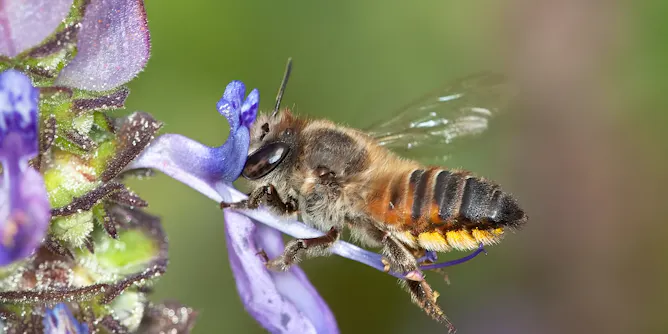
Pollination in South Africa’s ecosystems is extremely complex. However new advances such as pollen metabarcoding help us understand interactions between pollinators and pollen.
Articles on Pollinators
Displaying 141 - 160 of 175 articles
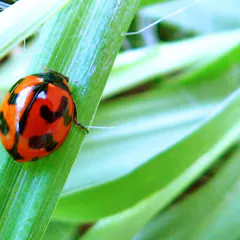
If warmer weather is your sign to reach for the pesticide, think again. From better soil to your own army of beneficial bugs, here are five reasons to put down the insect spray.
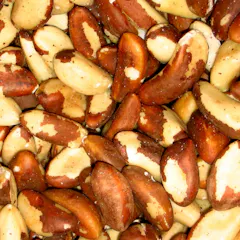
Is the 61% spike in the price of Brazil nuts this year because we’re going nuts for nuts?
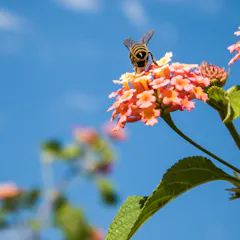
New research shows bees see a blue halo around flowers thanks to nanostructures on its petals.
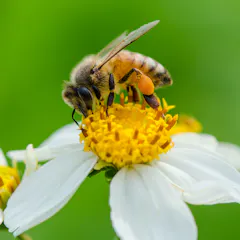
Urban bees deal with what’s known as “habitat patches,” discontinuous patches of green like gardens, parks and ravines. Green roofs could offer relief to bees dealing with habitat fragmentation.
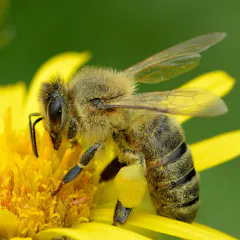
Bees need pollen to survive and grow, but not all plants can provide the right mix.
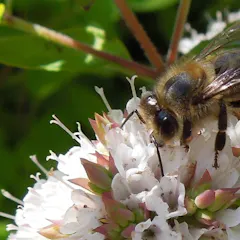
Garden pollinators can turn their noses up at the flowers human eyes find most beautiful.
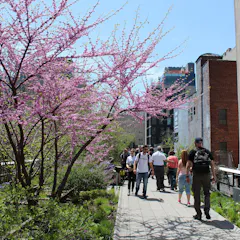
In an urbanizing world, people increasingly are seeking out nature in cities. Research shows that diverse species of animals, plants and insects can thrive in areas that humans have altered.
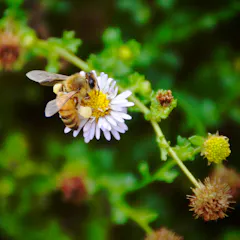
It’s a decade since US beekeepers first noticed that their bees were mysteriously dying. Now we know much more about Colony Collapse Disorder, raising hopes that we can turn bees’ fortunes around.
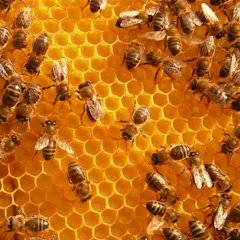
Every new batch of bees needs the equivalent of eight hectares of lavender fields to prosper.
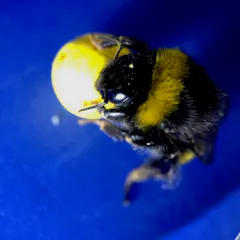
They shoot, they score … if there’s a sugary reward at the end of it.

Collecting pollen takes a surprising amount of teamwork.
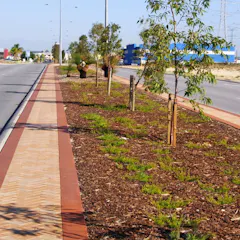
It is possible to use small spaces such as transport corridors, verges and the edges of sporting grounds for native wildlife habitat restoration, helping to bring biodiversity back into cities.

While the Bureau of Meteorology is predicting an increase in the average temperature this summer, entomologists are forecasting an increase in insect activity.
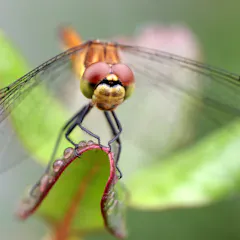
Study shows the footprint of climate change is already vast and that species are trying to adapt to rising temperatures.

Spring has sprung and gardens are flush with growth. Can this annual spike in plant activity tell us anything about climate change?
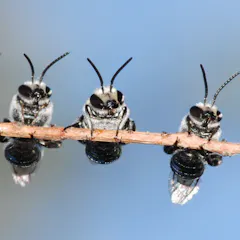
Whether you live in an urban apartment or a rural homestead, your outdoor area is more than just a private space. It’s a thriving ecosystem.
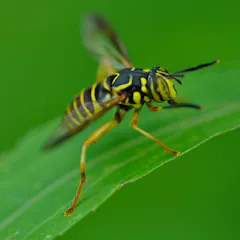
Hoverflies have evolved to trick predators into thinking they have a sting in the tail – but the predators have fought back.
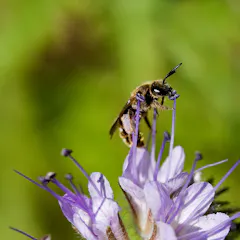
Two new studies have linked controversial pesticides neonicotinoides to wild bee and butterfly declines.
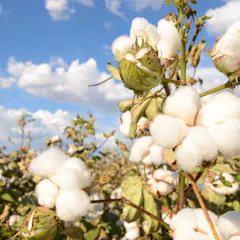
Bees and other pollinating insects are under stress worldwide. Research in South Texas shows that simple steps like planting wildflowers near fields can help pollinators and boost farmers’ profits.
Top contributors
-

Lecturer in Ecology, University of New England
-
Associate Professor in Entomology, University of Sydney
-
Research Affiliate in Human Ecology, University of California, Davis
-
Senior Research Associate in Entomology, Lancaster University
-
Associate Professor, Department of Physiology, Monash University
-
Professor of Ecology, University of Bristol
-
Emeritus Professor of Apiculture, University of Sussex
-
Associate Professor in Ecology, Northumbria University, Newcastle
-
Adjunct Research Fellow, Curtin University
-
Associate Professor, Faculty of Environmental and Urban Change, York University, Canada
-
Professor of Behavioural Ecology, UCL
-
Extension Agent, University of Florida
-
Professor of Biodiversity and Ecosystem Services, University of Reading
-
Lecturer in Conservation Ecology, Anglia Ruskin University
-
Professor and Department Head, Entomology and Plant Pathology, University of Tennessee