
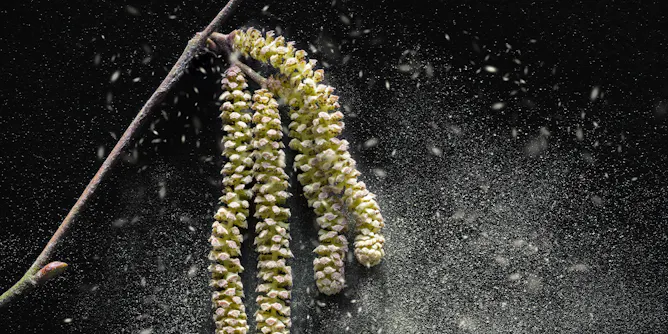
Pollen brings seasonal misery to millions of Americans, but it serves a critical purpose: fertilizing many kinds of plants, including food crops.
Articles on Pollinators
Displaying 61 - 80 of 175 articles
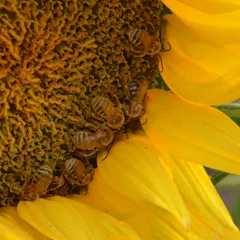
Huge single-crop fields attract bees in such numbers that they spread parasites to one another. Planting diverse mixes of flowers around fields helps spread out pollinators and keep them healthy.

Studies suggest that seeds coated with neonicotinoid insecticides may harm nontarget insects, mammals and birds. In response, states are starting to restrict use of these products.
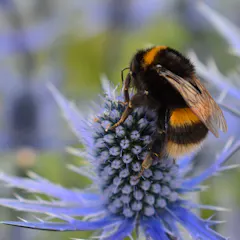
Climate change is throwing plants and pollinators out of sync.
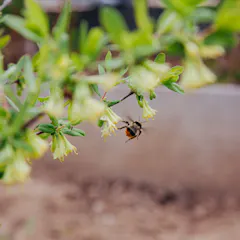
Up to 85% of the nectar available to pollinating insects in a city comes from gardens. What we plant – whether in an allotment or a window box – can make a huge difference.

Armed with smartphones, keen eyes and curiosity, students are learning to provide vital observations that add to our knowledge of the distribution of plant and animal species and how to conserve them.

A fly does some of its digesting outside its body before it even eats any food.
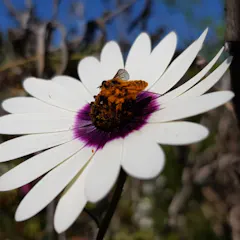
Half of all flowering plants mostly or completely rely on animal pollinators to make seeds. A decline in pollinators could cause major disruptions in natural ecosystems.
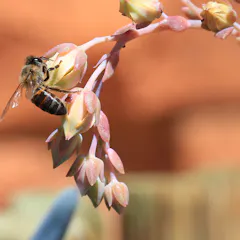
Honeybees are crucial for pollinating crops and plants. They need good forage resources to do this and these resources are under threat in South Africa.
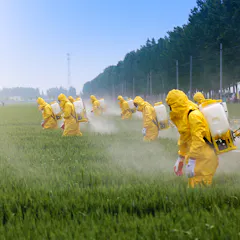
New research reveals an overlooked, but potentially significant, problem with agrochemicals and pollinators.
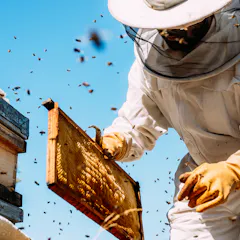
Beekeeping changes how people see and relate to the environment – there’s a lot we can learn.
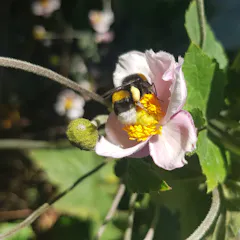
Bees can perceive flower colours and hues which are invisible to us — such as those produced by reflected ultraviolet radiation.
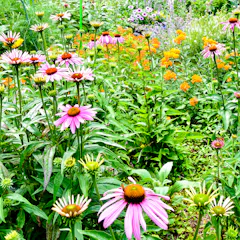
Cities are among the harshest habitats on Earth. But when planned properly, private gardens can help improve their liveability.

Baobab flowers have male and female parts but individual trees appear to be favouring one rather than the other. To keep tree populations healthy and fruitful, both types are needed.

Planting a garden for winter-active insects is a wonderful way to support local biodiversity. Your garden will thrive with the free pollination and pest control services the insects provide.
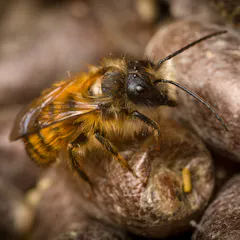
First ever feeding experiments reveal that solitary bees need to carb-load – and can be picky when it comes to dieting.
Preserved in amber, a tiny beetle has shed light on the moment the world first burst into bloom.
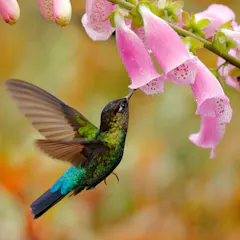
We studied how foxgloves taken to the Americas less than 200 years ago have changed compared to natives in Europe.
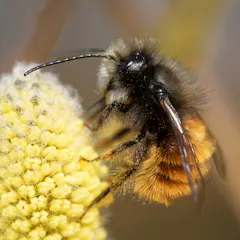
A diverse pollinator community is a reliable one.
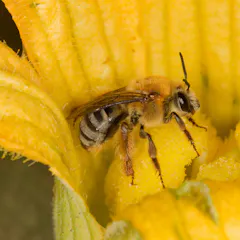
EU-banned pesticides could not only threaten wild bees where they eat, but where they sleep too.
Top contributors
-

Lecturer in Ecology, University of New England
-
Associate Professor in Entomology, University of Sydney
-
Research Affiliate in Human Ecology, University of California, Davis
-
Senior Research Associate in Entomology, Lancaster University
-
Associate Professor, Department of Physiology, Monash University
-
Professor of Ecology, University of Bristol
-
Emeritus Professor of Apiculture, University of Sussex
-
Associate Professor in Ecology, Northumbria University, Newcastle
-
Adjunct Research Fellow, Curtin University
-
Associate Professor, Faculty of Environmental and Urban Change, York University, Canada
-
Professor of Behavioural Ecology, UCL
-
Extension Agent, University of Florida
-
Professor of Biodiversity and Ecosystem Services, University of Reading
-
Lecturer in Conservation Ecology, Anglia Ruskin University
-
Professor and Department Head, Entomology and Plant Pathology, University of Tennessee