
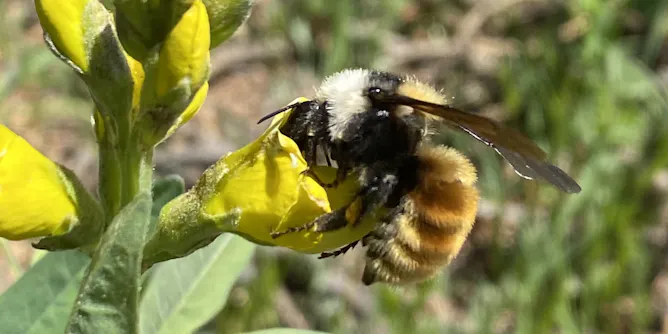
Decades-long environmental studies can reveal trends caused by climate change better than projects that last only a year or two.
Articles on Pollinators
Displaying 21 - 40 of 175 articles
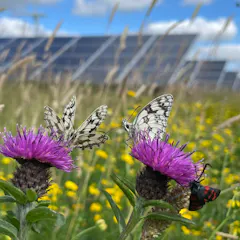
New research shows that solar farms can boost biodiversity and benefit nature under the right policies and appropriate management.

Researchers have been estimating the vast numbers of insects, including many pollinators, migrating at one location in the Pyrenees. But climate change and habitat loss could affect their abundance.
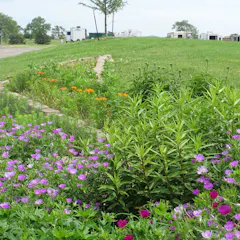
NoMowMay is a catchy concept, but it doesn’t provide the food that native North American pollinators need or lasting support for them.
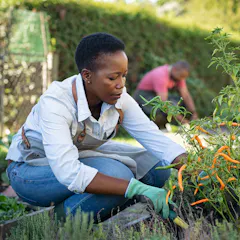
This episode explores how colonial history has affected what we plant and who gets to garden. We also discuss practical gardening tips with an eye to Indigenous knowledge.
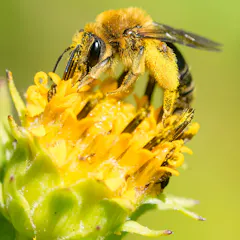
Wild bees face risks from domesticated bees, habitat loss, and climate change. Supporting bee diversity in Ontario is an important component of promoting a healthy environment.
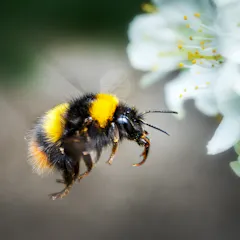
Check that something is blooming every week, March through October, to help bees.

Solar development isn’t always good for the land, but pairing it with agriculture can produce multiple benefits.
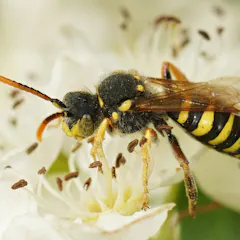
The nutritional needs of bees are complex and monoculture crops aren’t providing a diverse diet. Introducing more diverse wildflower meadows and green spaces could benefit wild pollinators.
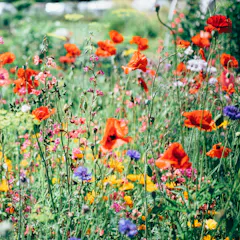
Flowers tend to stand out against a natural background. A new study shows this contrast evolved in a key relationship with their most famous pollinators – bees.
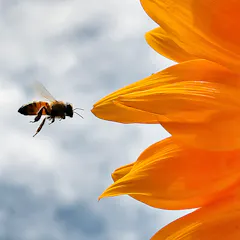
Inert ingredients are added for purposes other than killing pests and are not required under federal law to be tested for safety or identified on pesticide labels.

Two EU-funded projects are looking at high-tech solutions that could transform honeybee colonies into bio-hybrid entities.

The Varroa mite is here to stay. This will have wide-ranging impacts on beekeeping and the crops that rely on honey bee pollination in Australia.
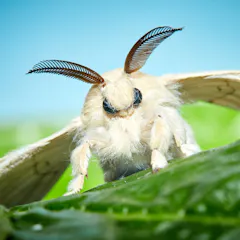
Moths are often overlooked as the poor cousin to butterflies, but they are truly remarkable creatures.

While Canada pledges $200 million to promote biodiversity, Doug Ford removes lands from the Greenbelt. Here is why we all should care.
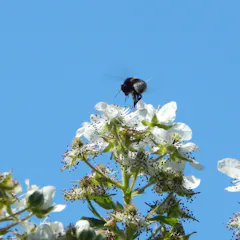
Native common wildflowers provide large amounts of pollen and nectar for insects – but many are undervalued by the public.
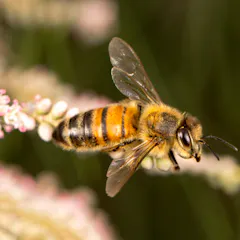
Feral honeybees have become a major problem in Australia. It’s time to develop effective and practical control measures.
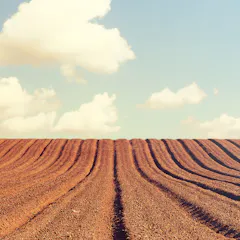
Farms have become less friendly for our insect friends – this must be reversed if we want food to eat.
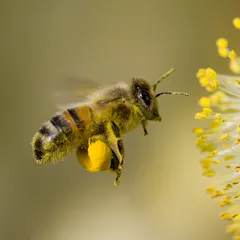
Picking the correct flowers is a crucial job for honey bees, so it’s no wonder they are incredibly efficient at it. But how can such little brains do it?
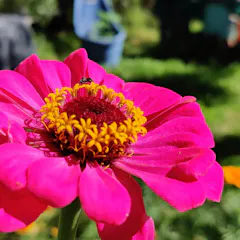
New research suggests insects have pollinated flowers since the pollen-bearing blooms first evolved more than 140 million years ago.
Top contributors
-

Lecturer in Ecology, University of New England
-
Associate Professor in Entomology, University of Sydney
-
Research Affiliate in Human Ecology, University of California, Davis
-
Senior Research Associate in Entomology, Lancaster University
-
Associate Professor, Department of Physiology, Monash University
-
Professor of Ecology, University of Bristol
-
Emeritus Professor of Apiculture, University of Sussex
-
Associate Professor in Ecology, Northumbria University, Newcastle
-
Adjunct Research Fellow, Curtin University
-
Associate Professor, Faculty of Environmental and Urban Change, York University, Canada
-
Professor of Behavioural Ecology, UCL
-
Extension Agent, University of Florida
-
Professor of Biodiversity and Ecosystem Services, University of Reading
-
Lecturer in Conservation Ecology, Anglia Ruskin University
-
Professor and Department Head, Entomology and Plant Pathology, University of Tennessee