

The police officer avoided jail time for the manslaughter of 95 year-old Clare Nowland. The case shows what the community thinks about how much is too much force.
Articles on Policing
Displaying 41 - 60 of 376 articles

One person said: ‘I had to report at the police station where he works, where everybody knows everybody’.
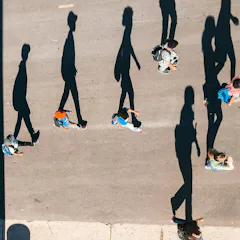
Experts argue that bias is systemic, and solutions should focus on changing policies and structures, not just individual behaviour.

Graffiti removal forms part of the visual culture of contemporary cities. The knowledge and aesthetic contributions of “buffers” have gone unnoticed for too long.

Adelle Hulsmeier’s project uses student films to help police tackle complex crimes.
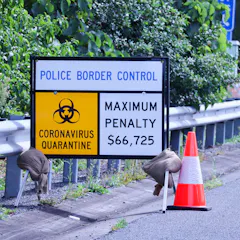
In our new study, people told us they’d been fined for leaving home to access drug treatment programs – and still couldn’t afford to pay, years later.

The Philadelphia Police Department plans to expand its use of drones, including as first responders.
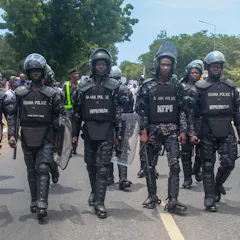
Our new research identifies four ways these protests are being criminalised and repressed.

While AI promises to transform criminal justice by increasing operational efficiency and improving public safety, it also comes with risks around privacy, accountability, fairness and human rights.

Domestic violence is not a random event. New research indicates most men who perpetrate domestic violence have contact with police well before they are charged with a domestic violence crime.

As of late September 2024, homicides in Philadelphia are down 40% compared with 2023.

Despite loud calls for tough policing of e-scooters and even outright bans, the problems can be better managed with technology and public education.
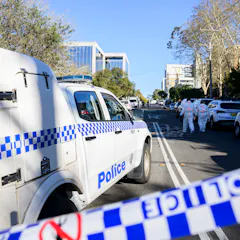
A collection of essays, edited by a former Queensland police officer, contains eyewitness accounts of systemic racism, homophobia, misogyny and institutionalised toxicity.

Organised crime has taken root in the Pacific and many countries are struggling to respond.
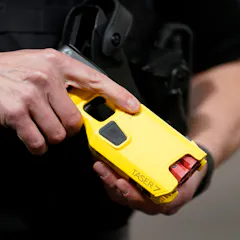
Tasers have become a common tool in UK policing, sparking debates over their safety and effectiveness.
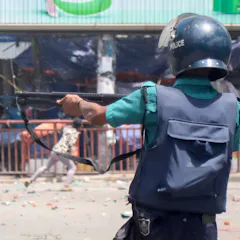
Police brutality has left many protesters dead in Bangladesh, but the authorities are not being held to account.

Our research found that while ShotSpotter may have benefits for improved detection and response, it offers little benefit for enforcement and clearance and did not reduce gunshot victimization.
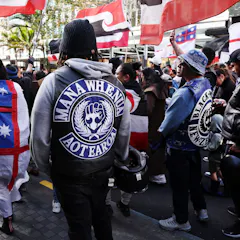
International research suggests many anti-gang policies actually increase crime, rather than reduce it. These local experts could help us do better – if New Zealand’s politicians would listen.

An analysis of trends over the last 20 years in Canada could not find any correlation between increases in municipal police budgets and a reduction in crime rates. There’s another way forward.

Our research shows the smallest of appearance changes are enough to lead to mistaken identifications in a police line-up. It doesn’t bode well for the justice system.
Top contributors
-

Associate Professor in Criminal Justice and Criminology, Bond University
-
Professor of Law, University of Technology Sydney
-
Assistant Professor of Criminal Justice and Criminology, Georgia State University
-
Emeritus Professor in Law and Criminal Justice, Adelaide University
-
Senior Lecturer in Law, UNSW
-
Associate Professor, UNSW
-
Assistant Professor, Augusta University
-
Professor (Practice), Faculty of Business and Economics, Monash University
-
Professor Emerita of Criminology, UNSW
-
PhD Candidate in Social Work and Criminology, UNSW
-
Professor, Sociology, University of Alberta
-
Professor of Criminology, University of Leeds
-
Eleanor Rathbone Chair of Sociology, University of Liverpool
-
Assistant Professor of Criminology and Criminal Justice, University of South Carolina
-
Associate Professor in Law, University of Canterbury