

For host cities football fans are simultaneously potential consumers and criminals. But they have rights, and fan zones are a good way of protecting fans, the public and the streets.
Articles on Policing
Displaying 61 - 80 of 376 articles
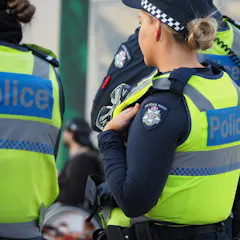
New research shows police specialising in family violence are concerned current approaches leave victim-survivors unprotected.
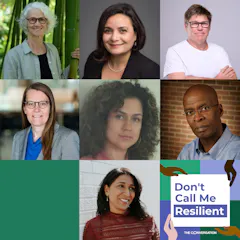
In this bonus episode, you’ll meet some of the producers who help make this podcast to revisit some of our favourite episodes from past seasons.

Community notifications are intended to be helpful, however, they can also make reintegrating back into the community challenging for released individuals.
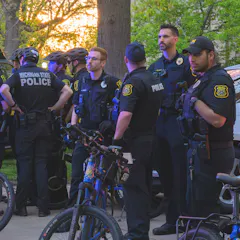
From culture shock to a lack of family support, slow progress on diversity in police recruitment reflects real challenges in a tough field.
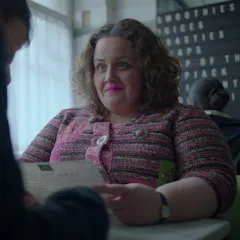
By using risk assessment guidelines, police could have taken steps to mitigate Martha’s stalking of Donny before it got worse.

Confiscating firearms from alleged abusers might seem like a good idea, but it’s unlikely to make much of a difference.
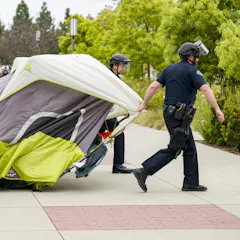
Framing dissent and poverty as a menace to public order can threaten fundamental rights, particularly when it’s used to justify the deployment of predictive technology.

The SIU plays a vital role in providing oversight of Ontario police officers. But how effective is the agency in practice?

As climate change ravages coastal livelihoods, piracy is on the rise, imperilling seafarers and trade.
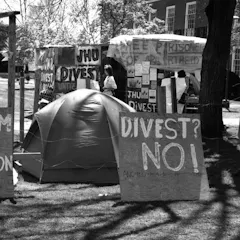
In the 1980s, university administrators called the police on anti-apartheid protesters, threatened to revoke their scholarships and ordered staff to demolish encampments.
The diagnosis of excited delirium has come under fire from doctors and other mental health professionals, but is still used by police forces, sometimes with tragic results. It’s time to end its use.

The current blue-on-blue battle between competing law enforcement agencies in a large British Columbia city does little to strengthen public trust in the rule of law and in our police forces
A social science researcher followed a dozen teens from different neighborhoods in North, West and Northeast Philadelphia, tracking their family histories and heart rates as they navigated daily life.
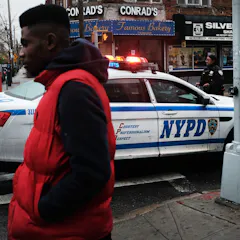
Evidence from NYC shows that stop-and-frisk policing leads to greater mistrust of police and more racial disparities in the criminal justice system.

Stopping someone against their will can be false imprisonment or even kidnapping. There are laws that determine who is acting as a hero and who is acting as a vigilante.
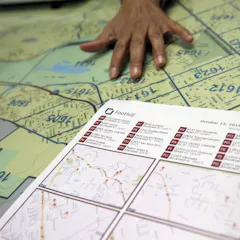
Predictive policing has been a bust. The Department of Justice nurtured the technology from researchers’ minds to corporate production lines and into the hands of police departments.
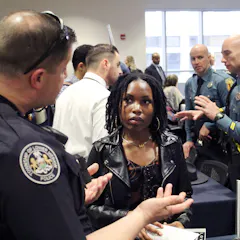
In a bid to reduce violent crime, the city’s new mayor is calling for a revitalization of a controversial practice the police department had mostly abandoned.

This isn’t the first time that US authorities have criminalized civil disobedience or framed grassroots organizing as a conspiracy.
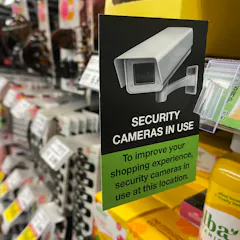
The food theft crisis is framed as a threat to paying customers. This furthers the divide between those who can still afford groceries and those who cannot.
Top contributors
-

Associate Professor in Criminal Justice and Criminology, Bond University
-
Professor of Law, University of Technology Sydney
-
Assistant Professor of Criminal Justice and Criminology, Georgia State University
-
Emeritus Professor in Law and Criminal Justice, Adelaide University
-
Senior Lecturer in Law, UNSW
-
Associate Professor, UNSW
-
Assistant Professor, Augusta University
-
Professor (Practice), Faculty of Business and Economics, Monash University
-
Professor Emerita of Criminology, UNSW
-
PhD Candidate in Social Work and Criminology, UNSW
-
Professor, Sociology, University of Alberta
-
Professor of Criminology, University of Leeds
-
Eleanor Rathbone Chair of Sociology, University of Liverpool
-
Assistant Professor of Criminology and Criminal Justice, University of South Carolina
-
Associate Professor in Law, University of Canterbury