

Polar ice isn’t all the same - it can be divided roughly into “land ice” and “sea ice”. What matters most for sea levels is how much ice slides off the land and melts in the sea.
Articles on Polar ice
Displaying 21 - 28 of 28 articles

New mapping shows how Antarctica’s huge Totten Glacier has retreated far inland, raising sea levels by more than a metre. Rising temperatures could trigger it to do so again.
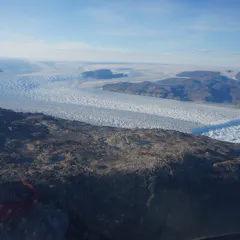
Could sea levels really rise by several metres this century. Probably not, although this century’s greenhouse emissions could potentially set the stage for large rises in centuries to come.
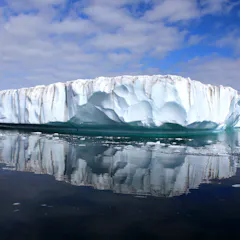
The Paris agreement has given us some solid targets to aim for in terms of limiting global warming. But that in turn begs a whole range of new scientific questions.
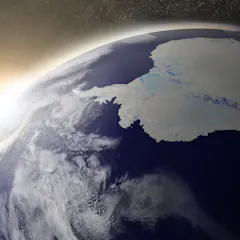
Why should we care if the polar ice sheets melt hundreds of years in the future? Because they are vital for maintaining our current climate.
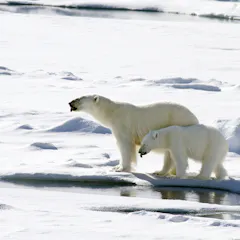
Could polar bears slip into a hibernation-like state to tough out lean hunting during summers with little sea ice? Sadly, experiment suggests no.
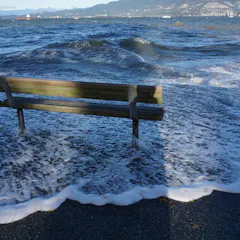
Since 1993, satellites have been used as well as tidal gauges to monitor sea level. A new calibration of this satellite record now shows that the rise in sea level is gathering pace.

Researchers in East Antarctica have surveyed an area the size of New South Wales to study the behaviour of the region’s biggest glacier - and the secrets below the ice that could speed up its melting.
Top contributors
-

Chair Professor, Climate Change Research Centre, UNSW
-
Professor of Polar Geodesy and ARC Laureate Fellow, University of Tasmania
-
CSIRO Fellow, CSIRO
-
Director, Securing Antarctica's Environmental Future and Professor of Biological Sciences, Monash University
-
Senior Lecturer, School of Geography, Planning, and Spatial Sciences, University of Tasmania
-
Chief Scientist, Australian Antarctic Division and Professor of Climate Science, Australian National University
-
Professor in Biodiversity and Conservation, The University of Queensland
-
Research Lead, Carbon Dioxide Removal, CSIRO
-
Pro Vice-Chancellor of Research, University of Technology Sydney
-
Research assistant professor, University of Alaska Fairbanks
-
Chief Research Scientist - Environment, CSIRO
-
Antarctic Research Fellow and Senior Lecturer, Monash University
-
Principal Research Scientist, CSIRO
-
Physical Oceanographer, Antarctic Climate and Ecosystems Cooperative Research Centre, University of Tasmania
-
Distinguished Professor of Earth, Ocean, and Atmospheric Sciences, Oregon State University