
Time to play, move, connect with peers and breathe is a vital part of learning and essential to academic motivation.
Articles on Play
Displaying 21 - 40 of 147 articles
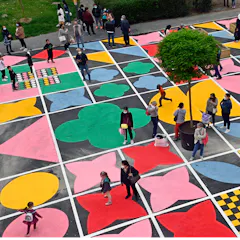
Play should be promoted in cities to bolster children’s right to play anywhere.
Autonomy, confidence and competence were stronger predictors of wellbeing than more traditional measures like deprivation or even total time spent being active.
Finding ways to encourage children to play in places such as driveways, courtyards and on their streets can help with their independence in the outdoors.
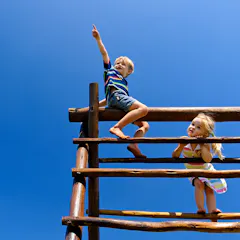
Our maps show some kids have nearer, bigger playgrounds than others.
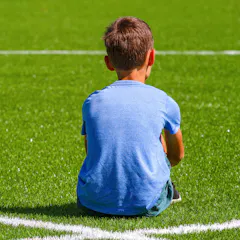
Clumsiness can cause some children to withdraw from physical, sporting and leisure activities.

Reduced to its essence, the process of natural selection would look a lot like play.

Imaginary companions are a normal and joyful part of childhood.
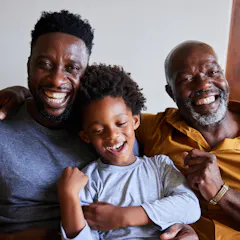
The fear of becoming a father is not a sign of weakness. Rather, it shows you understand that it’s a big role.

When resources are tight, mothers bear the costs of playing with their offspring even as they avoid socializing with others.

Few copies remain of the earliest known board game produced in the US.
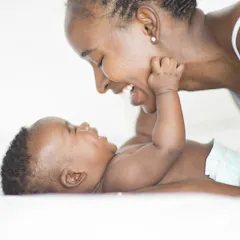
Children who play a lot learn skills such as sitting, crawling and standing quicker. Play also leads to better health and wellbeing as they grow older.
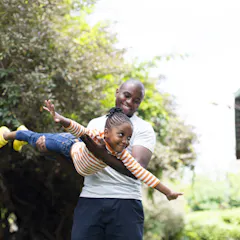
Children benefit enormously from regular, cognitively stimulating interactions with their caregivers.
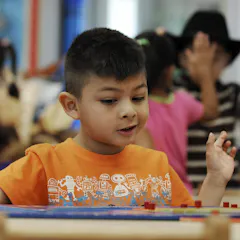
Kindergarteners’ literacy and active play are both grounded in the science of learning.

A new study shows how front yards can serve as windows into the inner lives of their residents – and their feelings about their home, neighborhood and city.

Skateparks show how the built environment can be transformed if communities, and the DIY cultures they give birth to, are allowed to flourish.
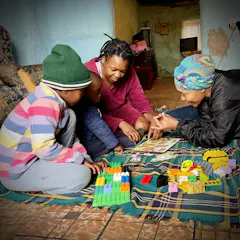
Neither hopefulness nor childhood development can occur in a vacuum. Strong relational bonds matter, too.

I took my young son Heathcliff to the show, and his perspective helped me see it through a kid’s eyes.
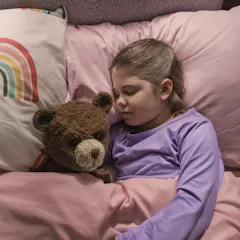
Some children have companions that are disobedient or even mean.
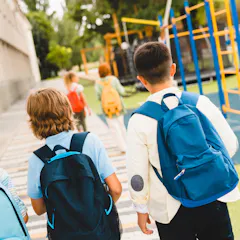
Education needs to be more aligned with healthy child development, children’s interests, and the importance of relationships for wellbeing.
Top contributors
-

Associate Professor of Education, Charles Sturt University
-
Adjunct assistant professor, North Carolina State University
-
Professor of Mobile Media and Games., RMIT University
-
Professor of Digital Learning and Play, Northumbria University, Newcastle
-
Associate Director and Researcher at the Developmental Pathways for Health Research Unit (DPHRU), University of the Witwatersrand
-
Assistant Professor of Psychology, Pace University
-
Associate Professor, Faculty of Arts and Design; Coordinator, Play, Creativity and Wellbeing Project, Centre for Creative and Cultural Research, University of Canberra
-
Injury epidemiologist | Health Data Scientist | Expert Witness, UNSW
-
Senior Lecturer in Early Childhood Studies, Charles Sturt University
-
Senior Lecturer in Psychology, University of Newcastle
-
VC Senior Research Fellow, RMIT University
-
Professor of Healthy Ageing, Australian Catholic University
-
Associate Professor of Developmental Psychology & Psychopathology, University of Leeds
-
Associate Professor in Landscape Architecture, Queensland University of Technology
-
Research Project Officer, School of Design, Queensland University of Technology