

Microplastics in seafood are well recorded but there are many other sources.
Articles on Plastic
Displaying 281 - 300 of 399 articles
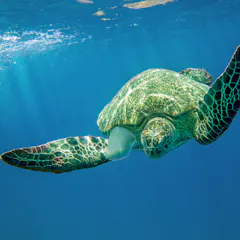
Little chunks of plastic are now scattered throughout the oceans and pollute most beaches around the world, including the nesting sites of threatened and endangered sea turtles.

Indonesia is the world’s largest producer of the seaweed that offers a solution for the global plastic crisis.
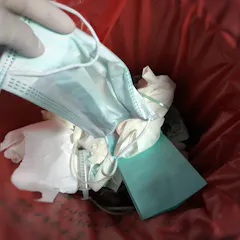
Health care produces 7% of Australia’s carbon emissions. And hospitals produce about half of this. Not to mention all the single-use items thrown away every day.

Richer countries import products but not the emissions used to make them.
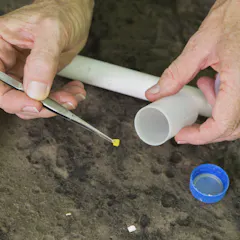
Ocean plastic has made a big splash, but there may be even more microplastic on land. The problem is that we have no idea exactly how much is in Australian soil, where it is, and what it’s doing.
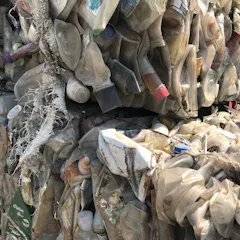
Plastic can only be recycled a few times before it becomes useless. But even non-recyclable plastic can be used to help produce petrol and diesel. Could this process help overcome the recycling crisis?
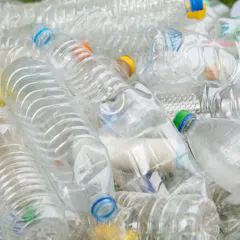
Under a new target, 100% of Australian packaging will be recyclable, compostable or reusable by 2025. But this is not enough - we also need to ensure that recyclable materials are actually recycled.
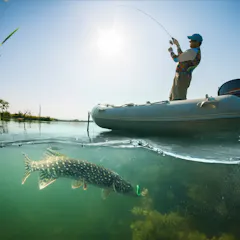
Ocean plastic has gained notoriety, but we’re starting to realize that microplastics pollute our freshwater and terrestrial ecosystems too.
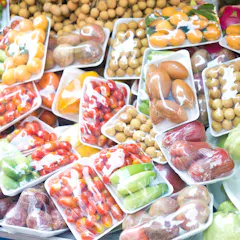
Yet plastic itself isn’t inherently evil as sometimes the environmental benefits outweigh the costs. So how to tell good plastic from bad?
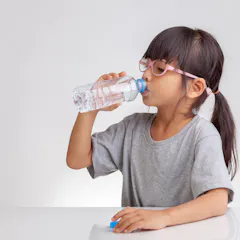
We all know that tap water is better than buying bottled water, from an environmental standpoint at least. But what should you drink it out of? A single-use bottle, used multiple times, might be best.

New research has found a way to speed up enzymes that break down the PET plastic in bottles.
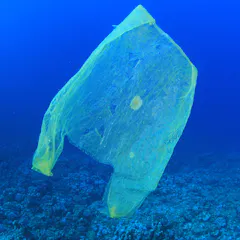
Banning plastic bags in food distribution is complicated and not all municipalities are on board. Are bioplastics a solution?
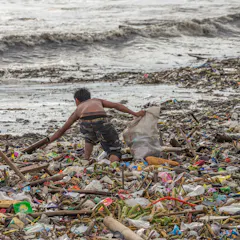
Cleaning up the oceans will require much better waste management in poorer countries.
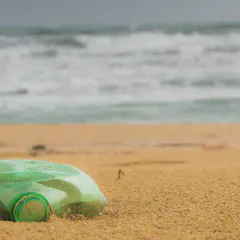
Plastics and microplastics in the marine environment are one of the great cause célèbre of our era. Here’s what we know and don’t know.

Truly green plastic requires more than sustainable raw materials.

Summer may have come to an official end, but the plastics from your bathers might still be at the beach!
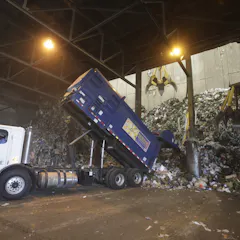
Most Americans don’t want incinerators in their neighborhoods, so waste management companies are burning trash in other facilities such as cement kilns. Is this a sustainable way to deal with garbage?
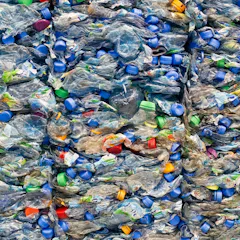
Plant-based, sustainable plastics may hold many of the answers to our plastic problems.
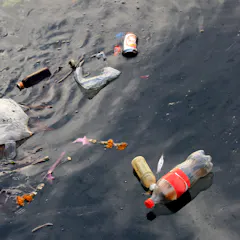
Drink containers end up in the ocean at a truly alarming rate. Simply paying people a small amount to return them cuts that rate by nearly half.
Top contributors
-

Senior Principal Research Scientist, Environment, CSIRO
-
Research Chair, Indigenous Approaches to Environmental Management, Keele University
-
Senior Principal Research Scientist, CSIRO
-
Lecturer, School of Life and Environmental Sciences, Deakin University
-
Professor of Sustainable Development, Keele University
-
Research Scientist, Stanford University
-
Lecturer in Ornithology, Charles Sturt University
-
Assistant Professor of Ecology and Evolutionary Biology, University of Toronto
-
Professor, School for Resource and Environmental Studies, Dalhousie University
-
Professor of Ocean Policy and Economy, University of Portsmouth
-
Professor of Coastal Oceanography, The University of Western Australia
-
Associate professor, University of Portsmouth
-
Oceanographer, The University of Western Australia
-
Research associate, Loughborough University
-
Professor of Global Environmental Politics, University of California, Berkeley