

The prevalence of certain ancient genome in Northern Europe makes people prone to developing autoimmune conditions.
Articles on Siberia
Displaying 1 - 20 of 30 articles
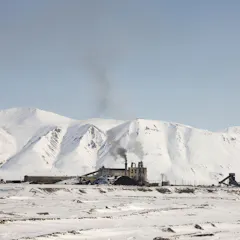
A Pandoravirus has been revived after remaining dormant in the Siberian permafrost for nearly 50,000 years.
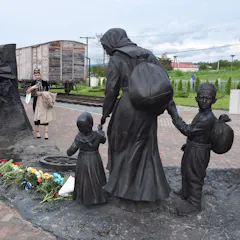
Forced relocation of civilian populations is a war crime.

The Arctic is particularly vulnerable to climate change, but efforts to tackle it risk alienating the people who live there.

The Laptev Sea is one of the Arctic’s biggest nurseries of new sea ice in winter, but Siberia’s record summer heat may have halted production.
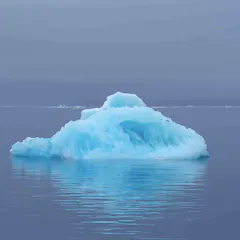
Extreme shrinkage of summer sea ice is just the latest evidence of rapid Arctic warming – and what happens in the Arctic doesn’t stay there.

By studying the DNA of people who lived in East Asia thousands of years ago, scientists are starting to untangle how the region was populated.
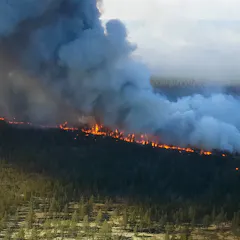
The high temperatures and wildfires of 2019 were thought to have heralded a freak summer for the Arctic. Then 2020 brought worse.
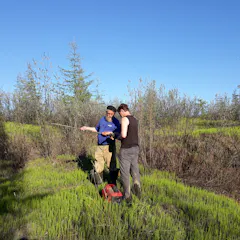
The Zimovs want to restore the prehistoric ‘mammoth steppe’ ecosystem and see if it slows down – or even reverses – melting permafrost.

Climate change is thawing permafrost and increasing the risk of these accidents, and the region has fewer of the bacteria that can ‘clean up’ oil spills.

The Arctic is warming about twice as fast as the planet as a whole, with serious consequences. Scientists have been warning about this for decades.
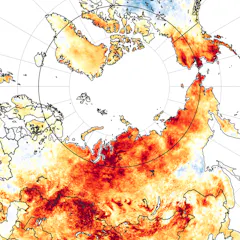
Models have predicted for some time that with every degree of global warming, the Arctic will see double or more.

The wet and low-lying East Siberian Arctic is likely to be a major methane source in the coming decades.

Neanderthals living in a cave in southern Siberia made distinctive stone tools that can be traced to their ancestral homeland in eastern Europe — an intercontinental journey of more than 3,000 km.

Hundreds of thousands of lakes, rivers and streams in the Arctic exist only because of the permafrost that lies beneath them. The warming Arctic threatens to change that.

A researcher based in Fairbanks, Alaska, links 2019’s record-breaking wildfires in far northern regions of the world to climate change, and describes what it’s like as zones near her city burn.
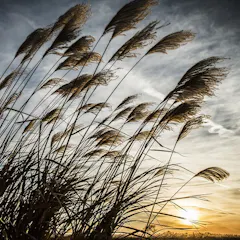
In the eastern reaches of Siberia, scientists discovered plants with exceptional cold tolerance that could be the key to sustainable bioenergy production.

New studies reveal when the Denisovans and their Neanderthal cousins occupied a cave in southern Siberia. It’s the only site known to have been inhabited by them and by modern humans.

Plankton in the world’s oldest and deepest lake are being disrupted by exceptionally warm waters.

The loss of the Siberian unicorn shows just how vulnerable some animals can be to environmental change that can impact on their food supply.
Top contributors
-

Professor of Glaciology and Earth Observation, University of Bristol
-
Director, ARC Centre of Excellence for Australian Biodiversity and Heritage (CABAH), University of Wollongong
-
Professor of Environmental Change, UCL
-
Reader in Environmental Science, University of Hull
-
Postdoctoral research associate, University of Oxford
-
Professor of Quaternary Science, Royal Holloway, University of London
-
Senior Lecturer, Geography and Environmental Sciences, Northumbria University, Newcastle
-
Senior Lecturer in Physics, Nottingham Trent University
-
Research Leader, Natural History Museum
-
Emeritus Reader in Policy Modelling, Cambridge Judge Business School
-
Profesor Antropología Física, Universidad Complutense de Madrid
-
Assistant professor, University of Nottingham
-
Research scientist - Geology - Mining exploration, CSIRO
-
Honorary Associate Professor, UNSW
-
Pro Vice-Chancellor of Research, University of Technology Sydney