
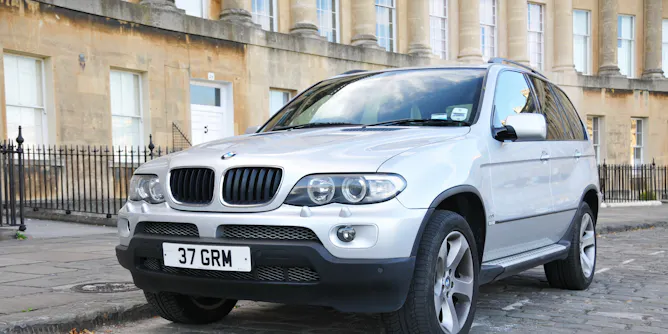
The controversial cars are under attack.
Articles on Pedestrians
Displaying 21 - 40 of 53 articles

What will the US$1.2 trillion infrastructure bill pay for? Here are some of the things it will help build, fix or remove.
As you’re walking through city streets on your way to work, school or appointments, you probably feel like you’re taking the most efficient route. Thanks to evolution, you’re probably not.

While the road toll has come down over the decades, it’s largely a result of fewer car occupants dying. Pedestrian deaths have barely changed for a decade, but they remain a road safety blind spot.
COVID-19 has underscored the value of parks and public spaces. A new survey shows that US mayors have gotten the message, but post-pandemic plans for public spaces remain largely undefined.
Instead of free parking, our post-COVID CBDs need a big vision to become attractive destinations that aren’t car-friendly at the expense of being people-friendly.

Pedestrians are wary of autonomous cars, but they trust traffic lights. Researchers suggest driverless cars could communicate directly with the signals to make their own actions more predictable.
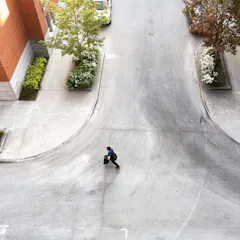
Most people do not know the right-of-way rules, but a starting point should be that pedestrian needs and safety take priority. Current road rules are biased towards driver convenience

How will people respond once they realise they can rely on autonomous vehicles to stop whenever someone steps out in front of them? Human behaviour might stand in the way of the promised ‘autopia’.
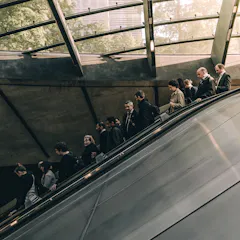
In many cities, convention holds that there’s a lane for walking and a lane for standing on the escalator. But human systems engineers suggest this isn’t the most efficient option for the system.
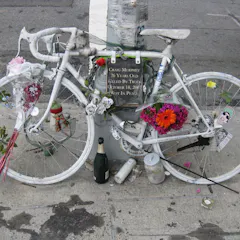
US cities were designed and engineered around cars. Now some are working to increase walking and biking, but the shift isn’t easy.
Other people influence how we vote, what jobs we apply for, which gadgets we buy – so of course they influence how we get around the city.

The debate over the place of cars in cities may seem recent, but pamphlets published during the French Revolution show that the battle was raging before the first automobile even saw the light of day.
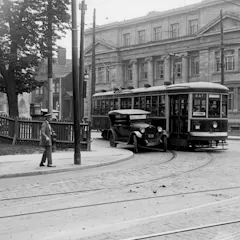
Torontonians have been experiencing pedestrian and bicyclist fatalities since the advent of the automobile. The one way to stop the deaths is to ban cars but since that won’t happen, what can be done?

Electric rideables are making life less comfortable and more dangerous for pedestrians. Here’s how makers of rideables could help make cities safer for everybody.
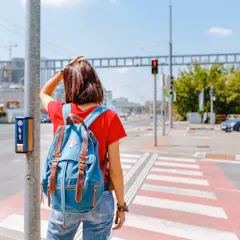
A lecturer in transport engineering weighs in on one of the greatest debates of our time.

Collisions at intersections between motor vehicles, cyclists and pedestrians cause many deaths and injuries. Design that considers how each group approaches intersections improves everyone’s safety.
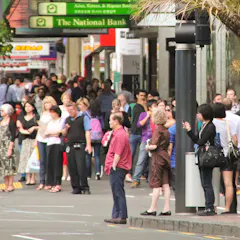
Everyone doesn’t simply wait their turn at traffic lights. Signals are set up to enable a ‘green wave’ for cars and adjust to heavy traffic, making walkers wait longer no matter how many there are.
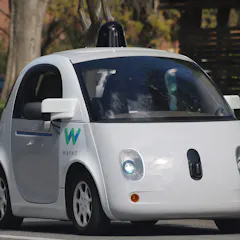
The biggest ethical challenges for self-driving cars arise in mundane situations, not when crashes are unavoidable.
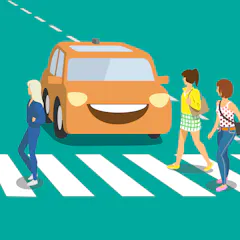
In the wake of a self-driving Uber car killing a pedestrian in Arizona, an ethicist examines the state of autonomous vehicle development.
Top contributors
-
 John Rennie Short is a Friend of The Conversation.
Professor Emeritus of Public Policy, University of Maryland, Baltimore County
-
Chadwick Professor of Civil Engineering, UCL
-
Senior Research Fellow in Human Factors & Sociotechnical Systems, University of the Sunshine Coast
-
Teaching Assistant Professor, University of Pittsburg and Visiting Associate Professor, The University of Osaka, University of Pittsburgh
-
Associate Research Professor, Urban Health Collaborative, Drexel University
-
PhD Candidate, University of Memphis
-
Senior Lecturer, University of Environment and Sustainable Development
-
Professor of Transport, University of Sydney
-
Research Active Lecturer, Discipline of Psychology, Charles Darwin University, Charles Darwin University
-
Associate professor, UCL
-
Work Based Learning Advisor, University of Strathclyde
-
Research Fellow, University of Sydney
-
Assistant Professor, Stanford University McCoy Family Center for Ethics in Society
-
Professor of Human Factors, University of the Sunshine Coast
-
Assistant Professor of Philosophy, UMass Lowell