
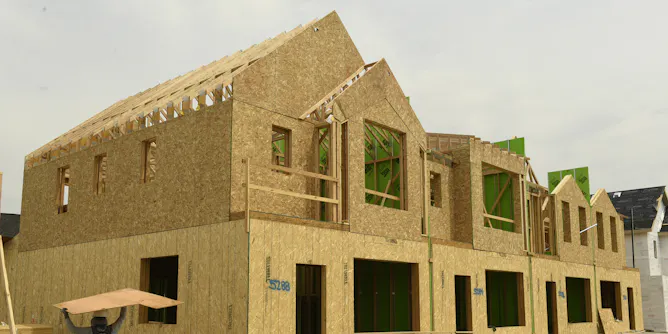
Lower land costs and new statewide housing reforms have made Colorado an outlier.
Articles on Parking
Displaying 1 - 20 of 29 articles
Australia largely has enough off-street parking to do away with unsightly kerbside parking – and free up space for bikes, pedestrians and scooters.
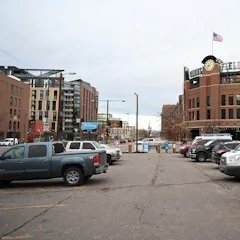
Structured parking can cost as much as $50,000 per space, making housing more expensive to build and for those living there.
It may be tempting to view hospital parking fees as exploiting a captive market. But the reality is much more complex.
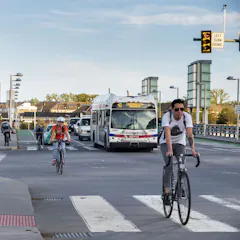
Philadelphia implemented new policies this year to better protect pedestrians and cyclists, but the city has a long way to go to reach its Vision Zero commitment of zero traffic deaths by 2030.

Despite loud calls for tough policing of e-scooters and even outright bans, the problems can be better managed with technology and public education.
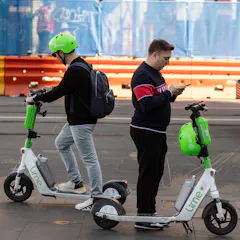
The parking of e-scooters is a source of fierce debate, but technology offers a solution to control the problem.
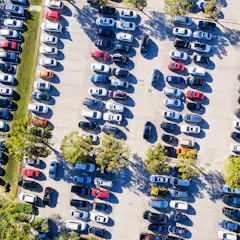
Paying for your parking via an app promises ease and efficiency. But we are entering a bargain with unclear terms around data privacy and public revenue.
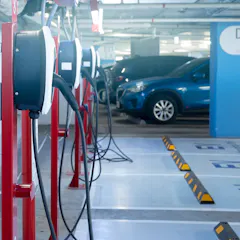
Electric vehicle batteries have the potential to catch fire, posing a problem for existing infrastructure, especially in enclosed car parks.
US cities are starting to reform laws that required developers to provide minimum amounts of parking. But there’s more they can do to loosen the auto’s grip on downtowns.
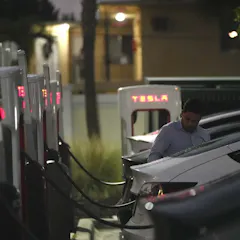
Canada’s zero-emissions vehicle sales target will need hundreds of thousands of EV charging points to be installed in homes, workplaces, retail spaces and along highway corridors in the coming years.
As many cities grapple with the housing crisis, some places are rewriting regulations and finding creative ways to repurpose these hulking masses of concrete that suck up valuable real estate.
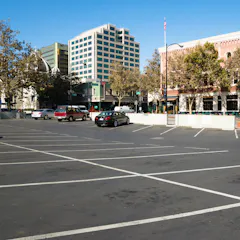
When Buffalo, New York, changed its zoning code so that developers no longer had to provide specified amounts of parking, space was freed up for public transit and people.

Roadsides have long been reserved for parking cars, but the pandemic led to many experiments with other ways of using scarce and valuable public space. We can put it to better and more flexible uses.
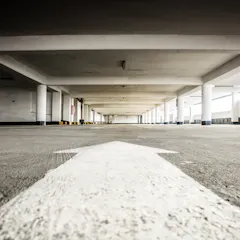
Self-driving cars may someday drop off their owners downtown and then leave to find free parking. What would that mean for cities of the future?
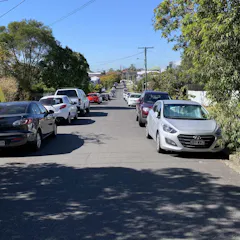
The global trend is to free up valuable city space by reducing parking and promoting other forms of transport that don’t clog roads and pollute the air. Australian cities are still putting cars first.
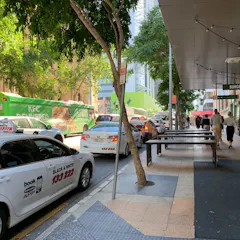
Cities must manage all the competing uses for limited roadside space to avoid congestion and maximise efficiency. And that begins with reliable data.
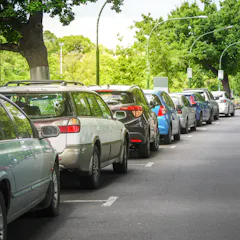
Australian cities have a glut of parking, even as politicians move to protect parking spaces or promise even more. There are better ways to keep congestion manageable and our cities liveable.

The Commuter Car Park Fund announced in the budget sounds big, but is likely to create only around 30,000 extra spaces – a marginal benefit for Australia’s 1.2 million daily public transport users.
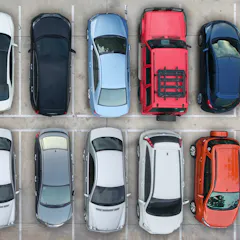
An increase in the use of self-driving cars will change parking infrastructure in cities, and hopefully result in more colourful character neighbourhoods.
Top contributors
-

Associate Professor in Urban Planning, The University of Queensland
-
Postdoctoral Research Associate, Faculty of Architecture, Building and Planning, University of Sydney
-
Honorary Professor of Planning, The University of Queensland
-
Senior Lecturer in Urban Planning & Design, Monash University
-
Professor of Human Geography, The University of Queensland
-
PhD Candidate, Faculty of the Arts, Social Sciences and Humanities, University of Wollongong
-
Professor Communications and Media, University of Canberra
-
Professorial Fellow, Mary MacKillop Institute for Health Research, Australian Catholic University; Emeritus Professor, Wertheim School of Public Health, University of California San Diego, University of California, San Diego
-
Professor of Cultural Studies, University of Wollongong
-
Lecturer, Urban Planning, University of Southern Queensland
-
Associate Professor in Urban Planning, The University of Melbourne
-
Professor of Environmental Design, University of Colorado Boulder
-
Associate Professor in Urban and Regional Planning, University of Sydney
-
Vice-Chancellor's Research Fellow, Centre for Urban Research, RMIT University
-
Senior Research Fellow, Sheffield Hallam University