
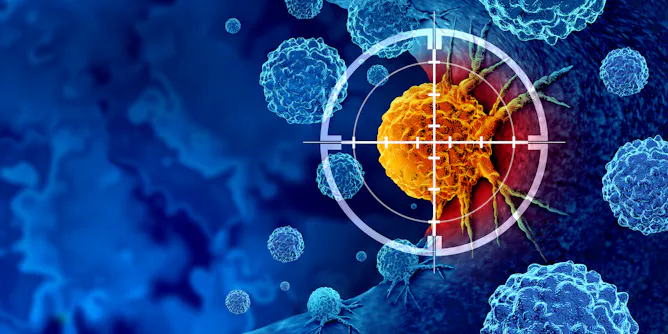
Around 97% of patients with advanced pancreatic cancer die within five years. Researchers have figured out a way to target the mechanism that makes these tumors so deadly.
Articles on Pancreatic cancer
Displaying 1 - 20 of 29 articles
Around 97% of patients with advanced pancreatic cancer die within five years. Researchers have figured out a way to target the mechanism that makes these tumors so deadly.

Pancreatic disease can be life threatening. Knowing the early warning signs and the lifestyle risks can help people seek help sooner.

Fermented stevia may kill pancreatic cancer cells while leaving healthy cells unharmed.

The future of cancer detection might be in your toilet.

The diet was shown to accelerate onset of a severe wasting disease.
This study further highlights the potential of mRNA vaccines in cancer treatment.
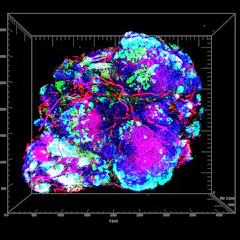
Some cancers are notoriously resistant to chemotherapy and not curable with surgery. Stopping tumors from adapting to the harsh microenvironments of the body could be a potential treatment avenue.
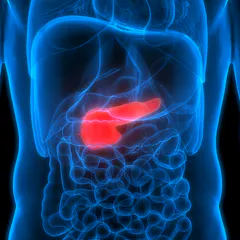
Large new study identifies very early risk factors for pancreatic cancer.
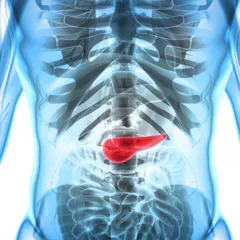
Pancreatic cancer currently has one of the least optimistic prognosis, with just 5% of patients surviving five years after diagnosis. A recent study opens a door to hope.

Alex Trebek raised an interesting question when he thanked well-wishers for supporting him in his fight against pancreatic cancer: Do prayers and good thoughts really have a medical effect?

Alex Trebek announced this week that his pancreatic cancer is in remission. A pancreatic cancer specialist explains the difficulties of the disease as well as new treatment advances.

Pancreatic cancer has historically had among the lowest survival rates of any type of cancer. A recent study that looked at genomic changes reveals some possible clues.

There are currently few effective and non-invasive methods to screen for early stages of cancer. But scientists have now developed a new blood test that promises to detect eight different cancers.

An app could help diagnose one of the most deadly cancers at the early stages using eye-scanning technology.

Something exciting is going on – no thanks to the supplements industry.
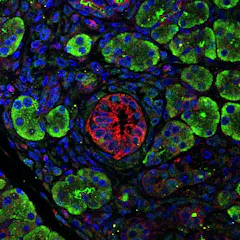
Pancreatic cancer has long been known as the “silent killer” but why is it so difficult to detect?

It’s early days, but hope is on the horizon when it comes to one of the deadliest cancers.
A new research paper has found some cancers aren’t picked up by GPs in the first or second appointments, but it’s because cancer is usually an unlikely explanation for a patient’s symptoms.

Currently, seven cancer types are listed in the top 20 causes of death in Australia. These are cancers of the lung, blood and lymph, bowel, prostate, breast, pancreas, skin and some childhood cancers.
Top contributors
-

Graduate Student in Cancer Systems Biology, Rice University
-
Professor of Biomedical Sciences, Anglia Ruskin University
-
Bertalli Chair in Cancer Medicine and Director of Research for the Centre for Cancer Research, The University of Melbourne
-
Professor of Medical Oncology, University of Colorado Anschutz
-
Director of Undergraduate Studies, School of Journalism, Media and Cultural Studies, Cardiff University
-
Research Fellow, Cardiff University
-
Professor and Laboratory Head, WEHI (Walter and Eliza Hall Institute of Medical Research)
-
Professor of Primary Care Cancer Research, The University of Melbourne
-
Adjunct Professor, School of Psychology, Curtin University and College of Health and Medicine, Australian National University
-
Professor of Biochemistry, University of Aberdeen
-
Senior Lecturer, The University of Western Australia
-
Associate Professor, Cancer Council NSW
-
Professor of Cellular and Molecular Biology, University of Westminster
-
PhD Student Studying Pancreatic Cancer, Cardiff University
-
profesor e investigador AXA-CNIO de Oncología Molecular, Centro Nacional de Investigaciones Oncológicas CNIO