
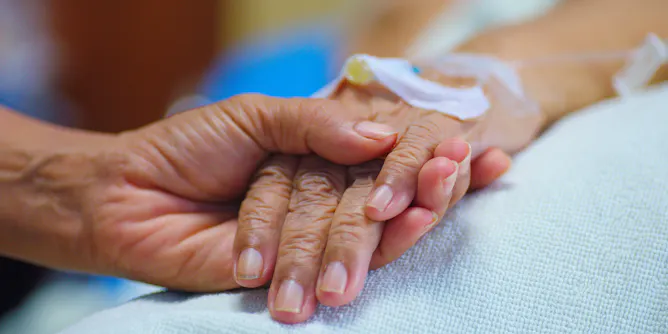
Lack of training and skills among those who work in the area may lead to LGBT people receiving poorer palliative care.
Articles on Palliative care
Displaying 41 - 60 of 102 articles
It’s time to talk to your loved ones about what care and treatment you’d want if you face death from COVID-19.
Ghana’s lack of a palliative care policy is posing a significant challenge to effective healthcare for cancer patients.

How we experience the moment of death may be influenced by a cocktail of brain chemicals and the manner in which our brains shut down.
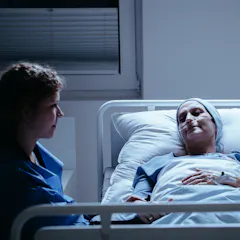
The seriously ill and their families often want to protect each other from thoughts of death. Conversation about end-of-life choices are, however, essential to a good death.

Nurses who surround the process of medically assisted dying are an important source of insight into the real conversations our society needs to have about what it’s really like.
Western Australia might soon become the second state in Australia to legalise voluntary assisted dying. Its proposed law draws on the Victorian model, but has some important differences, too.

As we sit on the cusp of voluntary assisted dying becoming legal in Victoria, we expect it won’t always be simple for people who want it to access it – at least in the legislation’s early days.
It is not always easy to identify who needs palliative care.
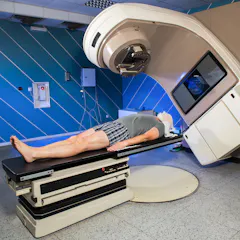
Palliative radiation therapy can improve a cancer patient’s life, by alleviating pain and other symptoms. Unfortunately, some doctors associate the term with end-of-life care and fail to refer people.
One of the great success stories in healthcare, a quarter of the UK hospice sector is said to be close to collapse.

You’ve more than likely heard of birth doulas. But nowadays, death doulas are providing support at the end of life. How they fit into existing structures of care remains to be understood.

In the final days of life, it may be too late to choose how you want to die, who you want to be cared by, and how you’d like your symptoms managed.

New findings show what the public really thinks about how we prioritise treatments at the end of people’s lives.
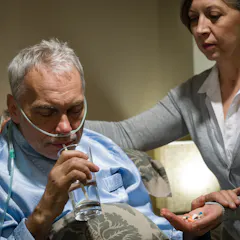
The UK has one of the most developed palliative care services in the world, yet people still miss out.
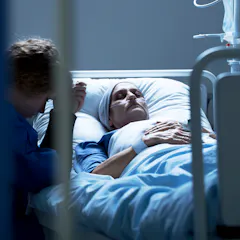
Most elderly Canadians do not receive the end-of-life care they desire. A new study hopes to rectify this.
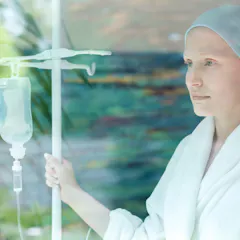
Half of all patients diagnosed with cancer in the UK still die of the disease.

The Massachusetts Medical Society recently reversed its long-held opposition to physician-assisted suicide. A psychiatrist notes many physicians are painfully conflicted about participating.

Excruciating pain at the end of life is extremely rare. The evidence shows pain and other symptoms, such as fatigue, insomnia and breathing issues, actually improve as people move closer to death.

The main arguments used by those who voted against assisted dying – including that the bill has insufficient safeguards – in Victoria’s upper house, deserve further scrutiny.
Top contributors
-

Distinguished Professor, Professor of End-of-Life Law and Regulation, Australian Centre for Health Law Research, Queensland University of Technology
-
Professor of Law, Australian Centre for Health Law Research, Queensland University of Technology
-
Matthew Flinders Professor and Director of the Research Centre for Palliative Care, Death and Dying, Flinders University
-
Consultant Neonatologist and Professor of Ethics, University of Oxford
-
Associate Professor of Medicine, Deakin University
-
Assistant Professor of Palliative Medicine, Aga Khan University
-
Senior Lecturer in Palliative Care, Flinders University
-
Honorary Enterprise Professor, School of Population and Global Health, and Department of General Practice and Primary Care, The University of Melbourne
-
NIHR Clinician Scientist and Honorary Consultant in Palliative Medicine, King's College London
-
Research Associate, Palliative and Supportive Services, Flinders University
-
Associate professor, Australian Catholic University
-
Research Fellow, Department of Medicine, The University of Melbourne
-
Palliative Medicine Physician, Senior Research Fellow, The University of Melbourne
-
Professor, VCCC Chair of Palliative Medicine, The University of Melbourne
-
Professor of Medical Sociology, University of Glasgow